
Discourse and register
Articles tagged Discourse and register across Chinese, Japanese, and Korean.
Switch language.
Articles.
Why Korean Grammar Feels Different From English
A learner-oriented essay on Korean word order, particles, omission, and honorific grammar from an English-speaking learner’s perspective.
How Politeness Works in Korean and Japanese
A learner-oriented essay on why politeness in Korean and Japanese is built into grammar, endings, address terms, and social framing rather than added as a thin layer on top.
Japanese Keigo Explained
A learner-oriented essay on honorific, humble, and polite Japanese, and how keigo works as a system of social framing rather than decorative politeness.
Korean Speech Levels and Honorifics Explained
A learner-oriented essay on Korean speech levels, honorific marking, and how grammar tracks social relation in everyday usage.
Ryukyuan Languages and Why They Are Not Just “Okinawan Dialect”
The reader can understand why Ryukyuan languages deserve treatment as related languages, not simply “Okinawan dialect.”
How Chinese Funerary Language Avoids Directness
The reader can recognize euphemism, restraint, condolence formulae, and ritual vocabulary in Chinese funerary and mourning language.
Confucian Terms Across East Asia: 仁, 義, 礼, 孝, and Their Afterlives
The reader can trace Confucian ethical vocabulary across Chinese, Japanese, and Korean cultural and political language.
The Vocabulary of Evaluation: 好, 优, 强, 稳, 高质量
The reader can read evaluative language in reviews, policy, business, education, and product copy without treating all positive words as simple praise.
The Mandarin of Housing Dreams: 房, 家, 安居, and Stability
The reader can understand how Mandarin links housing vocabulary with family, stability, status, local identity, education, and life planning.
The Language of Gift-Giving, Refusal, and Obligation in Korea
The reader can understand Korean gift language as relationship management rather than just vocabulary for presents.
How Japanese Speakers Avoid Direct Disagreement
The reader can identify indirect disagreement in Japanese through hedging, silence, partial agreement, topic shifting, soft objections, and noncommittal responses.
From Flashcards to Literacy: When Korean Study Must Leave the Card
The reader can tell when flashcards are useful and when Korean learning must move into extended reading, listening, writing, and task performance.
Korean Backchanneling: 네, 예, 맞아요, 음, 아
The reader can interpret Korean backchanneling as active participation, alignment, checking, or polite listening.
Relative Clauses Before the Noun: Why Chinese Packs Context Early
The reader can parse Chinese relative clauses that appear before the noun they modify.
When Not to Overcorrect Korean Pronunciation
The reader can avoid overcorrecting Korean pronunciation in ways that make speech stiff, unnatural, or socially odd.
The Grammar of Requests: 주세요, 해 주세요, 부탁드립니다, 해 주시겠어요
The reader can choose Korean request forms that match burden, relationship, and institutional setting.
Negation: 안, 못, 지 않다, 지 못하다, 아니다
The reader can distinguish Korean negation types by scope, ability, formality, and predicate type.
Modal Verbs: 想, 要, 应该, 得, 必须, 可以, 能, 会
The reader can distinguish desire, intention, obligation, necessity, permission, ability, and learned skill in Mandarin modal verbs.
Causality in Chinese: 因为, 所以, 由于, 因而, and Result Framing
The reader learns how Mandarin marks cause, result, explanation, and formal causal reasoning.
欲しい and たい: Desire Grammar and Person Restrictions
The reader can handle desire expressions while respecting Japanese restrictions on person, evidence, and reported desire.
Japanese and Korean Particles: Similar Surface, Different Systems
The reader can compare Japanese and Korean particles by function while avoiding one-to-one mapping mistakes.
Suru vs Naru: Making and Becoming in Japanese Thought
The reader can distinguish する and なる patterns as grammar for agency, intervention, change of state, and social framing.
How Chinese Uses 把 to Make Actions Feel Completed
The reader sees how 把 often combines with result markers to package an action as controlled, completed, or outcome-focused.
How to Read a Chinese Article in Three Passes
The reader can use a structured three-pass method to read Chinese articles for gist, argument structure, vocabulary, and reusable language.
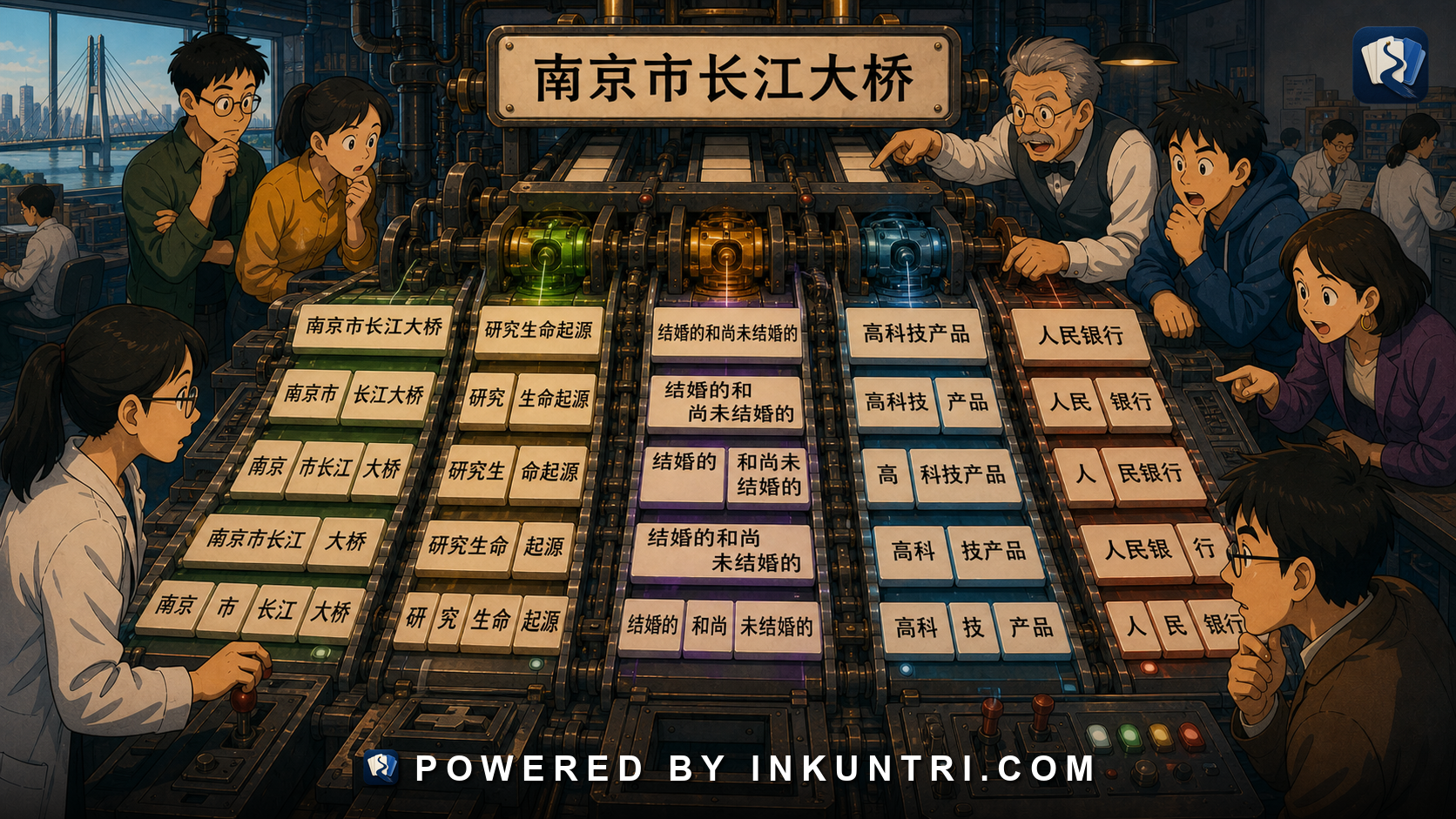
Why Chinese Search Engines Care About Segmentation
The reader learns why Chinese text search requires word segmentation and how segmentation errors affect search, NLP, and reading tools.
Tokyo Japanese, Kansai Japanese, and the Myth of One Spoken Japanese
The reader can compare Tokyo and Kansai Japanese without reducing either variety to stereotypes or catchphrases.
Japanese Set Phrases That Function Like Grammar
The reader can recognize fixed phrases that behave like grammar by setting expectations, relations, and discourse moves.
Pronunciation Problems That Survive N1
The reader can diagnose advanced pronunciation issues that persist after strong grammar and vocabulary knowledge.
Chinese Classics in Korean Education and Quotation
The reader can recognize Korean references to Chinese classics, four-character expressions, moral vocabulary, and school-text quotation practices without treating every classical-looking phrase as generic “Asian wisdom.”
Designing a Korean Error Corpus From Your Own Mistakes
The reader can turn personal Korean mistakes into a searchable error corpus that reveals patterns and supports targeted improvement.
How Chinese Classics Are Quoted in Japanese and Korean Contexts
The reader can recognize Chinese classical quotations as shared East Asian cultural material while avoiding the mistake of assuming identical interpretation across countries.
Chinese Verbs That Translate as “Make”: 做, 制作, 造成, 使, 令
The reader can choose among Mandarin verbs that English often collapses into “make.”
A Serious Learner’s Guide to Japanese Dictionaries
The reader can choose and use Japanese dictionaries for words, kanji, pitch accent, collocations, classical forms, domain terms, and learner-level explanations.
Food Labels in Japanese: 原材料, アレルギー, 賞味期限, 栄養成分
The reader can read Japanese food labels for ingredients, allergens, expiration, nutrition, storage, and manufacturing information.
Education Vocabulary: 学段, 招生, 培训, 课程, 素养
The reader can navigate Chinese education-related writing, from school notices to policy, tutoring ads, admissions pages, and curriculum documents.
Chinese HR Language: 招聘, 入职, 考核, 离职
The reader can understand Chinese HR language from recruitment through onboarding, performance review, contract changes, and resignation.
Korean Diaspora Language: China, Japan, Central Asia, and North America
The reader can understand diaspora Korean as a set of community language ecologies shaped by migration, heritage education, contact languages, identity, and generational change.
Classical Japanese Grammar Still Hiding in Modern Expressions
The reader can recognize classical Japanese grammar that survives in modern set phrases, literature, songs, signs, and formal writing.
Korean Verb Endings as the Core of the Language
The reader can see Korean verb endings as the engine of tense, mood, politeness, quotation, connection, and discourse.
Reading Chinese Meeting Minutes: 纪要, 事项, 责任人, 截止时间
The reader can read Chinese meeting minutes, identify decisions and action items, and understand the formal shorthand used in workplace documentation.
Building a Japanese Reader Workflow From News, Essays, Manga, and Forms
The reader can build a Japanese reading workflow that balances news, essays, manga, forms, and domain documents instead of relying on one genre.
から, ので, ため: Cause, Explanation, and Formality
The reader can choose among から, ので, and ため by tracking causality, explanation, formality, and speaker stance.
Platform Regulation Japanese: 利用規約, 削除, 通報, モデレーション
The reader can understand Japanese platform-regulation language around terms of use, deletion, reporting, moderation, liability, and user conduct.
What Serious Japan-Philes Should Learn From One Train Announcement
The reader can unpack a Japanese train announcement as a dense source of politeness, safety language, timing, institutional voice, and public-order norms.
Why “Teacher” 老师 Is a Social Word, Not Just a Job
The reader can understand 老师 as a flexible Mandarin address term used beyond school, including media, arts, professional training, online culture, and respectful interaction.
Korean Internet Humor as Hangul and Register Play
The reader can recognize how Korean internet humor uses spelling, abbreviation, sound symbolism, register shifts, and subtitle-like timing.
在, 正在, and 着: Three Ways Mandarin Frames Ongoing Action
The reader can choose between 在, 正在, and 着 based on progressive action, current emphasis, and durative state.
Information Structure in Japanese: Fronting, Omission, and Emphasis
The reader can track information structure in Japanese by noticing fronting, omission, contrastive topics, and emphasis rather than only sentence-level grammar.

Okurigana as Grammar: How Kana Endings Disambiguate Kanji
The reader can use okurigana as grammatical evidence for verb class, adjective class, meaning distinction, and dictionary lookup.
Japanese Word Order Flexibility and Its Limits
The reader can use Japanese word order flexibility without assuming particles make all orders equally natural.
Old Korean to Modern Korean: What Serious Learners Should Know
The reader can place Korean language history on a usable timeline and understand why historical orientation helps modern reading without turning every lesson into reconstruction.
Tone Pairs in Natural Speech: Why 2-3 and 4-4 Need Special Practice
The reader learns why tone pairs are the practical foundation of tone production and listening.
Gyeongsang, Jeolla, Chungcheong, and Regional Speech Identity
The reader can recognize regional Korean speech as identity, prosody, media performance, and local belonging rather than as accent comedy or “incorrect Korean.”
Formal Japanese Connectors: したがって, 一方, なお, また, ただし
The reader can use formal Japanese connectors to follow arguments in reports, essays, and official prose.
Buddhist Vocabulary Across Chinese, Japanese, and Korean
The reader understands Buddhist vocabulary as a major shared layer of religious, philosophical, literary, and everyday East Asian language.
Why Japanese Mora Timing Matters More Than Syllable Counting
The reader can count Japanese rhythm by mora rather than by English-style syllables and use that knowledge for listening, pronunciation, and poetry.
Jeju Language and Why It Is Not Just Regional Flavor
The reader can understand Jeju language/Jejueo as an endangered language ecology and approach Jeju speech in media, tourism, and scholarship with respect.
Honorific Prefixes お and ご: Habit, Register, and Exceptions
The reader can use honorific prefixes お and ご by understanding register, lexical habit, Sino-Japanese/native tendencies, and exceptions.
Kinship Terms as Social Vocabulary in Mandarin
The reader can interpret kinship terms as family labels, social address terms, metaphors, and hierarchy markers.
Hotel Korean: 체크인, 보관, 영수증, 불만
The reader can approach Korean hotel pages and service interactions by identifying check-in/out, luggage storage, receipts, complaints, rooms, reservation names, extra fees, breakfast, and front desk language.
Putonghua, Guoyu, and Huayu: One Standard, Several Social Histories
The reader understands why “Mandarin” has different names and institutional histories across Mainland China, Taiwan, Singapore, and global Chinese communities.
Korean Small Talk: Weather, Food, Work, and Safe Openings
The reader can use Korean small talk to open conversation, maintain warmth, and avoid jumping too quickly into overly personal or overly formal speech.
Administrative Guidance Japanese: 指導, 勧告, 命令, 処分
The reader can distinguish soft-sounding administrative guidance from recommendations, warnings, orders, and legally consequential dispositions.
Keigo System Map: 尊敬語, 謙譲語, 丁寧語, 美化語
The reader can map the major keigo systems and understand how they alter verbs, nouns, and relationship framing.
Mandarin Questions Beyond 吗: A-not-A, 呢, 吧, and Rhetorical Form
The reader recognizes Mandarin question types and their different assumptions, tones, and uses.
Dialect Identity in Japanese Media
The reader can analyze how dialect identity is represented, exaggerated, softened, or stereotyped in Japanese media.
False Friends Between Japanese and Korean Sino-Xenic Words
The reader can spot false friends between Japanese kango and Korean Sino-Xenic words by checking meaning, usage, and register rather than characters alone.
Tracking Korean Listening Progress With Real Audio
The reader can measure Korean listening progress with authentic audio, targeted transcripts, shadowing logs, and error categories.
How Chinese Builds Words From Characters Without Being “One Character = One Word”
The reader can use character knowledge to learn vocabulary without falling into the false belief that every character equals a standalone word.
Why Korean Hanja Still Matters for Reading Names, Law, and Academia
The reader understands why Hanja remains useful in Korean contexts even though modern Korean is usually written in Hangul.
Mandarin in Variety Shows: Banter, Teasing, and Audience Alignment
The reader can understand Mandarin variety-show speech as edited performance involving banter, teasing, callbacks, audience alignment, and persona management.
Chinese Loanwords, Japanese Colonial Terms, and English Loans in Korean
The reader can distinguish major borrowing channels into Korean and understand why origin often predicts register, social feeling, and domain.
The Grammar of Korean Legal Obligations: 해야 한다, 하여야 한다, 할 수 있다, 해서는 안 된다
The reader can parse Korean legal obligation and permission language with attention to force, prohibition, discretion, and duty.
Hotel Japanese: チェックイン, 預かり, 領収書, 苦情
The reader can understand hotel Japanese around check-in, luggage storage, receipts, complaints, room rules, and service requests.
Academic Japanese and the Sino-Xenic Knowledge Layer
The reader can understand academic Japanese as part of a wider Sino-Xenic knowledge layer shared across East Asian scholarly vocabulary.
Why Mandarin 儿化 Changes Meaning, Register, and Region
The reader understands 儿化 as a linguistic and social feature, not just a Beijing accent gimmick.
Police Report Mandarin: 立案, 报案, 询问, 证据
The reader can understand basic Chinese police-report and public-security vocabulary while distinguishing reporting, investigation, evidence, and case filing.
Korean Formal Writing: Nominal Endings, Parallelism, and Compression
The reader can parse Korean formal writing that uses nominal endings, parallel bullets, omitted actors, and compressed administrative style.
Volitional Forms: Intention, Invitation, and Soft Decision
The reader can use volitional forms to read intention, invitation, decision-making, and self-directed thought.
The Language of Gift-Giving, Refusal, and Obligation in Japan
The reader can understand Japanese gift-giving language around occasions, reciprocity, refusal, obligation, gratitude, humility, and ritualized presentation.
How Japanese Speakers Soften Disagreement Prosodically
The reader can hear and produce softened disagreement in Japanese through prosody, hedging, delay, and partial acceptance.
Customer-Service Mandarin: Apology, Escalation, and Resolution Scripts
The reader can understand customer-service Mandarin in chat scripts, complaint handling, escalation, apology, and resolution language.
Chinese Public Service Slogans: Rhythm, Morality, and Governance
The reader can analyze Chinese public-service slogans as rhythmic, moralizing, administrative, and persuasive language rather than simply translating them word by word.
The Language of Housing in Japan: マイホーム, 賃貸, 空き家
The reader can read Japanese housing language around renting, buying, vacant homes, floor plans, fees, neighborhood image, and homeownership ideals.
Same Character, Different Word: 学, 學, 学ぶ, 배우다, and the Limits of Cognates
The reader learns that shared characters do not mean shared words, especially when Japanese and Korean use native verbs around Chinese-derived characters.
When to Use Machine Translation for Japanese and When to Distrust It
The reader can use machine translation as a controlled aid for Japanese while recognizing failure modes in register, ambiguity, legal/medical language, idioms, and domain terms.
Mandarin Grammar Patterns That Become Invisible at Intermediate Level
The reader notices grammar patterns they may already “know” but fail to use with precision in reading and writing.
The Script Reform Debate: Simplification, Pinyin, and Unfinished Questions
The reader understands script reform as a long debate involving literacy, identity, technology, regional standards, and politics.
How to Build a Yearlong Korean Intensive Around Inkuntri + Reader
The reader can design a 12-month Korean study plan that combines structured lessons, reading, listening, writing, domain literacy, and periodic assessment.
How Particles Sound in Fast Speech: は, が, を, に, and へ
The reader can hear particles in connected speech and stop expecting every は, が, を, に, and へ to sound isolated and equally stressed.
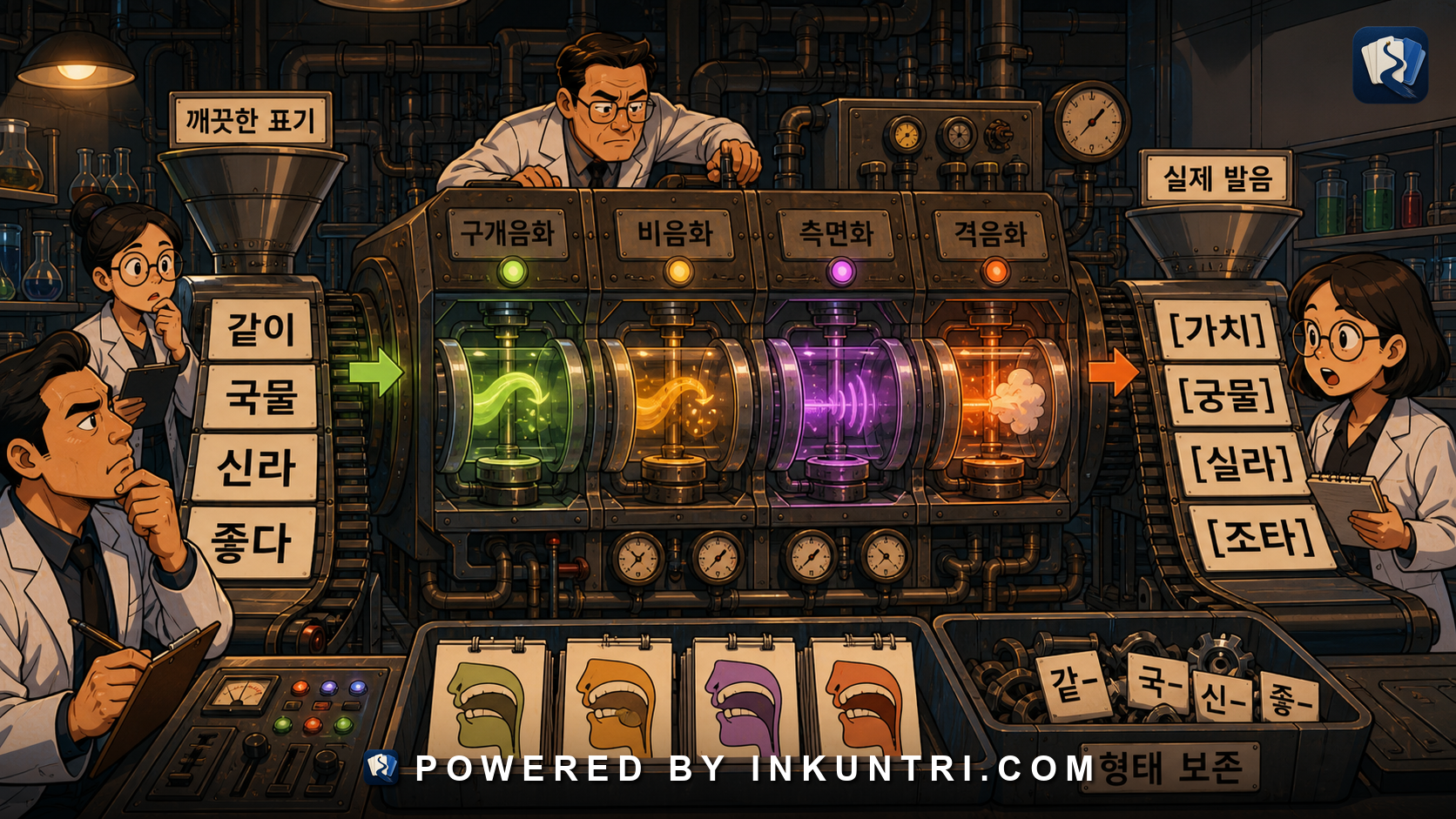
Korean Sound Changes Reflected Poorly in Spelling
The reader can predict when Korean spelling hides surface pronunciation changes and when it preserves morphology instead.
Adverb Placement and Scope in Japanese Sentences
The reader can analyze adverb placement and scope to avoid misreading what a Japanese adverb modifies.
How Japanese Children Move From Kana to Kanji Literacy
The reader can understand how Japanese children acquire literacy from kana fluency through graded kanji, vocabulary, reading, and composition.
How Children Acquire Mandarin Tones
The reader gets a serious but accessible look at tone acquisition and what adult learners can and cannot borrow from child development.
Diplomatic Korean: 회담, 합의, 우려, 협력
The reader can read Korean diplomatic statements by identifying meetings, agreements, concerns, cooperation, bilateral frames, joint statements, discussion, urging, regret, and calibrated stance language.
Education Japanese: 入試, 単位, 学籍, 指導, 評価
The reader can navigate education Japanese through admission, credits, enrollment status, instruction, evaluation, and school administration vocabulary.
The Vocabulary of Japanese Apologies by Severity
The reader can grade Japanese apology vocabulary by severity, responsibility, relationship, and repair action.
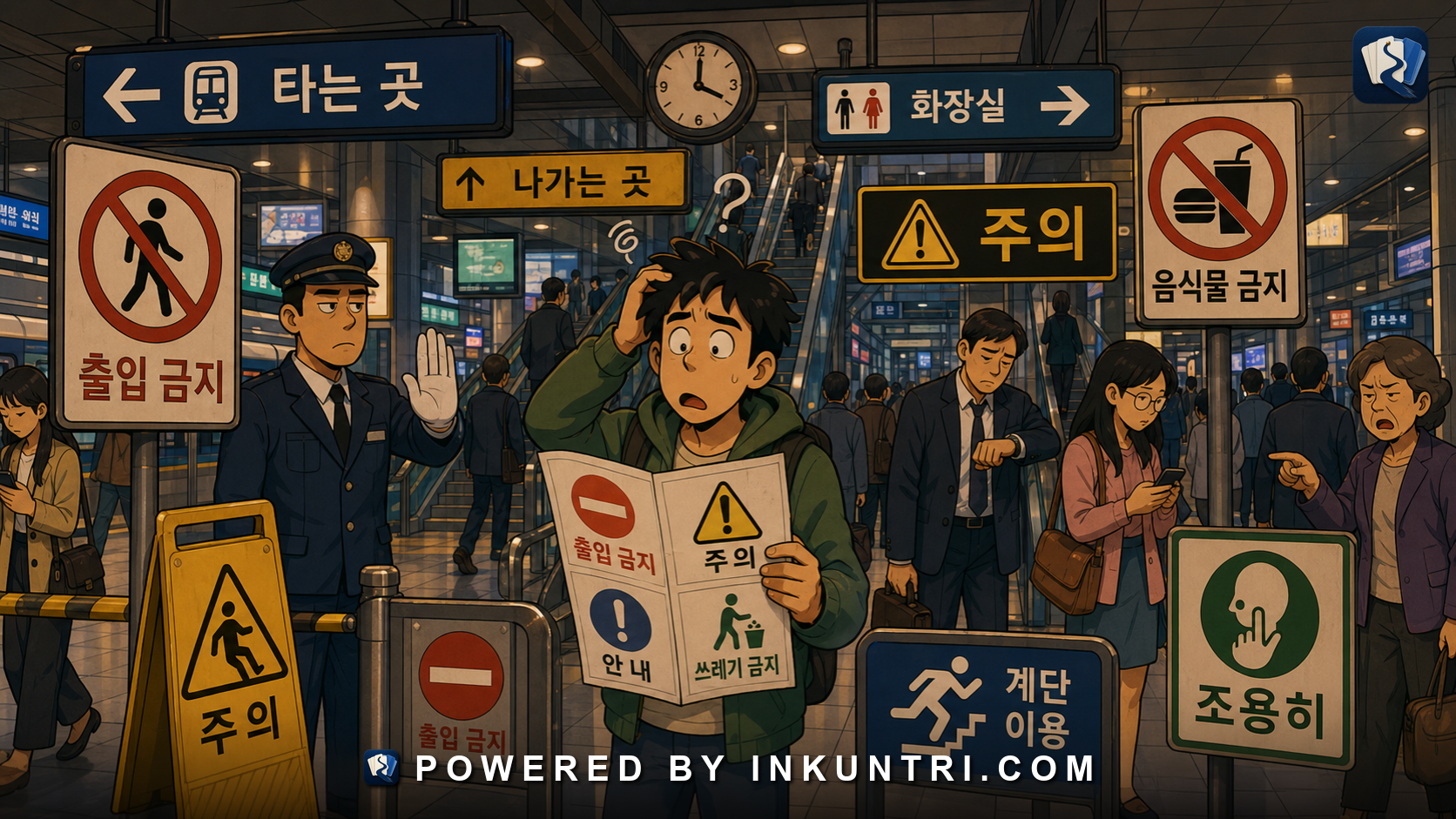
Public-Sign Korean: Prohibitions, Requests, Warnings, and Polite Authority
The reader can read Korean public signs as compressed systems of authority, politeness, safety, and institutional voice.
The Korean Language Under Japanese Colonial Rule
The reader can understand colonial-era language history as schooling, policy, identity, vocabulary, publication, resistance, and post-liberation memory rather than a simple list of loanwords.
Gendered Japanese: History, Media, and Reality
The reader can discuss gendered Japanese historically and critically, separating real patterns from stereotypes and media exaggeration.
成语 for Adults: History, Register, and When Not to Use Them
The reader learns to treat 成语 as register-sensitive cultural vocabulary, not as decorative proof of fluency.
Coverbs or Prepositions? 把, 被, 给, 在, 从, 对, 跟, and 向
The reader understands why Mandarin “prepositions” often behave historically and structurally like verbs.
Internet Slang Built From Homophones: 666, 88, xswl, and Beyond
The reader understands how Chinese internet slang exploits sound, numbers, initials, tone, and platform culture while learning to use it cautiously.
Gaming Japanese: UI, Patch Notes, Gacha, and Player Feedback
The reader can read Japanese gaming language in UI, patch notes, gacha announcements, balance changes, and player feedback.
Why Japanese Keigo and Korean Honorifics Feel Related but Work Differently
The reader can compare Japanese keigo and Korean honorifics as related-looking social systems with different grammar, scope, and everyday expectations.
How Korean Builds Long Sentences Without Losing the Reader
The reader can parse long Korean sentences by tracking modifiers, clause chains, quotation frames, topic continuity, and the final predicate.
Backchanneling: はい, ええ, うん, そうですね as Listening Grammar
The reader can treat backchanneling as listening grammar that keeps Japanese conversation flowing and signals attention without taking the floor.
CJK Translation of Western Concepts: Nation, Society, Science, Rights
The reader can understand modern Korean intellectual vocabulary as part of a broader East Asian translation history while still checking Korean-specific usage.
Translationese Korean: Spotting English-Shaped Sentences
The reader can spot Korean that is grammatical but shaped too strongly by English syntax, especially in learner writing, weak translation, corporate documents, and policy prose.
Mandarin Travel Vlogs: Informal Speech and Place Branding
The reader can understand Chinese travel-vlog language, including informal narration, recommendation formulas, influencer phrasing, and place-branding clichés.
Fraud Warning Japanese: 特殊詐欺, 不審メール, 注意喚起
The reader can identify Japanese fraud-warning language in official notices, emails, texts, bank alerts, and public-safety announcements.
Chinese Press Releases: Formula, Flattery, and Strategic Vagueness
The reader can recognize the formulaic structure and rhetorical habits of Chinese press releases from companies, institutions, and local governments.
Location and Direction: 에, 에서, 으로, 까지, 부터
The reader can distinguish Korean particles that mark location, destination, source, route, endpoint, starting point, time frame, and process direction.
Building a Personal Pitch-Accent Notebook
The reader can build a personal pitch-accent notebook that is useful for speaking, listening, and review rather than a graveyard of dictionary labels.
Chinese Company Registration Language: 法人, 股东, 章程, and 营业执照
The reader can recognize the vocabulary and document logic of company registration, corporate identity, and business licensing in Chinese.
Reading Temple, Palace, and Heritage-Site Signs
The reader can read Korean heritage-site signs as a mix of visitor instruction, historical explanation, preservation language, and religious/court vocabulary.
The Phonetics of Korean Apology: 미안합니다, 죄송합니다, 실례합니다
The reader can hear Korean apology phrases through phonetics, register, and social weight.
Political Vocabulary: 稳, 治, 发展, 生态, 共同体
The reader can identify key political morphemes and understand how they build policy language, slogans, and official framing.
Creating Domain-Specific Chinese Glossaries From Source Texts
The reader can build Chinese glossaries for specific domains by extracting terms from real documents, defining them from context, and organizing them for reuse.
How Mandarin Builds Long Sentences Without Case Marking
The reader learns how Mandarin uses word order, topic structure, modifiers, particles, and discourse context to build long sentences without case endings.

What Chinese Children’s Readers Teach About Literacy Progression
The reader understands how graded children’s materials sequence characters, vocabulary, pinyin support, syntax, and cultural content.
How Japanese Uses Lists, Parallelism, and Nominal Endings
The reader can interpret Japanese list structures, parallel phrasing, and nominal endings in formal prose without losing the sentence thread.
Potential Forms: Ability, Permission, and Inherent Possibility
The reader can distinguish ability, permission, availability, and inherent possibility in Japanese potential expressions.
How to Compare Mainland, Taiwan, and Diaspora Usage Responsibly
The reader can compare Mainland, Taiwan, Hong Kong, Singapore, and diaspora Chinese usage without collapsing everything into “same Chinese” or exaggerating difference.
Pronoun Avoidance and Person Reference in Korean
The reader can avoid overusing Korean pronouns by using names, titles, kinship terms, roles, and omission appropriately.
Money Talk in Korean: Directness, Indirection, and Social Boundary
The reader can recognize when Korean money talk is ordinary, intrusive, playful, transactional, or relationship-defining.
Chinese Table Manners Through Verbs of Serving and Sharing
The reader can understand table manners in Mandarin through the verbs people use to serve, offer, share, refuse, toast, and care for others at a meal.
Supply Chain Japanese: 調達, 在庫, 納期, 検品
The reader can understand Japanese supply-chain language around procurement, inventory, delivery dates, inspection, shortages, and coordination.
Voice, Gender, and Persona in Japanese Media Speech
The reader can analyze voice, gender, and persona in Japanese media speech without reducing real speakers to stereotypes.
Potential Complements: 能, 会, 可以, 得, and 不得 Compared
The reader distinguishes general ability/permission from verb-specific possibility expressed through potential complements.
Documentary Narration in Korean: Authority and Emotion
The reader can understand how Korean documentary narration builds authority, empathy, suspense, and moral framing through grammar and voice.
を, に, で, へ, と: Case Particles as Event Architecture
The reader can read Japanese case particles as an event architecture system rather than a list of English preposition equivalents.
Building a Tri-Language Hanja/Kanji/Hanzi Cognate Map
The reader can build a Korean-centered cognate map across Hanja, Japanese kanji, and Chinese hanzi while tracking character form, reading, meaning, register, drift, and usefulness.
Childcare and School Communication in Mandarin
The reader can understand common Mandarin communication among teachers, parents, caregivers, and schools, especially notices, group chats, forms, routine logistics, and soft criticism.
The Language of Japanese Neighborhood Associations
The reader can read the language of Japanese neighborhood associations as local governance, cooperation, obligation, and community identity.
Casual Contractions: ている to てる, じゃない to じゃん, and More
The reader can recognize common casual contractions and understand their grammar, register, and social boundaries.
Using Speech Recognition Critically for Mandarin Pronunciation Practice
The reader learns to use speech recognition as one feedback signal without mistaking it for a pronunciation teacher.
Japanese Lab Safety Language: 危険物, 保護具, 廃棄, 点検
The reader can read Japanese lab-safety language around hazards, protective equipment, waste handling, inspections, emergency procedures, and responsibility.
Japanese Etiquette Phrases That Sound Natural Only in Context
The reader can use common Japanese etiquette phrases only in the contexts where they sound natural, avoiding overuse, mismatch, and textbook stiffness.
Information Structure: 新信息, 旧信息, Focus, and Emphasis
The reader understands how Mandarin organizes old information, new information, focus, and emphasis through word order and particles.
Singapore Chinese, Multilingualism, and the Role of 华语
The reader understands Singapore Mandarin/华语 as part of a multilingual society shaped by English, Malay, Tamil, and southern Chinese languages.
How Korean Speakers Soften Disagreement Prosodically
The reader can notice how Korean speakers soften disagreement with prosody, hedging, pacing, and indirect phrasing.
How to Use Japanese Corpora Without Mistaking Frequency for Importance
The reader can use Japanese corpora responsibly by distinguishing frequency, distribution, register, genre, collocation, learner usefulness, and curricular importance.
How Chinese Dramas Teach Register, Not Just Romance
The reader can use Chinese dramas to study register, role, genre, and social positioning rather than simply mining romantic lines or isolated vocabulary.
Tatemae and Honne as Language Practices, Not Slogans
The reader can analyze 建前 and 本音 as discourse practices rather than simplistic labels for Japanese sincerity or insincerity.
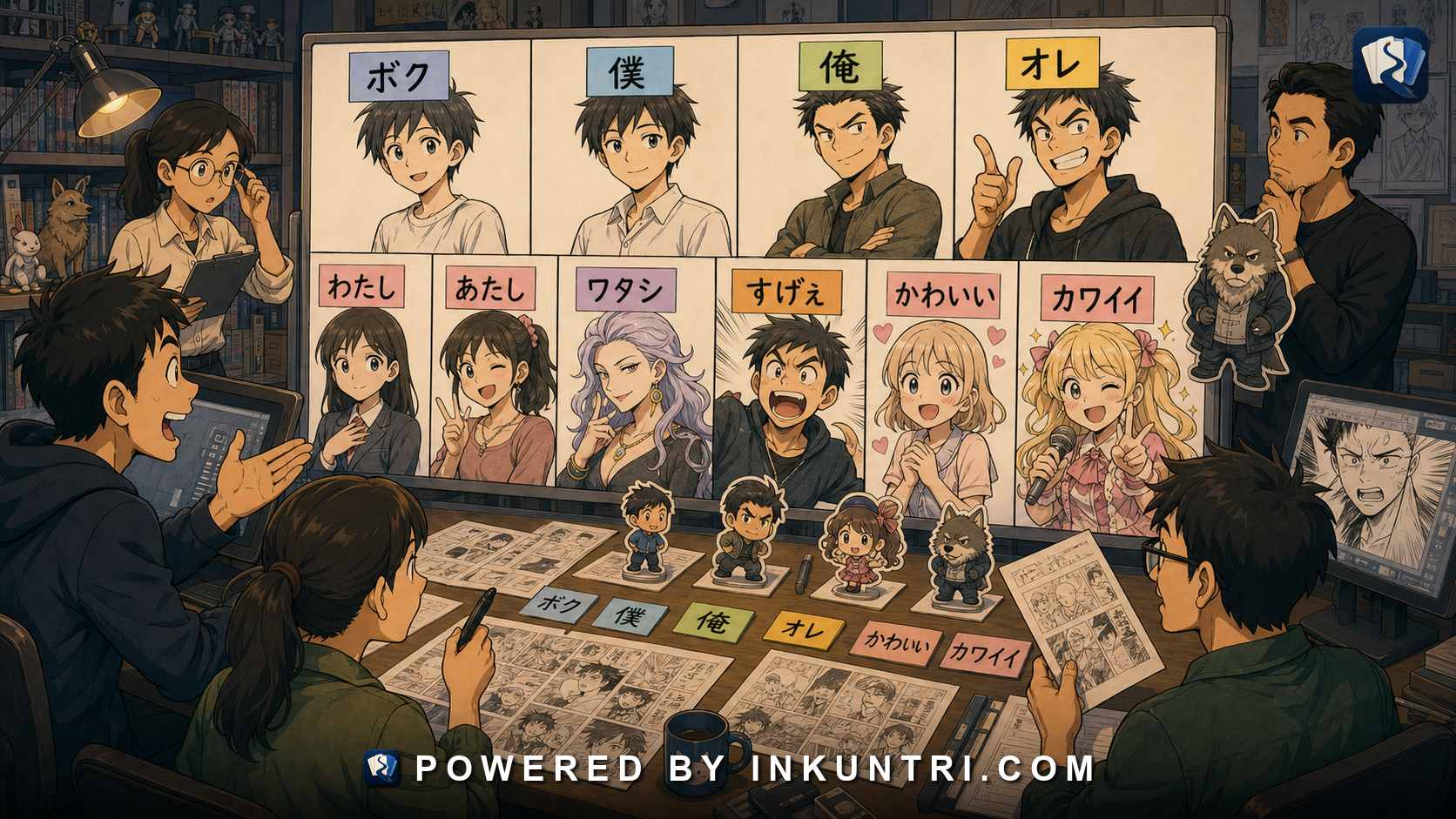
How Manga Uses Script Choice to Signal Voice
The reader can analyze how manga uses script choice to signal age, class, species, accent, emotion, artificiality, or character persona.
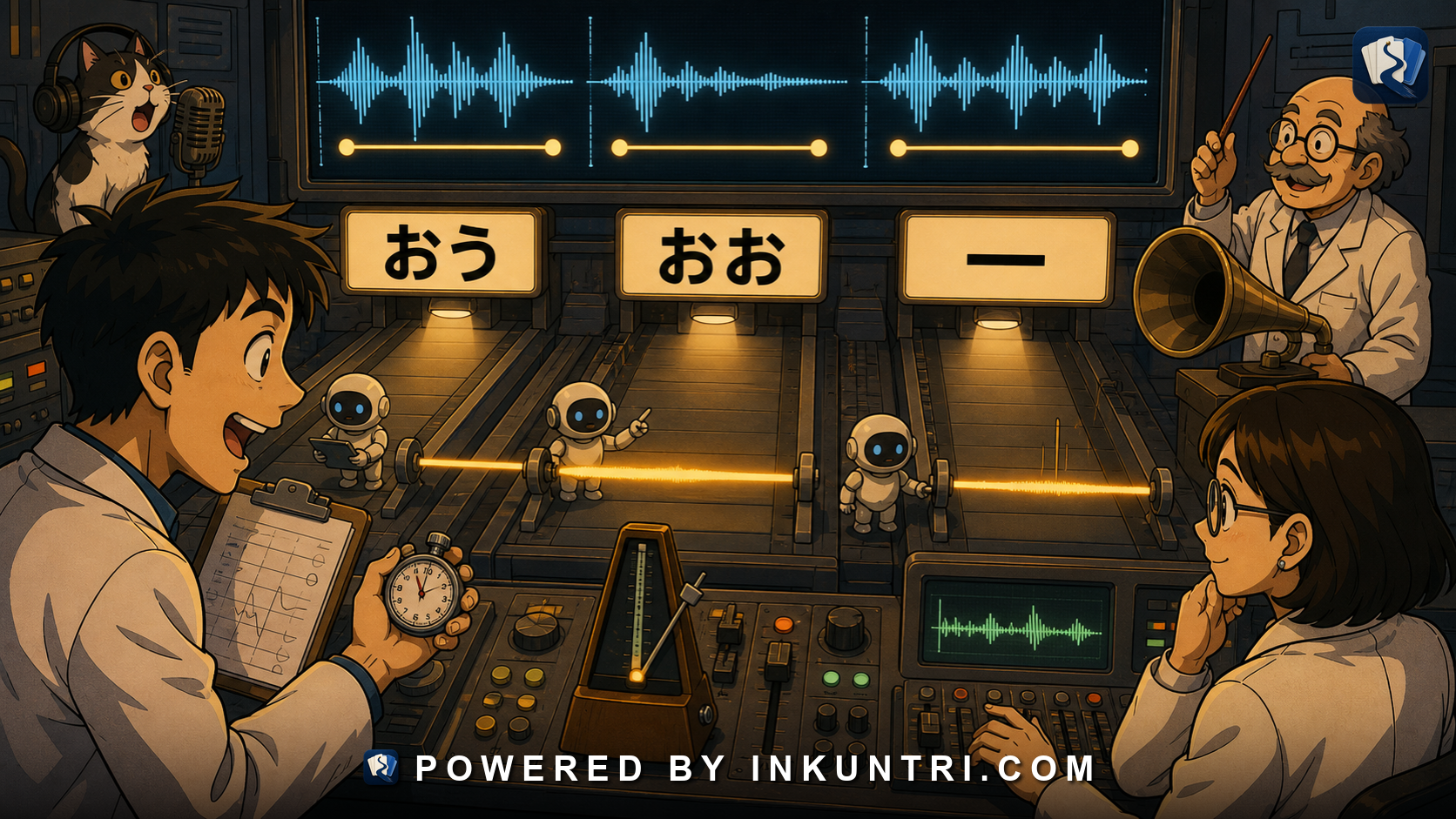
Long Vowels in Kana: おう, おお, ー, and Romanization Trouble
The reader can read and pronounce long vowels by distinguishing kana spelling, romanization, katakana length marks, and actual mora timing.
How Korean Dramas Teach Register and Social Role
The reader can use Korean dramas as register evidence while avoiding the mistake of copying stylized dialogue as ordinary speech.
When a Korean Word Has Native and Sino-Korean Alternatives
The reader can choose between Korean near-synonyms such as 나이/연령, 이름/성명, 집/주택, 몸/신체, 말/언어, 도움/지원, and 아픔/통증 by register, domain, collocation, and emotional distance.
Onomatopoeia and Sound Symbolism in Spoken Japanese
The reader can use Japanese onomatopoeia and sound symbolism as a serious vocabulary system for sound, texture, emotion, motion, and state.
The Language of Housing in Korea: 전세, 월세, 내 집 마련
The reader can understand Korean housing vocabulary across ads, news, contracts, family conversations, and policy discourse.
How to Track Mandarin Listening Progress With Real Audio
The reader can measure Mandarin listening progress using real audio, transcripts, dictation, shadowing, comprehension logs, and targeted diagnosis.
Mandarin Conditionals: 如果, 要是, 只要, 除非, and 即使
The reader can distinguish ordinary conditions, casual hypotheticals, sufficient conditions, exceptions, and concessive conditions.
Restaurant Licensing and Inspection Language in China
The reader can interpret restaurant licensing, food-service permits, inspection results, and public hygiene notices in Chinese.
Using Speech Recognition Carefully for Japanese Pronunciation
The reader can use speech-recognition tools for Japanese pronunciation practice without mistaking their scores for linguistic truth.
How Mandarin Speakers Reduce Syllables in Fast Speech
The reader understands that natural Mandarin speech reduces syllables, particles, and common words without becoming “incorrect.”
Nominalization With の and こと
The reader can distinguish の and こと nominalization by function, register, concreteness, and sentence pattern.
Korean Drama Speech vs Real Conversation
The reader can use Korean drama speech as a learning resource while separating scripted convention from ordinary conversation.
Evidential and Experiential Korean: 더라, 더라고요, 봤다
The reader can understand 더라 and 더라고요 as Korean tools for reporting personal discovery, memory, or witnessed evidence.
The 的 System: Possession, Modification, Nominalization, and Emphasis
The reader sees 的 as a family of related structures rather than a single “possessive particle.”
Past Tense, Perfect, and Result State in Korean
The reader can separate Korean past tense from perfect meaning, experiential memory, and resulting state.
Sentence-Final 吧, 啊, 呢, 了, and 的 in Conversation
The reader understands major sentence-final particles as stance markers that shape conversation, certainty, softness, and shared context.
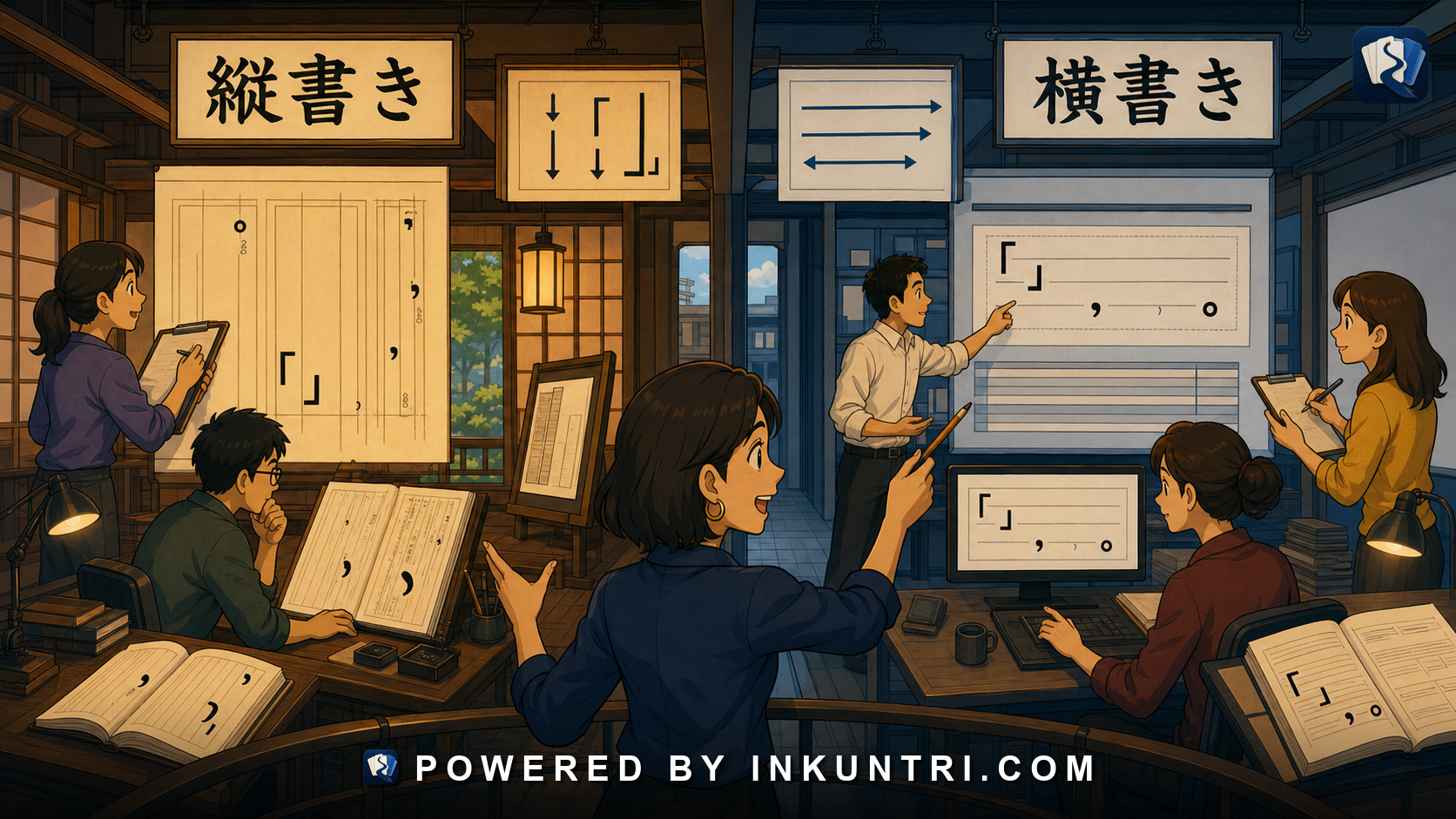
Vertical Writing, Horizontal Writing, and What Layout Changes
The reader can understand how vertical and horizontal layout affect punctuation, line breaking, emphasis, numbers, and reading experience.
Standard Korean, Seoul Speech, and the Politics of “Correct” Korean
The reader can distinguish Standard Korean from actual Seoul speech and understand why “correct Korean” is institutional, social, and linguistic at once.
Chinese Internet Humor as Linguistic Compression
The reader can understand Chinese internet humor as a system of compression, quotation, rhythm, homophones, stance-taking, and shared cultural context.
Pronunciation Problems That Survive Advanced Korean Study
The reader can diagnose advanced Korean pronunciation problems that remain after basic Hangul and sound-change study.
Taiwan Mandarin Pronunciation: Common Differences Learners Actually Hear
The reader recognizes common Taiwan Mandarin pronunciation patterns and understands how they affect listening, not just accent labels.
Transitive and Intransitive Pairs as Event Framing
The reader can use transitive and intransitive verb pairs to understand how Japanese frames events, agency, and responsibility.
Funeral Korean and the Language of Avoidance
The reader can understand Korean funeral notices and condolence language while respecting avoidance, understatement, and register constraints.

Hangul as a Scientific Script: What That Claim Gets Right and Wrong
The reader can separate the real design strengths of Hangul from simplistic claims about perfection or total transparency.
How Japanese News Talks About Youth, Work, and Social Anxiety
The reader can read Japanese news discourse about youth, work, precarity, mental health, and social anxiety without flattening it into stereotypes.
Result Complements as Event Engineering
The reader understands result complements as a core Mandarin way to specify whether an action achieved an outcome.
How Politeness Vocabulary Travels Differently Across the Three Languages
The reader understands why Chinese, Japanese, and Korean politeness cannot be compared only through shared formal vocabulary.
Diplomatic Japanese: 会談, 合意, 懸念, 協力
The reader can read Japanese diplomatic language around meetings, agreements, concerns, cooperation, statements, and careful disagreement.
How Korean Politeness Sounds, Not Just What It Says
The reader can hear politeness as a sound pattern involving pace, pitch, endings, and hesitation, not just vocabulary choice.
Chinese Military News Vocabulary: 演训, 装备, 战区, 舰艇
The reader can read Chinese military-news language with attention to official terminology, euphemism, geography, equipment categories, and formulaic phrasing.
Pharmaceutical Labels in Japanese: 効能, 用法, 禁忌, 副作用
The reader can read Japanese pharmaceutical labels and identify intended effect, dosage, contraindications, side effects, and warning hierarchy.
Korean Connective Endings as Clause Chaining
The reader can read Korean connective endings as clause-chaining tools that organize time, cause, contrast, sequence, and stance.
Old Chinese, Middle Chinese, and Modern Mandarin: What Learners Actually Need to Know
The reader understands the broad historical layers behind Mandarin without getting buried in specialist reconstruction details.
The Grammar of Chinese Legal Obligations: 应当, 必须, 可以, 不得
The reader can distinguish duty, necessity, permission, authorization, prohibition, and recommendation in legal and regulatory Chinese.
Korean Dialects in Media: Comedy, Authenticity, and Stereotype
The reader can recognize what regional speech is doing in Korean media without treating it as merely “funny accent” or transparent evidence of real local speech.
Regional Pitch Accent: Kansai, Tōhoku, Kyūshū, and Beyond
The reader can understand regional pitch accent as real linguistic structure while avoiding the idea that Tokyo accent equals all Japanese.
Location Phrases: 在, 到, 从, 往, and the Shape of Movement
The reader can distinguish location, source, destination, direction, route, and endpoint instead of translating every phrase as “at,” “to,” or “from.”
Money Talk in Chinese: Directness, Euphemism, and Social Boundary
The reader can recognize when Chinese money talk is direct, indirect, joking, taboo, face-saving, transactional, or relational.
When to Use Machine Translation for Chinese and When to Distrust It
The reader can use machine translation as a support tool for Chinese while detecting common failures in syntax, register, named entities, idioms, domain terms, and cultural context.
Building Korean Vocabulary by Register Instead of Frequency Alone
The reader can organize Korean vocabulary by word family, register, domain, collocation, and source type rather than relying on flat frequency lists.
How Japanese Encodes Social Distance Without Explaining It
The reader can notice how Japanese encodes social distance through address, verb choice, politeness level, topic management, omission, and indirectness.
How to Compare Tokyo, Kansai, and Regional Usage Responsibly
The reader can compare Tokyo, Kansai, and regional Japanese usage without overgeneralizing from stereotypes, jokes, or one speaker’s habits.
Money Talk in Japanese: Directness, Indirection, and Taboo
The reader can understand how Japanese handles money talk across salary, splitting bills, gifts, pricing, debt, discounts, and socially delicate questions.
How Korean Encodes Social Distance Without Explaining It
The reader can notice social distance in pronouns, titles, speech levels, request forms, omissions, and topic choices rather than treating politeness as a simple suffix list.
Comparatives in Korean: 보다, 만큼, 제일, 더
The reader can parse Korean comparison in reviews, charts, news statistics, product pages, and everyday evaluation.
Directional Complements and Spatial Imagination in Chinese
The reader can parse basic and extended directional complements as movement, perspective, and metaphor.
Native Korean, Sino-Korean, and Loanwords: Three Layers of Vocabulary
The reader can classify Korean vocabulary by layer and understand how layer affects register, collocation, domain, and emotional tone.
Korean Topic and Subject After 은/는 vs 이/가
The reader can use 은/는 and 이/가 as information-structure tools rather than memorizing them as simple topic versus subject labels.
Why Korean Honorifics and Japanese Keigo Feel Related but Work Differently
The reader can compare Korean honorifics and Japanese keigo by role, grammar, and relationship without assuming a one-to-one mapping.
Vowels That Devoice: です, ます, and Everyday Speech
The reader can notice vowel devoicing in common environments and use it to understand why natural です and ます differ from textbook spelling.
Questions Beyond 네/아니요: Wh-Questions, Rhetorical Questions, and Confirmation
The reader can read and ask Korean questions beyond yes/no formats, including wh-questions, rhetorical questions, and confirmation checks.
Negation Systems: 不, 没, 别, 非, 无, and 未
The reader learns to choose Mandarin negation markers by aspect, modality, register, and genre.
Police and Incident Korean: 신고, 진술, 증거, 수사
The reader can approach Korean police and incident language by identifying reporting, statements, evidence, investigation, suspects, victims, witnesses, complaints, arrests, and the difference between official status...
What Serious Korea-Philes Should Learn From One Subway Announcement
The reader can treat one Korean subway announcement as a compact lesson in public language, politeness, accessibility, safety, urban geography, and repeated listening.
The Language of Chinese Regional Pride
The reader can understand how Mandarin expresses regional identity, hometown pride, local stereotypes, regional rivalry, and belonging.
What Korean Learners Should Know About North-South Terminology
The reader can compare North and South Korean terminology without turning division into novelty, caricature, or overconfident equivalence lists.

Email Japanese: Formatting, Openings, Closings, and Line Breaks
The reader can write and read Japanese email by understanding formulaic openings, closings, line breaks, signatures, and politeness expectations.
Korean Word Order Flexibility and Its Limits
The reader can understand Korean word-order flexibility while respecting the limits created by particles, information structure, and processing.
Korean Intonation in Questions, Requests, and Complaints
The reader can hear Korean intonation as discourse meaning: question, request, complaint, confirmation, surprise, or softening.
Museum Japanese: 展示解説, 文化財, 所蔵, 修復
The reader can read Japanese museum language around exhibition commentary, cultural property, collection, restoration, and curatorial framing.
Mandarin in the Chinese Diaspora: Identity, Education, and Code-Switching
The reader understands how Mandarin functions differently across overseas Chinese communities, heritage education, migration histories, and multilingual environments.
Cloud Computing Mandarin: 云服务, 容器, 数据库, 部署
The reader can understand Chinese cloud-computing vocabulary in product pages, documentation, architecture diagrams, and technical support articles.
Titles and Suffixes: 씨, 님, 선생님, 선배, 팀장
The reader can choose and interpret Korean address terms by role, relationship, institution, and register rather than relying on one-size-fits-all politeness rules.
Mandarin, Cantonese, Shanghainese, Hokkien: Language, Variety, and Politics
The reader gains a respectful and accurate framework for discussing Sinitic languages and the politics of calling them “dialects.”
Japanese App Permission Language: 位置情報, 通知, 連携, 解除
The reader can understand Japanese app-permission and privacy-interface language around location, notifications, account linking, data sharing, consent, and cancellation.
た as Past, Completion, Discovery, and Narrative Anchor
The reader can interpret た beyond simple past tense: completion, discovery, change of state, confirmation, and narrative anchoring.
The Grammar of Japanese Legal Obligations: しなければならない, してはならない, できる
The reader can parse Japanese legal obligation and permission language as a system of duty, prohibition, discretion, and legal effect.
Pronoun Avoidance and Person Reference in Japanese
The reader can choose and interpret person reference in Japanese through names, titles, roles, kinship terms, and avoided pronouns.
Kanji, Hanzi, and Hanja: Same Characters, Different Languages
The reader can compare kanji, hanzi, and hanja as shared character heritage with different readings, reforms, literacy roles, and cultural meanings.
How Beijing Accent Differs From Standard Classroom Mandarin
The reader can distinguish Beijing-accent features from standard Putonghua expectations and avoid overgeneralizing Beijing speech as “the standard.”
逆接 Grammar: が, けど, のに, ても, ところが
The reader can distinguish Japanese adversative connectors by contrast type, expectation, register, and discourse function instead of translating all of them as “but.”
How to Compare Seoul, Regional, and North-South Usage Responsibly
The reader can compare Korean usage varieties without turning difference into stereotype, superiority, or unsupported anecdote.
Time Words in Mandarin: When Time Comes Before the Verb
The reader can place time expressions naturally in Mandarin sentences and understand how time anchors discourse.
Traditional Chinese Medicine Vocabulary for Skeptical Learners
The reader can understand traditional Chinese medicine vocabulary as language and cultural discourse while maintaining clear boundaries between terminology, belief system, and evidence.
Korean Homographs in Hangul: Why Context Does the Work
The reader can use context to resolve Hangul homographs that share spelling but differ in meaning or origin.
Japanese Memes, Net Slang, and Polite Hostility Online
The reader can recognize Japanese net slang and polite hostility online, including sarcasm, veiled criticism, quote-posting, and register manipulation.
Supply Chain Korean: 조달, 재고, 납기, 검수
The reader can approach Korean supply-chain emails, reports, and warehouse statuses by identifying procurement, inventory, lead time, delivery deadlines, inspection, purchase orders, inbound/outbound flow, delay...
Translationese Japanese: Spotting English-Shaped Sentences
The reader can spot English-shaped Japanese and revise it toward native Japanese information flow, collocation, and register.
Literary Chinese in Today’s Signs, Names, and Slogans
The reader can spot literary or classical-style language embedded in modern public Chinese.
The Korean Passive: 되다, 지다, 이/히/리/기, and Translation Traps
The reader can read Korean passive constructions without forcing them into English passive patterns.
Academic Paper Chinese: 摘要, 研究方法, 结果, 讨论
The reader can read the structure and recurring language of Chinese academic papers across abstracts, methods, results, and discussion sections.
How Chinese Public Announcements Sound Authoritative
The reader can identify the lexical and grammatical features that make Chinese announcements sound official, authoritative, and action-oriented.
Korean as a Global Language: K-Culture, Study, and Soft Power
The reader can distinguish entertainment exposure, formal study, heritage identity, institutional promotion, exams, and cultural diplomacy in global Korean.
The ㅢ Problem: Standard, Casual, and Regional Pronunciations
The reader can handle ㅢ across standard, casual, and regional pronunciation contexts.
Discourse Markers: 사실, 물론, 아무튼, 그러니까, 그런데
The reader can interpret Korean discourse markers as tools for steering thought, not filler words.
How Chinese Documentary Narration Builds Authority
The reader can identify the linguistic techniques Chinese documentary narration uses to sound authoritative, historical, scientific, humane, or national in scope.
How Mandarin Handles Compliments and Denials
The reader can interpret compliment responses in Mandarin, including denial, deflection, modest acceptance, reciprocal praise, and playful exaggeration.
How Japanese Dramas Teach Register and Social Role
The reader can use Japanese dramas as register laboratories by tracking role, hierarchy, intimacy, conflict, and genre exaggeration.
Gaming Chinese: UI, Patch Notes, Player Complaints, and Esports
The reader can understand Chinese gaming language across UI labels, patch notes, player forums, bug reports, and esports commentary.
The Grammar of Korean Polite Refusal
The reader can interpret and produce Korean refusal language that protects relationship, avoids overpromising, and matches the burden of the request.
A Research Stack for Chinese Learners: Dictionaries, Corpora, Standards, and Archives
The reader can assemble a serious Chinese research stack for verifying words, usage, standards, historical context, public documents, and domain terminology.
Gendered Language Debates in Modern Chinese
The reader understands how Chinese debates gender through characters, pronouns, address terms, professional titles, and internet discourse.
How to Parse One Long Japanese Sentence Without Panic
The reader can parse long Japanese sentences by identifying clause boundaries, modifiers, nominal heads, connectors, and the final predicate.
How to Parse a Dense Chinese Sentence Step by Step
The reader gains a reusable procedure for attacking long Mandarin sentences in news, essays, policy, and academic prose.
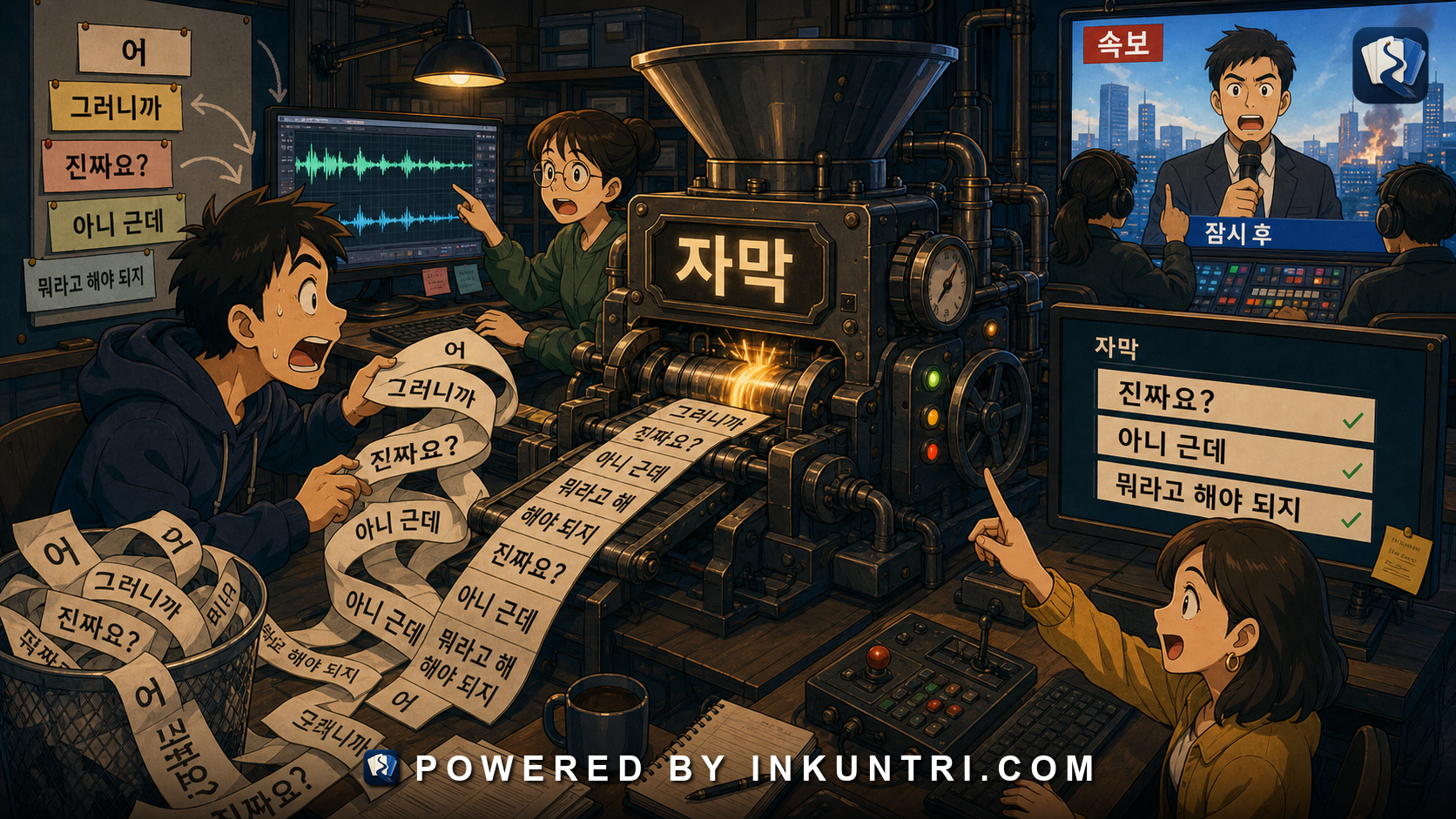
How Korean Subtitles Compress Fast Speech
The reader can see how Korean subtitles compress fast speech while preserving enough grammar and discourse for viewers.
How Hangul Was Created and Why It Took Centuries to Dominate
The reader understands Hangul as both a brilliant script design and a social history of adoption, prestige, education, and standardization.
The Social Life of English in Modern Korea
The reader can analyze English in Korean as status, expertise, branding, education, humor, and anxiety—not merely vocabulary borrowing.
Buddhist Vocabulary Across Korean, Chinese, and Japanese
The reader can compare Buddhist vocabulary across Korean, Chinese, and Japanese while distinguishing doctrine, temple language, history, and everyday idiom.
Workplace Mandarin: Meetings, Minutes, Deliverables, and Alignment
The reader can understand Mandarin workplace language around meetings, minutes, responsibilities, timelines, deliverables, and “alignment.”
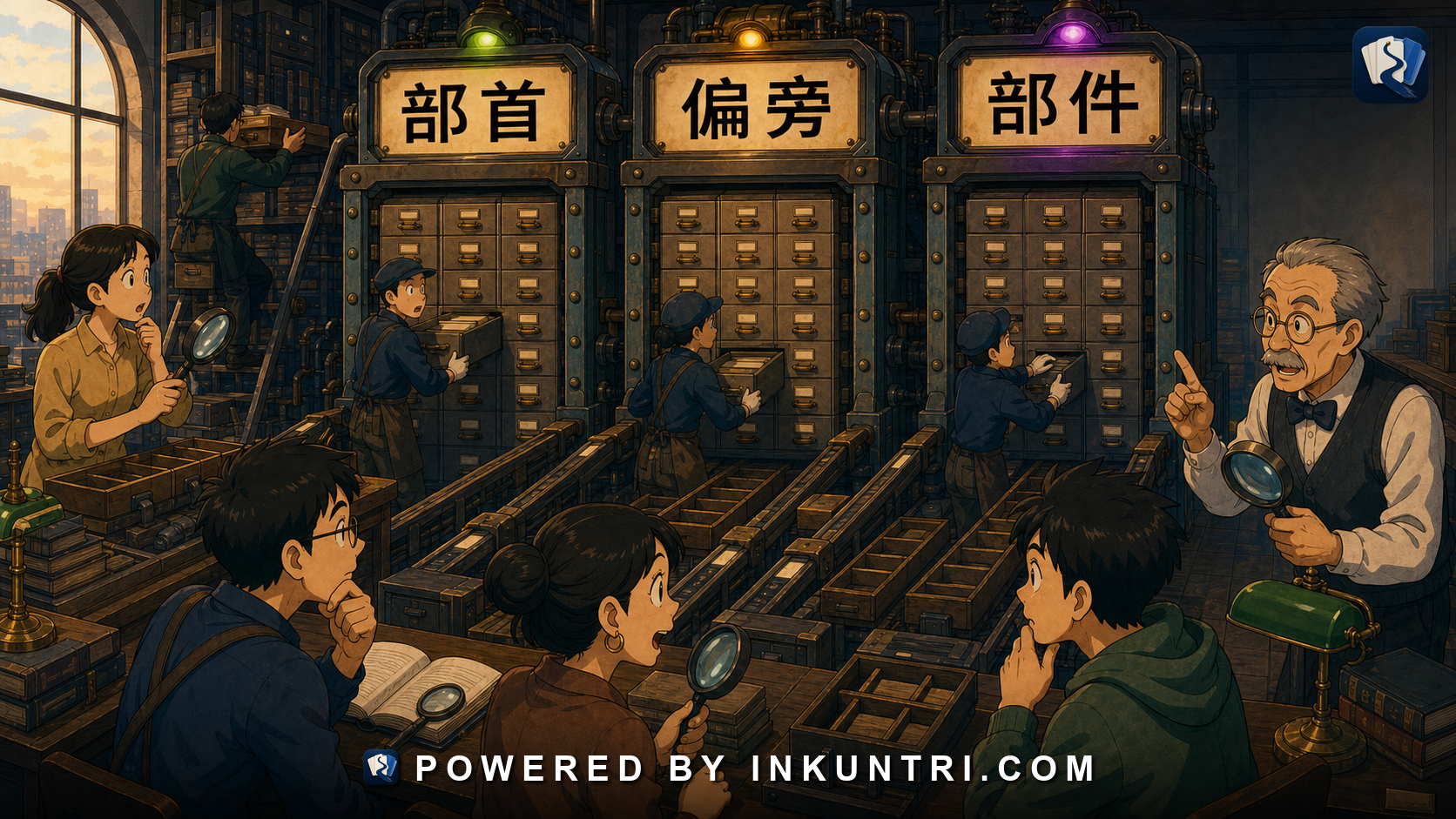
The Real Work of 部首 in Reading, Lookup, and Education
The reader learns that 部首 are not simply “meaning parts” and sees how radicals function in dictionaries, schooling, and learner memory.
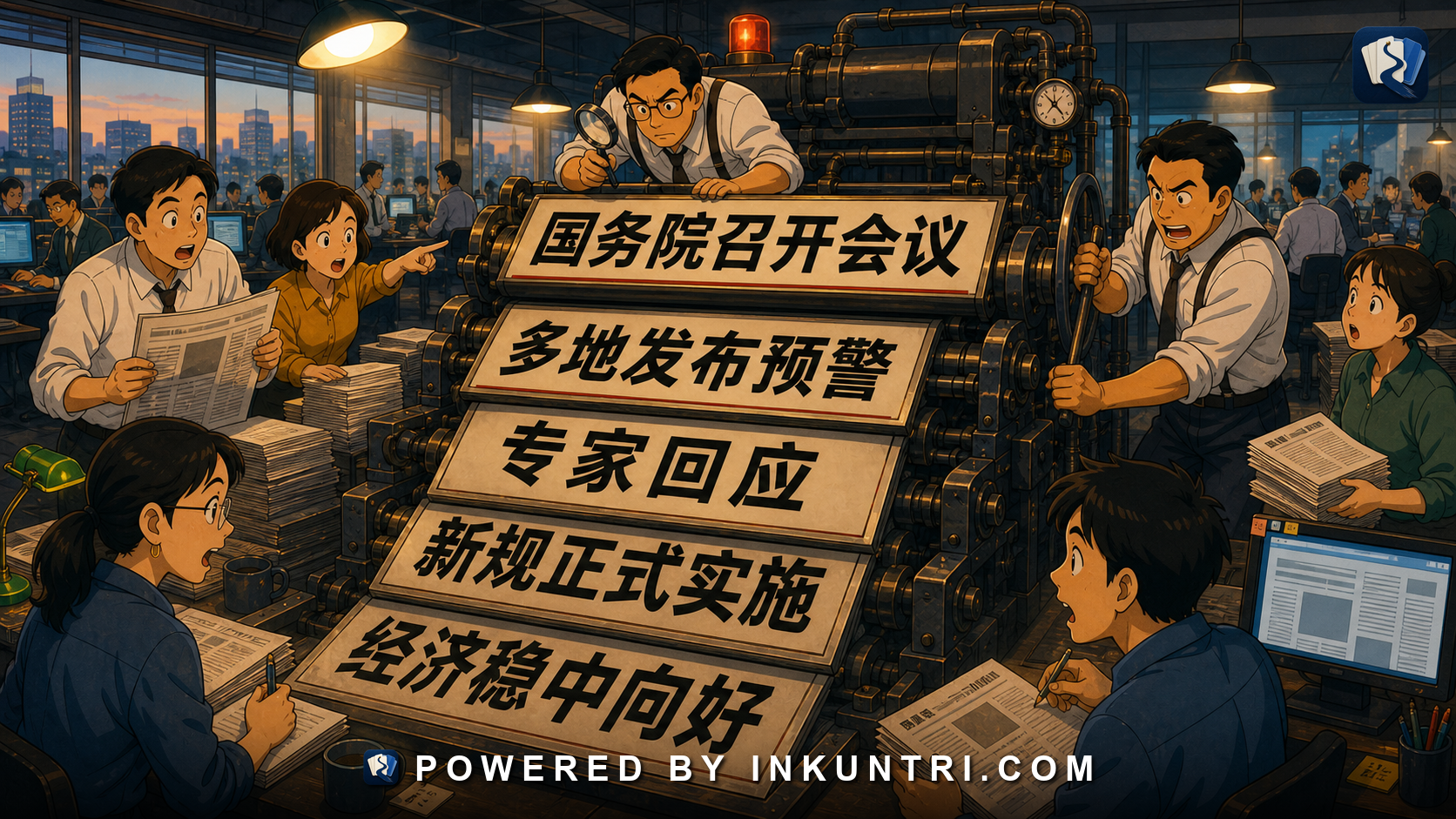
The Typography of Chinese News Headlines
The reader learns how Chinese headlines compress grammar, highlight actors, and use layout conventions differently from body text.
Speech Rate and Pausing in Korean Presentations
The reader can control speech rate and pausing for Korean presentations and formal explanations.
Giving and Receiving: 주다, 드리다, 받다 as Perspective Grammar
The reader can use 주다, 드리다, 받다, and related forms as perspective grammar, not only transfer verbs.
Listening to Kansai Japanese Without Turning It Into a Stereotype
The reader can listen to Kansai Japanese as a living regional variety rather than a bundle of comedy stereotypes.
Adjectives as Predicates: い-Adjectives and な-Adjectives
The reader can analyze い-adjectives and な-adjectives as predicate systems, not merely as word lists before nouns.
Classical Chinese Literacy in Korea and Its Modern Afterlife
The reader can recognize how Classical Chinese literacy shaped Korean formal vocabulary, names, documents, scholarship, and cultural memory without reducing Korean to Chinese.
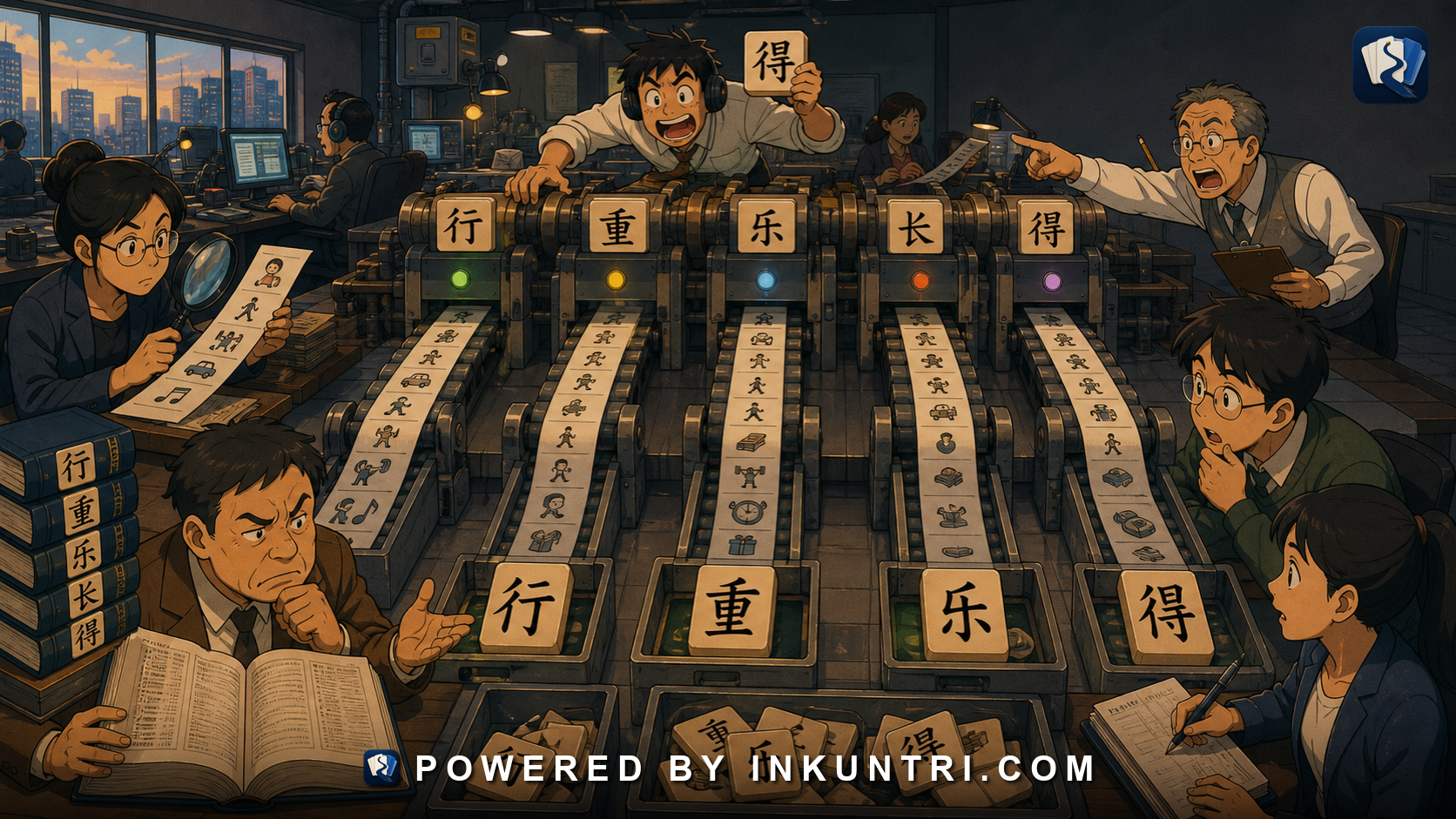
Polyphonic Characters in Real Sentences: 行, 重, 乐, 长, and Beyond
The reader can use sentence context to disambiguate common polyphonic characters in authentic reading.
Building a Cross-CJK Cognate Deck Without Teaching Yourself Errors
The reader can build a Chinese-Japanese-Korean vocabulary comparison system that captures useful cognates without reinforcing false friends or fake equivalences.
Housing Policy Mandarin: 保障房, 商品房, 公积金, 限购
The reader can understand Chinese housing-policy language in news, government notices, and real estate commentary.
Cloud Computing Korean: 클라우드, 컨테이너, 배포, 모니터링
The reader can approach Korean cloud-computing documents by identifying cloud services, containers, deployment, monitoring, instances, regions, scaling, logs, and failures.
Liaison in Korean: When Final Consonants Move Forward
The reader can predict liaison when final consonants move into a following vowel-initial syllable.
How to Read Linguistics Papers About Japanese Without Drowning
The reader can approach linguistics papers about Japanese by identifying research question, data, terminology, argument structure, examples, and what matters for language learning.
The Vocabulary of Korean Apologies by Severity
The reader can select apology language by severity, relationship, responsibility, and repair obligation instead of memorizing one “sorry” phrase.
How Korean Schooling Shapes Standard Speech
The reader can see school Korean as an institutionally trained norm involving pronunciation, spelling, public speaking, honorifics, and correctness.
被, 让, 叫, and 给: Passive, Causative, and Blame Framing
The reader learns how Mandarin encodes affectedness, agency, responsibility, and misfortune through passive-like constructions.
Indirect Quotation in Korean News and Interviews
The reader can interpret indirect quotation in Korean news and interviews as a way of managing source, stance, and responsibility.
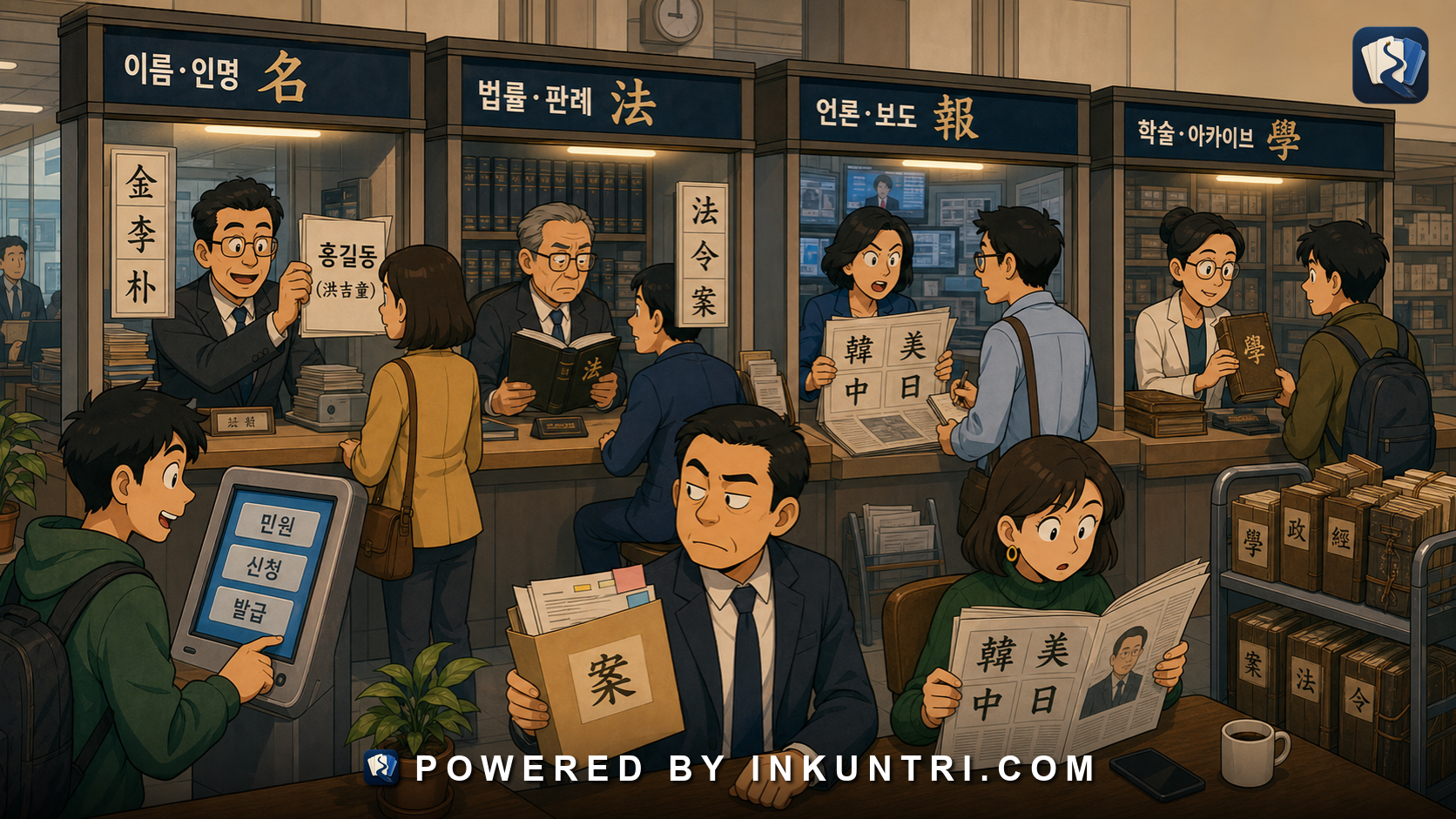
When Hanja Still Appears in Korean Names, Law, News, and Academia
The reader can know where Hanja still matters in modern Korean reading: names, law, news, official documents, scholarship, and archives.
Mandarin Grammar for Data Labels, UI Buttons, and Product Copy
The reader can understand and write compact Chinese for interfaces, product pages, forms, charts, and app copy.
Idioms From Classical Chinese in Modern Japanese
The reader can identify idioms inherited from Classical Chinese and understand why they still shape formal and literary Japanese.
Family Registry Japanese: 戸籍, 住民票, 印鑑証明
The reader can read Japanese family-registry and resident-document language around koseki, resident record, seal certificate, identity, and administrative proof.
Japanese Internet Humor as Script and Register Play
The reader can analyze Japanese internet humor through script choice, register shifts, parody forms, abbreviations, reaction language, and community context.
How Tones Interact With Emotional Speech
The reader understands how Mandarin speakers express emotion while maintaining lexical tone contrasts.
Japanese Pronunciation Self-Diagnosis With Recording and Pitch Models
The reader can self-diagnose Japanese pronunciation using recordings, pitch-accent models, mora timing, vowel devoicing, intonation, and targeted correction.
How Standard Japanese Became Standard
The reader can explain how Standard Japanese became standard through institutions, media, education, and urban prestige.
Gendered Korean: History, Media, and Real Usage
The reader can analyze gendered Korean as usage, ideology, media performance, and interaction rather than a fixed “men’s language vs women’s language” code.
Building a Korean Reader Workflow From News, Essays, Dramas, and Forms
The reader can build a balanced Korean reading workflow that combines polished prose, spoken dialogue, domain documents, and repeatable annotation habits.
Japanese Topic and Focus After は vs が
The reader can analyze は and が as information-structure tools for topic, focus, contrast, and sentence framing.
False Friends Between Korean and Mandarin Sino-Xenic Words
The reader can identify Korean–Mandarin false friends that share character roots but diverge in modern meaning, collocation, or register.
Japanese School Language and the Formation of Standard Speech
The reader can see how school language participates in forming standard speech, literacy norms, and social behavior.
なら, と, ば, たら: Four Conditional Logics
The reader can choose among なら, と, ば, and たら by recognizing different conditional logics and discourse functions.
Fraud Warning Korean: 보이스피싱, 스미싱, 주의보
The reader can understand Korean fraud warnings, recognize official caution patterns, and identify the verbs used for reporting, prevention, and damage control.
Chinese Medical Intake Forms: Symptoms, History, Allergies, and Consent
The reader can understand the vocabulary and structure of Chinese medical intake forms while recognizing which language is administrative, clinical, or consent-related.
Speech Levels as Grammar: 해체, 해요체, 하십시오체, and Beyond
The reader can choose and interpret Korean speech levels as grammatical systems tied to relationship, genre, and situation.
Negotiation Japanese: 見積, 納期, 条件, 調整
The reader can handle Japanese negotiation language around quotations, delivery dates, conditions, adjustment, concessions, and polite refusal.
Chinese Imperatives: Commands, Suggestions, Warnings, and Softening
The reader can identify and produce imperatives across levels of directness, authority, urgency, and politeness.
How Mandarin Became the National Standard
The reader understands Mandarin standardization as a historical, educational, political, and linguistic process.
Serial Verb Constructions in Everyday Mandarin
The reader recognizes chains of verbs that express sequence, purpose, means, and accompanying actions without extra conjunctions.
Why 선생님 Is a Social Category, Not Just “Teacher”
The reader can understand 선생님 as an address term for expertise, service roles, respect, and safe distance, not only for schoolteachers.
Academic Japanese: Hedging, Citation, and Argument Flow
The reader can read academic Japanese as argument management: hedging, citation, definition, scope control, and careful claim strength.
Seollal and Chuseok Korean: Greetings, Kinship, and Commercial Formulae
The reader can understand major Korean holiday language in family, workplace, commercial, and public-message contexts.
The Language of Korean Family Registers and Identity Documents
The reader can recognize major terms in Korean civil-status and identity documents without treating them as ordinary conversational vocabulary.
The Vocabulary of Japanese Requests by Burden
The reader can choose request vocabulary by burden, politeness, authority, and the other person’s likely cost.
Korean and Japanese Particles: Similar Surface, Different Systems
The reader can compare Korean and Japanese particles by discourse job rather than by superficial labels like topic, subject, and object.
过 and Experiential Memory: More Than “Have Done”
The reader learns that 过 marks experience and relevance, not simply English present perfect.
The Sounds of Chinese Political Speech: Pace, Emphasis, and Formula
The reader can hear how formal political speech uses pacing, formulaic phrasing, and emphasis to project authority and clarity.
Museum Korean and the Language of Heritage
The reader can read Korean museum labels, exhibition panels, catalog entries, and audio-guide language with attention to period, material, value, and provenance.
Korean Modality: 수 있다, 줄 알다, 해야 하다, 모양이다
The reader can analyze Korean modality through ability, know-how, obligation, possibility, inference, and appearance.
A Serious Learner’s Guide to Korean Dictionaries
The reader can choose the right dictionary type for meaning, usage, Hanja layer, pronunciation, collocation, example sentences, and domain terminology.
The Grammar of Comparison: 比, 跟…一样, 没有, 最, 更
The reader can express comparison, equality, inferiority, superlative, and degree naturally in Mandarin.
Chinese Verbs That Translate as “Say”: 说, 讲, 表示, 称, 指出
The reader can identify different reporting verbs and use them appropriately in speech, news, interviews, and academic writing.
Honorifics and Hierarchy in Korean Workplaces
The reader can understand how Korean workplace language coordinates rank, seniority, role, reporting lines, and politeness.
Traditional Medicine Korean: 한의학, 체질, 처방, 침
The reader can read Korean traditional-medicine clinic pages and patient-facing explanations by identifying Korean medicine institutions, constitution, prescription, acupuncture, herbs, pulse diagnosis, moxibustion...
ん Before Different Sounds: How One Kana Becomes Many Nasals
The reader can understand ん as a moraic nasal whose actual sound changes depending on what follows.
Information Structure in Korean: Focus, Topic, and Omission
The reader can track Korean focus, topic, and omission as discourse choices rather than missing words.
Why Knowing Chinese Helps Japanese—and Where It Betrays You
The reader can use Chinese knowledge to learn Japanese faster while guarding against false friends, wrong readings, and grammar assumptions.
Sentence-Final Particles: よ, ね, な, ぞ, ぜ, わ, か
The reader can interpret sentence-final particles as stance markers for assertion, sharing, confirmation, gendered/media voice, and social relationship.
Customer-Service Japanese: クレーム, 謝罪, 確認, 対応
The reader can interpret Japanese customer-service language for complaints, apologies, confirmation, escalation, and response commitments.
How Chinese Language Policy Shows Up in School Textbooks
The reader can see textbooks as language-policy artifacts that teach vocabulary, values, standard pronunciation, literacy, and national narratives.
Near-Synonym Field Guide: 알다, 이해하다, 깨닫다, 인식하다
The reader can distinguish factual knowledge, comprehension, realization, and institutional awareness in Korean.
How Chinese Speakers Talk Around Disagreement
The reader can identify indirect disagreement in Mandarin and understand when softened language is politeness, caution, hierarchy management, delay, or genuine uncertainty.
Japanese Food Ordering as Cultural Literacy
The reader can order food in Japanese while understanding menu structure, set-meal language, customization norms, service scripts, payment flow, and politeness.
How Korean Speakers Avoid Direct Disagreement
The reader can recognize disagreement when it is softened, delayed, framed as consideration, or hidden behind procedural language.
Post-Liberation Language Reform in North and South Korea
The reader can understand North/South Korean language divergence as separate standardization histories involving spelling, vocabulary, pronunciation, policy, and ideology.
Academic Korean: Hedging, Citation, and Argument Flow
The reader can read and write academic Korean by recognizing hedging, citation, argument structure, and formal stance.
Negotiation Mandarin: Price, Scope, Deadline, and Relationship
The reader can understand Mandarin negotiation language involving price, scope, timeline, concessions, relationship maintenance, and final confirmation.
A Research Stack for Korean Learners: Corpora, Dictionaries, White Papers, Archives
The reader can assemble a serious Korean research workflow using resource types rather than relying on random search results or social-media explanations.
News Korean: Attribution, Headline Compression, and Agency Style
The reader can read Korean news prose by expanding compressed headlines, identifying attribution verbs, source hierarchy, agency style, officials, speed labels, and reported versus claimed information.
Idioms From Classical Chinese in Modern Korean
The reader can recognize Hanja-based idioms in modern Korean, understand their register, and decide when recognition is more important than active use.
Giving and Receiving: あげる, くれる, もらう as Perspective Grammar
The reader can read あげる, くれる, and もらう as perspective grammar that encodes social direction of benefit.
Light-Verb する Compounds in Japanese Technical Prose
The reader can recognize する compounds as a major engine of formal, technical, bureaucratic, and academic Japanese.
The Language of Gift-Giving, Face, and Refusal in Mandarin
The reader can understand Mandarin formulae around gift-giving, refusal, acceptance, reciprocity, and face without flattening them into generic polite phrases.
Korean Wedding Language: 축의금, 청첩장, 예식, 답례
The reader can read Korean wedding invitations, ceremony pages, and etiquette notes by identifying congratulatory money, invitation wording, ceremony roles, return gifts, host families, bride/groom terms, guests...
Parsing Dense Korean Sentences Step by Step
The reader gains a repeatable procedure for dense Korean in policy, academic, legal, and news writing.
Japanese as a Global Language: Pop Culture, Business, and Study Abroad
The reader can understand Japanese as a global language of pop culture, business, tourism, study abroad, and soft power without reducing it to anime fandom.
Desire and Intention: -고 싶다, -(으)려고 하다, -(으)ㄹ까 하다
The reader can differentiate desire, intention, plan, and tentative thought in Korean.
Reading Seoul Through Language: Districts, Lines, Neighborhoods, and Place Branding
The reader can use Seoul place language to understand administrative geography, transit speech, neighborhood identity, and commercial branding.
How Chinese Handles Generic Statements and Habits
The reader understands how Mandarin expresses general truths, repeated actions, tendencies, and habitual behavior without relying on English simple-present tense.
Why “Dialect” Is a Loaded Word in Chinese Contexts
The reader understands why 方言 does not map cleanly to the English word “dialect.”
Reading Tokyo Through Language: Wards, Lines, Districts, and Place Branding
The reader can interpret Tokyo place language through ward names, station lines, neighborhood branding, district identity, and transit-oriented descriptions.
Modern Japanese Through Korean Eyes: What Cognates Reveal
The reader can use Korean-Japanese cognates to discover patterns in modern Japanese without flattening the two languages into the same system.
Industrialization and the Vocabulary of Modern Korean Work
The reader can connect Korean workplace vocabulary to factory history, corporate hierarchy, labor relations, productivity language, and office culture.
Japanese Company Documents: 登記, 定款, 代表取締役, 株主総会
The reader can decode Japanese company documents by distinguishing corporate structure, legal authority, governance events, and registration language.
Mandarin Academic Prose: Topic Chains, Nominalization, and Hedging
The reader can recognize the sentence architecture of Chinese academic prose and avoid reading every clause as a simple conversational sentence.
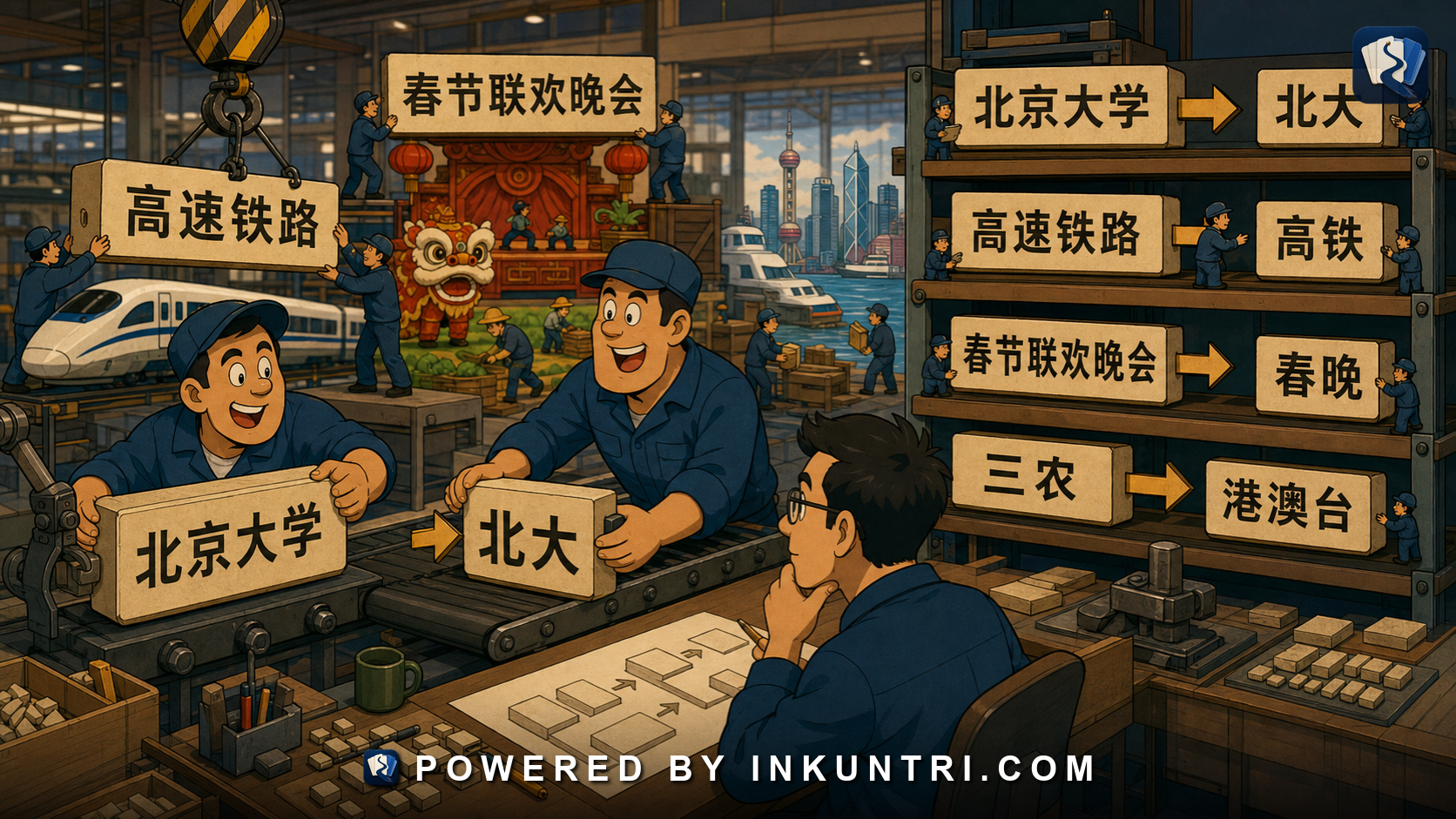
How Chinese Abbreviations Use Characters as Building Blocks
The reader understands how Chinese abbreviations are created and why they are central to newspapers, institutions, education, politics, transport, and everyday speech.
The Language of Neighborhood Life: 아파트, 관리사무소, 동대표
The reader can read apartment notices, resident messages, and neighborhood-management language in Korean urban life.
The 是…的 Construction: Event Framing and Contrast
The reader can use 是…的 to emphasize circumstances of a completed or known event, especially time, place, manner, and agent.
Designing Korean Anki Cards for Grammar, Vocabulary, Sound Change, and Context
The reader can design spaced-repetition cards that test Korean use, recognition, listening, sound change, and context instead of memorizing isolated glosses.
Seoul Korean vs Regional Accents: What Learners Actually Hear
The reader can approach Seoul and regional accents as real phonological systems without stereotype-driven shortcuts.
Political Japanese: 政策, 与党, 野党, 法案, 閣議
The reader can read basic political Japanese by identifying institutions, parties, proposals, cabinet processes, and policy vocabulary.
Building a Tri-Language Kanji/Hanzi/Hanja Cognate Map
The reader can build a practical tri-language Kanji/Hanzi/Hanja cognate map for vocabulary learning and cross-language reading.
HR Japanese: 採用, 入社, 評価, 異動, 退職
The reader can read Japanese HR language around hiring, joining, evaluation, transfer, retirement, and personnel procedures.
Speech Rate and Pausing in Japanese Presentations
The reader can control speech rate and pausing in Japanese presentations to make information structure clear and professional.
고 있다 vs 아/어 있다: Action in Progress vs Resulting State
The reader can distinguish 고 있다 from 아/어 있다 by separating ongoing action from resulting state.
Diplomatic Chinese: 会晤, 共识, 立场, 倡议
The reader can understand Chinese diplomatic language in official statements, meeting readouts, speeches, and foreign-policy news.
How to Use Korean Corpora Without Mistaking Frequency for Importance
The reader can use corpus evidence to study Korean collocations and patterns while accounting for genre, register, source bias, and learner goals.
Verbal Nouns in Korean Bureaucratic Style
The reader can read Korean administrative pages where words such as 신청, 접수, 제출, 검토, 승인, 안내, and 처리 function as steps, headings, statuses, and actions.
Vowel Mergers in Modern Seoul Korean
The reader can recognize modern Seoul vowel mergers and understand their effects on listening, spelling, and formality.
てある and ておく: Prepared States and Intentional Arrangement
The reader can distinguish てある and ておく as grammar for prepared states, intentional arrangement, and future-oriented action.
Korean Adverb Placement and Scope
The reader can understand how Korean adverbs such as 거의, 반드시, 이미, 아직, 별도로, 직접, 충분히, 다시, 서로, and 동시에 change scope, focus, and interpretation.
How to Audit a Chinese Learning Resource for Seriousness
The reader can evaluate Chinese learning resources by checking linguistic accuracy, source quality, examples, register awareness, pedagogy, transparency, and update discipline.
Media Chinese: Headlines, Sources, Attribution, and Stance
The reader can analyze Chinese news writing by identifying headline compression, source attribution, stance markers, and reporting formulas.
Japanese AI Vocabulary: 生成AI, 推論, 学習データ, 計算資源
The reader can read Japanese AI vocabulary across technical, business, and policy contexts without reducing every term to English buzzwords.
The CJK Vocabulary of Modernity: Nation, Society, Science, Economy
The reader sees how a shared character vocabulary helped East Asia name modern institutions and concepts across Chinese, Japanese, and Korean.
From Flashcards to Literacy: When Japanese Study Must Leave the Card
The reader can recognize when flashcards have stopped helping and transition toward reading, listening, domain literacy, writing, and real-context review.
을/를, 에, 에서, 으로: Case Particles as Event Architecture
The reader can treat Korean case particles as event architecture that shows role, location, source, direction, and method.
Kinship Terms and Address Terms in Korean Society
The reader can treat Korean address terms as social grammar involving age, gender, role, closeness, service context, and avoidance of pronouns.
Apology Grammar: すみません, 申し訳ない, 失礼しました
The reader can choose apology grammar by distinguishing inconvenience, fault, interruption, regret, and formal responsibility.
K-Pop Lyrics: Pronouns, English, Emotion, and Persona
The reader can analyze K-pop lyrics as crafted persona-language involving pronouns, English phrases, emotional compression, and genre conventions.
Classical Roots in Modern Mandarin: When Old Words Do New Work
The reader recognizes classical-looking vocabulary in modern contexts and can judge whether it is literary, bureaucratic, academic, or everyday.
CJK Numerals and Counters: Korean Counting in Comparative Perspective
The reader can read Korean counting expressions across native numbers, Sino-Korean numbers, counters, legal numbering, time, money, statistics, and CJK comparison without forcing Chinese or Japanese patterns onto Korean.
Reading Chinese White Papers: Structure, Formula, and Policy Claims
The reader can read Chinese white papers as structured policy documents with claims, evidence, historical framing, and official rhetoric.
Chinese Loanwords vs English Loanwords in Modern Japanese
The reader can compare Chinese loanwords and English loanwords in Japanese by age, script, register, domain, and perceived foreignness.
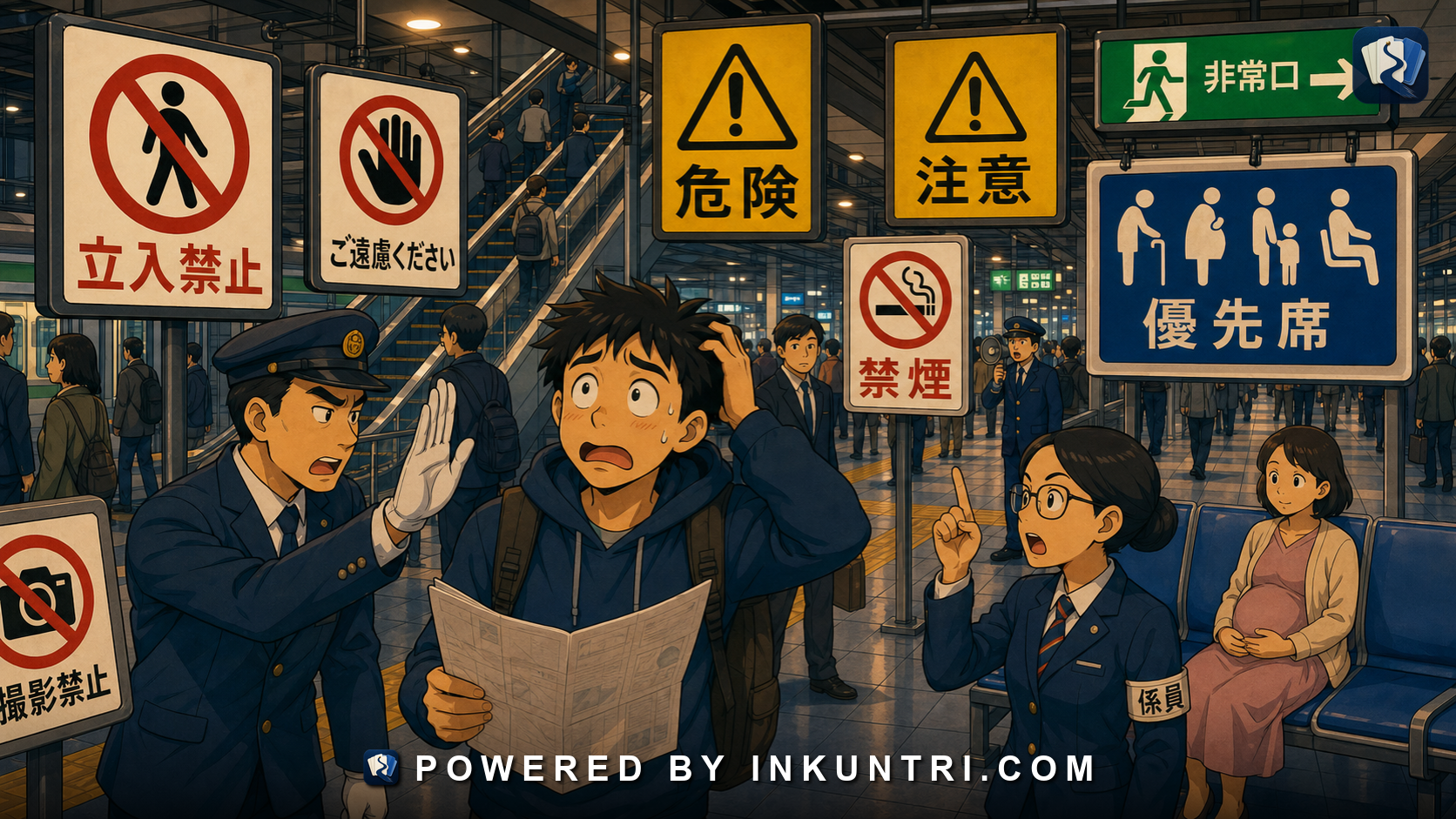
Public-Sign Japanese: Prohibitions, Requests, Warnings, and Polite Authority
The reader can read public-sign Japanese as a system of authority, politeness, warning, prohibition, and civic coordination.
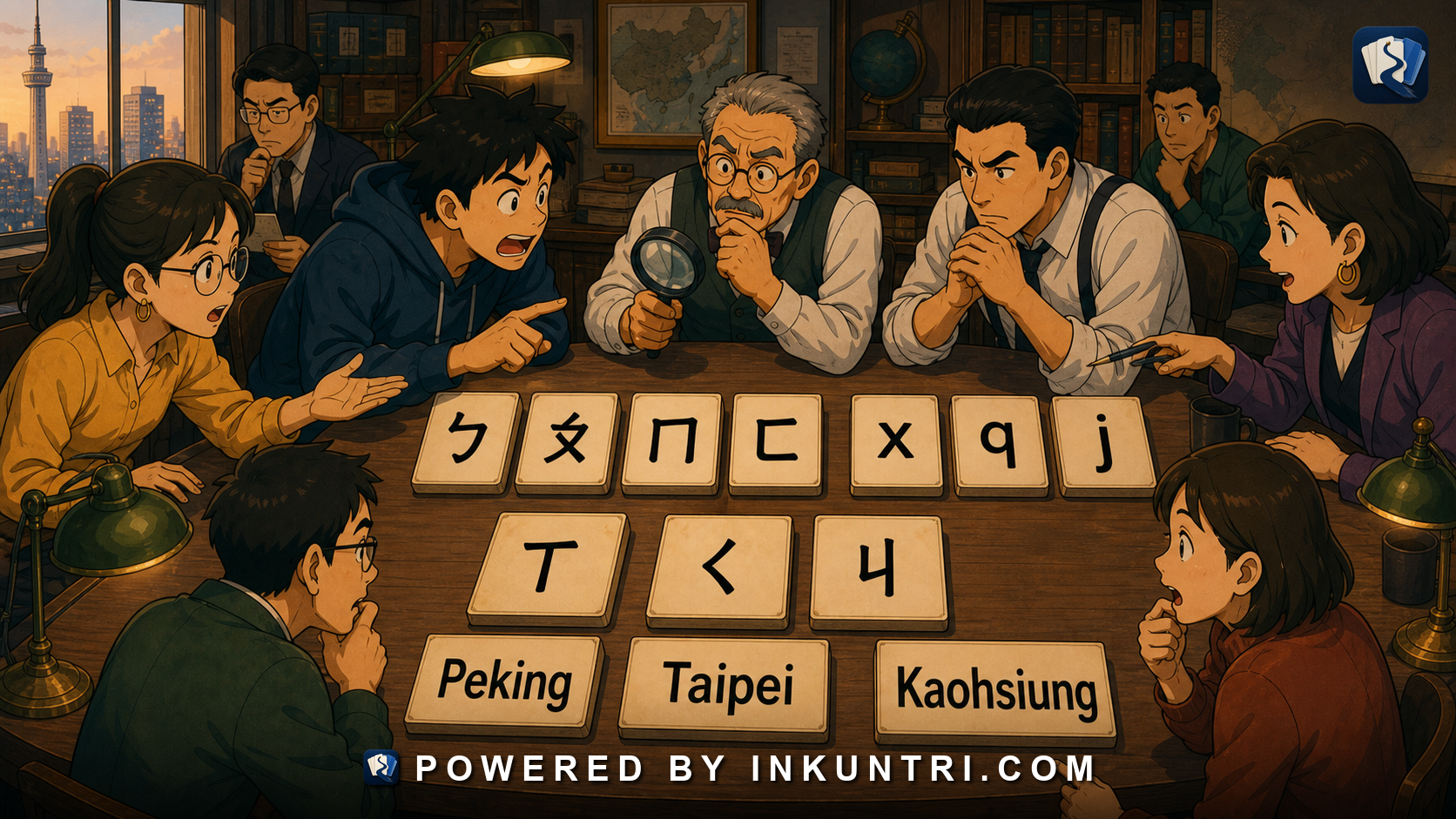
Pinyin, Zhuyin, and the Politics of Pronunciation Notation
The reader understands pronunciation notation systems as tools with histories, institutions, and regional identities.
CJK Numerals and Counters: Japanese Counting in Comparative Perspective
The reader can compare Japanese numerals and counters with Chinese and Korean systems while keeping Japanese counting grammar intact.
Light Verbs and Support Verbs in Korean
The reader can recognize Korean constructions where the main semantic weight sits in a noun and the verb supplies action shape, register, respect, or institutional framing.
When to Use Machine Translation for Korean and When to Distrust It
The reader can use machine translation as a controlled aid while spotting common Korean-specific failures in subject inference, politeness, terminology, and register.
How Chinese Restaurant Names Signal Region, Class, and Taste
The reader can interpret Chinese restaurant names as clues to cuisine, region, price point, nostalgia, branding strategy, and social positioning.
Plain Form, Polite Form, and Where Grammar Meets Social Distance
The reader can choose between plain and polite forms by considering grammar, relationship, genre, and social distance rather than politeness alone.
Contrast and Concession: 지만, 는데, 아/어도, 더라도
The reader can read Korean contrast and concession through 지만, 는데, 아/어도, and 더라도 without flattening them into but.
How Public Announcements Sound Authoritative in Korean
The reader can understand the formulae, politeness, rhythm, and controlled authority of Korean announcements in stations, airports, buildings, and institutions.
Workplace Japanese: Meeting Minutes, Alignment, and Decision Language
The reader can understand workplace Japanese for meeting minutes, alignment, decisions, action items, and responsibility tracking.
Wedding Korean: Ceremony, Speech, Gift, and Register
The reader can read Korean wedding invitations, ceremony language, congratulatory speech, and gift-money conventions with register awareness.
The Phonetics of Mandarin Apologies, Requests, and Softening
The reader learns how pronunciation, particles, rhythm, and pitch soften Mandarin speech acts.
Batchim Pronunciation: Why Final Consonants Collapse Into Seven Sounds
The reader can map written final consonants onto the seven major Korean batchim pronunciations before applying liaison or other changes.
How Mandarin Packages Stance: 认为, 表示, 指出, 强调
The reader can tell whether a Chinese sentence presents a belief, announcement, evidence-based point, emphasis, or institutional position.
Medical Kango and Its Chinese/Korean Counterparts
The reader can compare medical kango and its Chinese/Korean counterparts while avoiding unsafe assumptions about diagnosis or treatment terms.
The Grammar of Apology: 미안하다, 죄송하다, 사과드리다
The reader can use Korean apology grammar and vocabulary according to severity, responsibility, and social distance.
How to Use Chinese Corpora Without Misreading Frequency
The reader can use Chinese corpora responsibly, understanding that frequency depends on corpus composition, genre, date, region, tokenization, and search method.
Pitch Accent in Verb and Adjective Conjugation
The reader can track how pitch accent interacts with verb and adjective conjugation instead of treating each form as a separate word.
Chinese Grammar in Translationese: Spotting English-Shaped Mandarin
The reader can recognize Mandarin that is grammatical but unnaturally shaped by English syntax, especially in learner writing and weak translation.
Chinese Etiquette Phrases That Sound Natural Only in Context
The reader can use and interpret Chinese etiquette phrases by context, avoiding stiff overuse and recognizing when formulae are sincere, routine, or socially strategic.

Katakana Beyond Loanwords: Emphasis, Species Names, Sound Effects, and Branding
The reader can interpret katakana as a marker of loanwords, emphasis, taxonomy, sound, technology, branding, and persona.
Variety-Show Korean: Teasing, Reaction, and Group Alignment
The reader can understand Korean variety-show speech as a performance of teasing, reaction, captions, hierarchy, and group belonging.
The Language of Weddings in Contemporary China
The reader can understand contemporary Chinese wedding language as a mix of legal registration, family negotiation, banquet etiquette, gift money, auspicious phrases, and public celebration.
Prosody in Chinese News Announcing vs Everyday Conversation
The reader can hear the difference between broadcast Mandarin and everyday Mandarin in rhythm, pitch range, phrasing, and register.
得 and 地: How Modern Usage Separates Result and Manner
The reader learns how 得 and 地 function in standard written Mandarin and where real usage blurs textbook rules.
Birth, Household, and Identity Documents in Chinese
The reader can recognize the basic structure and vocabulary of Chinese birth, household-registration, residence, and identity documents without treating them as ordinary conversational Chinese.
University Japanese: 履修, 単位, シラバス, 成績証明書
The reader can navigate university Japanese around course registration, credits, syllabi, transcripts, grades, and student procedures.
The Language of Migration: 户口, 居住证, 流动人口
The reader can read Chinese migration, residency, employment, and public-service vocabulary with sensitivity to legal and social context.
Third-Tone Sandhi Beyond 你好: How Chains of Low Tones Behave
The reader learns how third tones behave in sequences and why textbook “third tone” often differs from natural speech.

Korean Punctuation: Modern Standards and Real Usage
The reader can read Korean punctuation according to modern convention while recognizing real-world variation.
Why Knowing Chinese Helps Korean—and Where It Misleads You
The reader can use Chinese knowledge as a Korean vocabulary advantage while protecting against false friends, collocation errors, and Hangul-only ambiguity.
Counting Grammar: Counters, Classifiers, and Category Thinking
The reader can treat Japanese counters as grammar-plus-vocabulary that classifies objects, events, people, institutions, and abstractions.
SOV Word Order in Korean and Japanese vs Chinese SVO
The reader can compare Korean/Japanese verb-final structure with Mandarin SVO structure without letting shared vocabulary hide syntax differences.
How Mandarin Encodes Family Obligation Without Saying “Family Values”
The reader can recognize how Mandarin expresses family duty, hierarchy, care, worry, and obligation through ordinary verbs, kinship terms, and indirect expectations.
Building a Chinese Topical Reading Ladder From A1 to Advanced
The reader can design a long-term Chinese reading ladder that grows by topic, genre, vocabulary density, cultural load, and syntactic complexity from beginner to advanced levels.
Near-Synonym Field Guide: 보다, 지켜보다, 살펴보다, 검토하다
The reader can distinguish visual perception, sustained observation, informal inspection, and formal review/evaluation in Korean.
Sino-Korean Vocabulary From a Mandarin Learner’s Perspective
The reader can recognize the Hanja layer behind many Korean words and understand how it relates to Mandarin vocabulary.
How to Read a Japanese Article in Three Passes
The reader can read a Japanese article through three purposeful passes: structure and gist, sentence-level parsing, then vocabulary/register extraction.
Near-Synonym Field Guide: 고치다, 치료하다, 수정하다, 개선하다
The reader can choose the Korean repair verb based on whether the target is a machine, habit, illness, document, error, system, policy, or condition.

Korean Internet Spelling: ㅋㅋ, ㅠㅠ, Abbreviations, and Persona
The reader can interpret Korean internet spelling as social signaling, affect, speed, and community style rather than as random mistakes.
When Not to Overcorrect Pitch Accent
The reader can avoid overcorrecting pitch accent in ways that harm fluency, natural interaction, or respect for regional variation.
Public-Service Slogans in Korean: Soft Authority and Moral Framing
The reader can interpret Korean public-service slogans as persuasive language that mixes care, discipline, civic duty, and moral belonging.
Automotive Korean: 전기차, 자율주행, 차량용, 안전지원
The reader can approach Korean automotive articles by identifying electric vehicles, autonomous driving, vehicle-grade components, safety assistance, batteries, charging, recalls, driving range, and sensors.
Childcare and School Communication in Korean
The reader can understand Korean school and childcare messages as a genre with its own politeness, deadlines, preparation lists, and parent-teacher roles.
Buddhist Vocabulary Across Japanese, Chinese, and Korean
The reader can recognize Buddhist vocabulary across Japanese, Chinese, and Korean and see its influence beyond religion.
Workplace Korean: 보고, 결재, 협의, 공유, 조율
The reader can understand how Korean workplace vocabulary maps information flow, hierarchy, approval, coordination, and task ownership.
Minimal Pairs That Matter: ㄱ/ㅋ/ㄲ, ㄷ/ㅌ/ㄸ, ㅅ/ㅆ
The reader can train the minimal pairs that actually change meaning and comprehension in Korean.
The Language of Work Units, Neighborhood Committees, and Urban Governance
The reader understands civic and neighborhood vocabulary that appears in Chinese urban life, notices, registration, and local governance.
Scientific Vocabulary: 研究, 实验, 数据, 模型, 机制
The reader can interpret the core vocabulary of Chinese scientific summaries, abstracts, popular science, and research reporting.
Influencer Commerce Japanese: PR表記, 案件, フォロワー, 購買
The reader can understand Japanese influencer-commerce language around PR labeling, sponsored posts, followers, purchase funnels, and credibility.
How Measure Words Are Written in Real Notes, Receipts, and Labels
The reader sees measure words not only as grammar lessons but as practical written units in commerce, packaging, recipes, and everyday records.
Education Policy Japanese: 入試, 学習指導要領, 奨学金, 不登校
The reader can read Japanese education-policy language around entrance exams, curriculum guidelines, scholarships, absenteeism, and school reform.
How Chinese News Talks About Youth, Employment, and Anxiety
The reader can read Chinese news and commentary about young people, employment, career uncertainty, social pressure, and anxiety with attention to framing.
The Grammar of Polite Requests in Mandarin
The reader learns how Mandarin requests are softened through grammar, wording, particles, and social framing.
Korean Grammar Patterns That Become Invisible at Intermediate Level
The reader notices familiar Korean patterns whose real function disappears once they feel “easy.”
Chinese Bureaucratic Language From Imperial Memorials to Modern Notices
The reader can recognize continuity and change in Chinese bureaucratic language, from formal memorial style to contemporary notices and regulations.
How to Build a Chinese Vocabulary Deck Around Word Families, Not Lists
The reader gains a practical method for organizing Chinese vocabulary by morpheme, collocation, register, and sentence environment.
How Sino-Korean Vocabulary Creates Formal and Technical Korean
The reader can use Sino-Korean roots to decode formal and technical Korean while avoiding false confidence.
Building Vocabulary by Register Instead of Frequency Alone
The reader can build Japanese vocabulary by register, domain, and usage situation rather than frequency rank alone.
Adjective Verbs in Korean: Why “Descriptive Verbs” Matter
The reader can treat Korean descriptive verbs as verbs with conjugation, tense, modifiers, and sentence endings.
The Language of Chinese Family Registers and Ancestral Places
The reader can recognize key terms in genealogy, ancestral hometowns, clan records, and family-history documents.
How to Mine Korean Sentences Without Collecting Translationese
The reader can collect Korean example sentences that reflect native usage, context, and register rather than mechanically translated English structures.
Building a Personal Korean Shadowing Corpus
The reader can build a personal Korean shadowing corpus matched to level, goals, accent exposure, and register.
Near-Synonym Field Guide: 말하다, 이야기하다, 밝히다, 주장하다
The reader can identify whether a Korean speech verb frames casual saying, narrative telling, official disclosure, contested assertion, explanation, or reported stance.
Ellipsis in Japanese Conversation: What Can Be Left Unsaid
The reader can understand ellipsis in Japanese conversation as context-sensitive grammar, not laziness or incomplete speech.
Japanese Negation: ない, ぬ, ん, ず, ではない
The reader can read Japanese negation across modern, literary, dialectal, and formal styles without treating ない as the only negative form.
Topic-Comment Structure in Chinese News Paragraphs
The reader can identify topic chains and understand why Chinese paragraphs often move differently from English paragraphs.
How Japanese Katakana Loans Re-Enter Chinese Tech Talk
The reader understands how Japanese-mediated English loans, product names, gaming words, and tech slang can circulate back into Chinese discourse without becoming ordinary Mandarin vocabulary.
Titles and Suffixes: さん, 様, 先生, 先輩, 部長
The reader can interpret Japanese titles and suffixes as relationship markers, role labels, honorific devices, and institutional signals.
Quotative と: Speech, Thought, Sound, and Framing
The reader can parse quotative と as a flexible frame for speech, thought, sound, naming, definition, and reported information.
Newspaper Korean and the Development of Modern Formal Style
The reader can parse Korean news style as a genre with headline compression, source attribution, Sino-Korean density, and formal reporting habits.
Korean Etiquette Phrases That Sound Natural Only in Context
The reader can use common Korean etiquette phrases with context, role, and timing rather than treating them as literal translations.
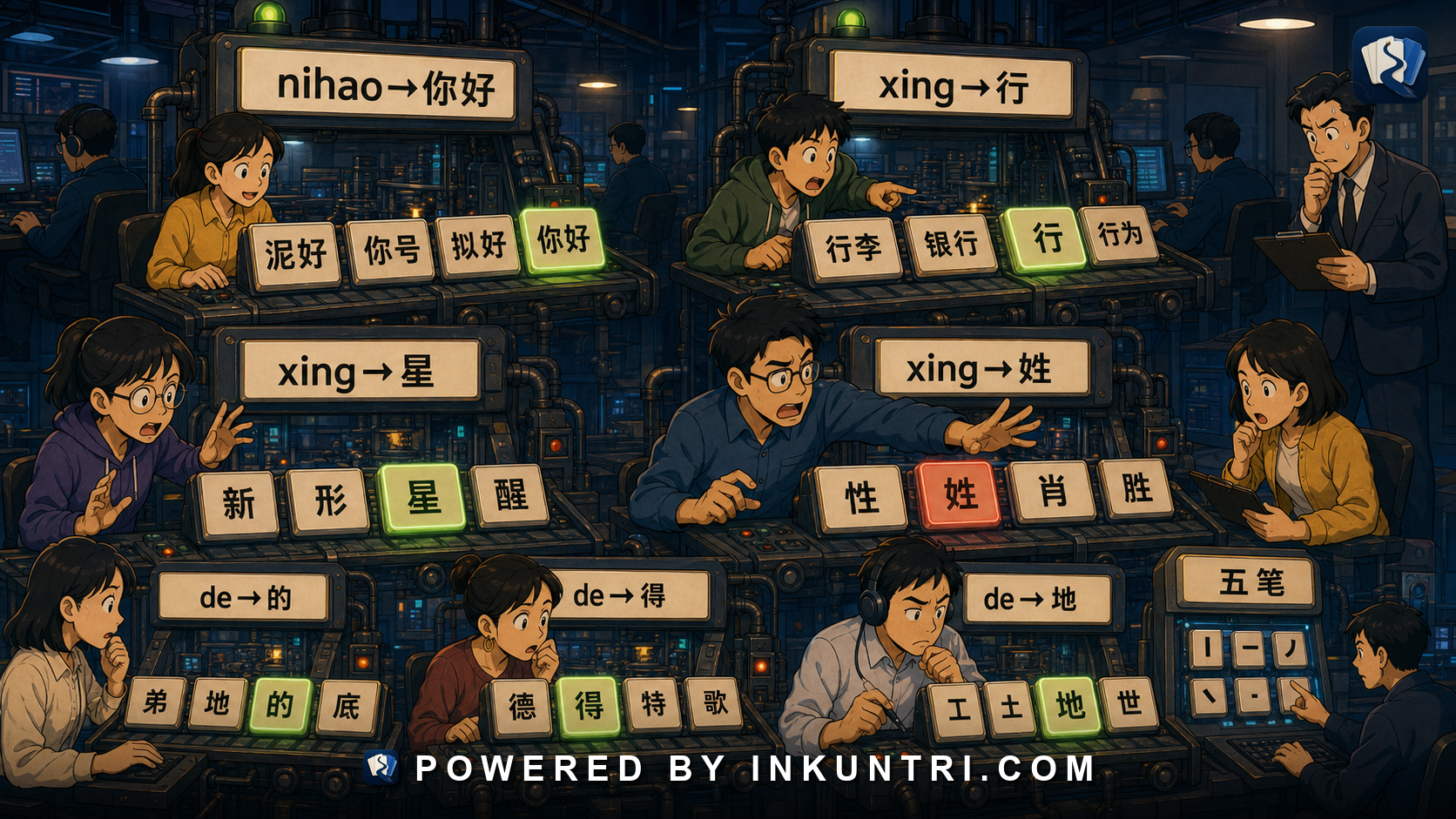
How Chinese Input Methods Shape What People Type
The reader understands how Pinyin, shape-based, handwriting, and predictive input methods influence modern Chinese writing habits.
Tea Ceremony Vocabulary Without Exoticizing It
The reader can understand tea ceremony vocabulary as a living technical and cultural register without reducing it to exotic imagery.
The Vocabulary of Korean Requests by Burden
The reader can shape Korean requests by burden, relationship, time pressure, and refusal space instead of merely adding 요.
Loanwords in Mandarin: Sound Borrowing, Meaning Borrowing, and Hybrids
The reader can classify Mandarin loanwords and understand why Chinese sometimes borrows sound, sometimes meaning, and often both.
Season Words and Cultural Vocabulary in Korean Writing
The reader can interpret Korean seasonal words across weather reports, greetings, essays, advertisements, school calendars, holidays, and literary imagery.
School Culture in Korean: Hagwon, Exams, Clubs, and 선후배
The reader can understand Korean school-related language as an ecosystem of exams, extracurriculars, private education, peer hierarchy, and future planning.
Fast Speech Reductions in Korean Conversation
The reader can recognize common reductions in fast Korean speech without treating them as separate vocabulary.
How to Audit a Korean Learning Resource for Seriousness
The reader can evaluate Korean courses, apps, videos, textbooks, and websites by evidence, scope, examples, register coverage, and learner outcomes.
Reading Temple Inscriptions and Donation Plaques
The reader can approach Chinese temple inscriptions and donation plaques by recognizing formulaic layout, donor language, merit vocabulary, dates, names, and honorific phrasing.
Creating Domain-Specific Japanese Glossaries From Source Texts
The reader can build domain-specific Japanese glossaries from real source texts by extracting terms, definitions, collocations, example sentences, and usage constraints.
把 Sentences as Control Over Outcomes
The reader understands 把 not as a mysterious particle but as a construction that foregrounds what happens to an object.
When Subjects Disappear: Pronoun Omission in Mandarin Discourse
The reader learns how Mandarin omits pronouns and subjects when discourse context makes reference clear.
Mandarin Numeral-Classifier-Noun Order in Real Documents
The reader can read and produce quantity expressions in forms, labels, contracts, receipts, notices, product pages, and official documents.
Language Contact in Japan: Chinese, Korean, English, Portuguese, Dutch
The reader can trace language contact in Japan through words from Chinese, Korean, English, Portuguese, Dutch, and other sources.
Parallelism in Chinese Writing: From Slogans to Essays
The reader can identify parallel structure as a serious organizing device in Chinese rhetoric, not merely decorative repetition.
Traditional Medicine and Wellness Japanese: 漢方, 体質, 処方
The reader can read traditional medicine and wellness Japanese around kampo, constitution, prescriptions, symptoms, and consultation language with appropriate caution.
The Role of Hakka, Min, Wu, and Yue in the Sinitic Landscape
The reader gains a structured overview of major non-Mandarin Sinitic groups and their cultural, regional, and linguistic significance.
Two-Character Compounds: The Engine of Modern Chinese Vocabulary
The reader understands why disyllabic compounds dominate modern Mandarin and how their internal structures work.
Japanese Table Manners Through Serving Verbs and Set Phrases
The reader can understand Japanese table manners through serving verbs, gratitude phrases, host-guest roles, and formulaic meal language.
Discourse Markers: 其实, 当然, 反正, 总之, 那么, 然后
The reader can hear and read discourse markers as argument-management tools rather than filler words.
Interjections in Korean: 아이고, 어머, 아, 음, 글쎄
The reader can read and hear Korean interjections as emotional, social, and discourse markers rather than dictionary translations.
Chinese Handwriting in the Age of Phones: Recognition, Forgetting, and Recall
The reader understands why character recognition can outpace handwriting ability and how to train the two separately.
Ellipsis in Korean Conversation: What Context Carries
The reader can read Korean ellipsis by using context, particles, endings, and shared situation rather than searching for missing words.
Chinese Wedding Documents and Social Language
The reader can understand Chinese wedding-related language across invitations, banquet arrangements, registration documents, family titles, gifts, and social formulas.
Four-Kanji Compounds: Rhythm, Status, and Compression
The reader can read four-kanji compounds as compressed arguments, slogans, classifications, and prestige vocabulary.
Automotive Chinese: 新能源车, 智能座舱, 辅助驾驶
The reader can understand Chinese automotive language in product pages, reviews, policy news, and owner forums.
Sentence Intonation in Mandarin: Questions Without Tone Collapse
The reader learns how Mandarin speakers ask questions and express stance while preserving lexical tone.

The Real Function of Kana in Advanced Japanese
The reader can see kana as advanced grammar infrastructure, not just an introductory phonetic alphabet.
Building a Korean Topical Reading Ladder From A1 to Advanced
The reader can build a long-term Korean reading ladder that moves from beginner-safe texts to serious domain reading without skipping the bridge stages.
Busan and Gyeongsang Prosody Without Stereotypes
The reader can understand Busan and broader Gyeongsang prosody through pitch, rhythm, and pragmatic use rather than caricature.
Topic Chains in Japanese Paragraphs
The reader can follow topic chains across Japanese paragraphs where the same topic remains active through omission and subtle shifts.
How Hanja Education Rose, Fell, and Partly Remains
The reader can explain why Hanja is less visible in modern Korean but still matters for names, dictionaries, law, academia, and high-register vocabulary.
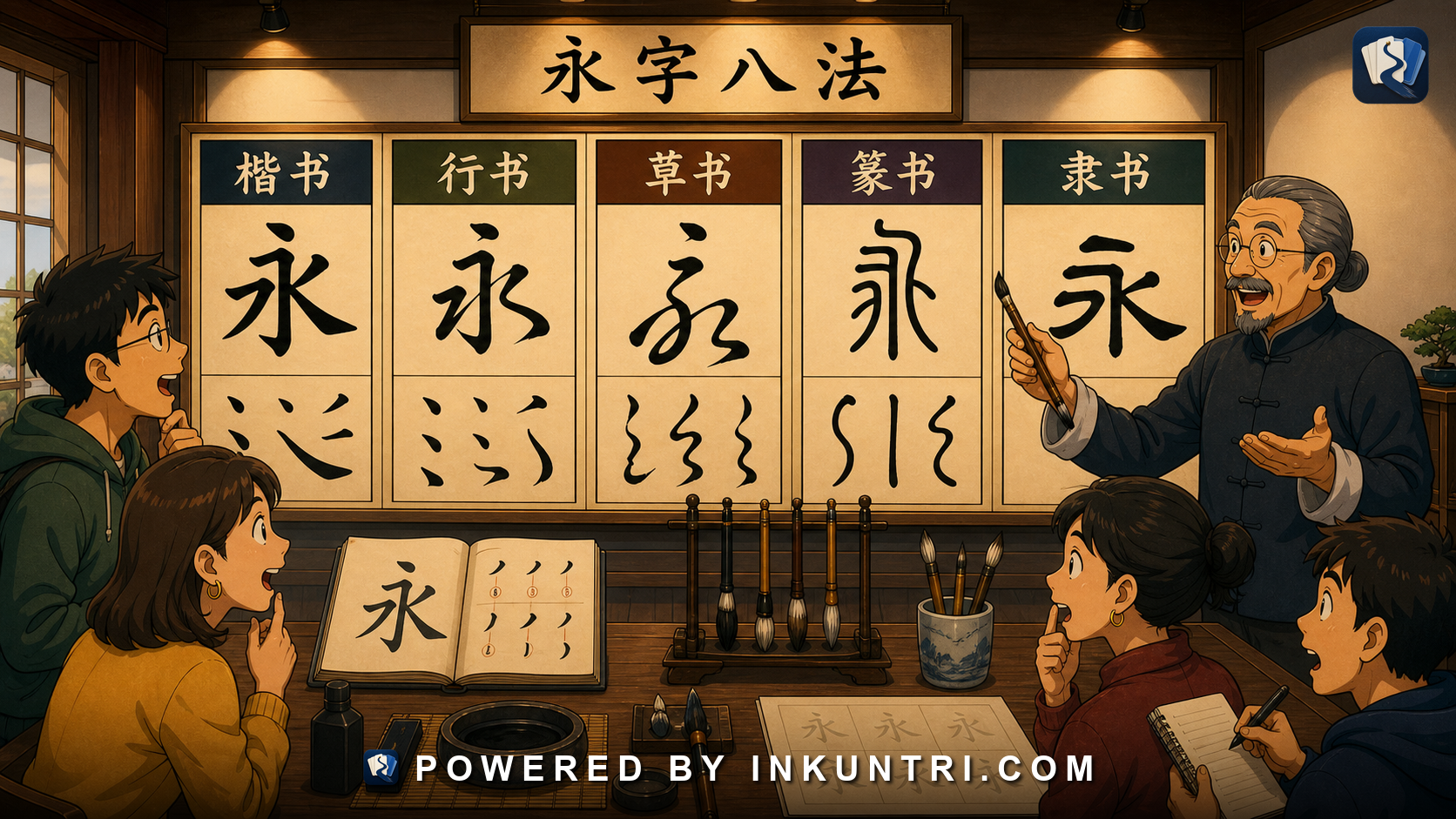
What Learners Need to Know About Calligraphy Without Becoming Calligraphers
The reader gains enough calligraphy literacy to understand stroke order, style names, cultural references, and handwritten variation without needing to master brush art.
Japanese Internet Slang: Abbreviation, Kana Play, and Persona
The reader can understand Japanese internet slang as abbreviation, kana play, persona performance, and platform-specific writing.
Wedding Japanese: Ceremony, Speech, Gift, and Register
The reader can understand wedding Japanese across ceremony language, speeches, invitations, money gifts, taboo words, and formal register.
Chinese-Japanese False Friends in Business Vocabulary
The reader can spot high-risk Chinese-Japanese business vocabulary that looks familiar but differs in usage, meaning, or register.
Chinese Food Ordering as Cultural Literacy, Not Survival Phrasebook
The reader can see food ordering in Chinese as a social act involving hierarchy, generosity, face, regional food knowledge, dietary needs, and group coordination.
Logistics Chinese: 快递, 运单, 仓储, 派送
The reader can understand logistics and delivery tracking language in Chinese e-commerce, courier, and warehouse contexts.
Synonym Pairs in Chinese: Why Many Compounds Have Two Near-Meaning Characters
The reader understands coordinate compounds and stops treating every character pair as a precise “A plus B” formula.
Japanese Shadowing With Drama, News, and Interviews
The reader can build a Japanese shadowing practice that changes depending on whether the source is drama, news, interview, or presentation.
Character Families for Serious Learners: Not Mnemonics, but Morphology
The reader learns to group characters by shared components and word families in a linguistically grounded way.
The Language of Chinese Parenting and Education Pressure
The reader can interpret Chinese parenting and education-pressure vocabulary in media, family conversation, school chat, and social commentary.
Food Labels in Korean: 원재료, 알레르기, 유통기한, 영양성분
The reader can read Korean food labels by identifying ingredients, allergens, date labels, nutrition facts, storage method, country of origin, content amount, sodium, calories, and safety warnings.
Youth Language in Japan: Trend, Identity, and Media Panic
The reader can evaluate Japanese youth language as identity work, trend circulation, and media narrative rather than language decay.
Japanese Press Releases: ご報告, お知らせ, 開催, 連携
The reader can interpret Japanese press releases by recognizing announcement formulas, corporate positioning, event details, and partnership language.
Relative Clauses Without Relative Pronouns
The reader can parse Japanese relative clauses without looking for a relative pronoun or English-style clause marker.
How to Mine Chinese Sentences Without Collecting Bad Examples
The reader can collect useful Chinese example sentences while avoiding decontextualized, mistranslated, unidiomatic, outdated, or register-mismatched examples.
Korean Travel Vlogs: Informal Speech and Place Promotion
The reader can use Korean travel vlogs to study informal narration, place promotion, evaluation language, and creator-audience relationship.
Politeness and Hierarchy in Japanese Workplaces
The reader can connect Japanese politeness and hierarchy to concrete workplace language choices and decision-making practices.
Korean Lab Safety Language: 위험물, 보호구, 폐기, 점검
The reader can interpret Korean laboratory-safety signs, manuals, inspection checklists, and disposal instructions with attention to risk and procedure.
Korean Product Manuals: 안전수칙, 사용방법, 고장, 점검
The reader can read Korean product manuals by identifying safety rules, procedures, warnings, prohibited actions, troubleshooting, inspection, maintenance, warranty, and replacement language.
The Vocabulary of Face: 面子, 脸, 体面, 丢脸
The reader can distinguish core Mandarin terms related to face, dignity, reputation, embarrassment, prestige, and social presentation.
Retirement and Pension Chinese: 社保, 医保, 养老金, 缴费
The reader can parse basic Chinese about social insurance, medical insurance, pension contributions, retirement status, benefit claims, and public-service notices while staying clear of benefits advice.
Rural Development Policy Vocabulary in Chinese News
The reader can read Chinese news about rural development by recognizing policy slogans, administrative categories, and concrete implementation language.
Ellipsis in Menus, Labels, Headlines, and Forms
The reader can recover omitted words in compact real-world Chinese and stop expecting complete textbook sentences everywhere.
Sentence Intonation in Japanese Questions, Requests, and Doubt
The reader can hear how sentence intonation changes questions, requests, doubt, surprise, and confirmation beyond the written particle か.
How to Mine Japanese Sentences Without Collecting Translationese
The reader can collect Japanese example sentences from natural sources while avoiding translationese, artificial examples, contextless fragments, and overlong cards.
The Japanese Verb System as One Morphological Machine
The reader can see the Japanese verb system as an organized morphology machine instead of memorizing disconnected conjugation charts.
Interjections in Japanese: ええ, あの, まあ, へえ, うーん
The reader can interpret Japanese interjections as interactional tools for hesitation, surprise, agreement, thinking, soft refusal, and stance.
How to Audit a Japanese Learning Resource for Seriousness
The reader can evaluate Japanese learning resources for accuracy, scope, source quality, example naturalness, cultural depth, pedagogy, and hidden weaknesses.
How Korean News Talks About Youth, Work, and Social Anxiety
The reader can read Korean news language about young adults, employment, precarity, housing, burnout, and social pressure without reducing it to slogans.
Medical Vocabulary: 症状, 诊断, 治疗, 风险, 预后
The reader can understand common Chinese medical information while recognizing the difference between symptoms, diagnosis, treatment, risk, and prognosis.
Environmental Impact Korean
The reader can approach Korean environmental impact documents by identifying impact assessment, mitigation measures, emissions, pollutants, monitoring, resident comments, approval conditions, ecosystem language, and...
Honorific 시: Respect Marking, Social Reality, and Overuse
The reader can use honorific 시 as a grammatical respect marker while avoiding overuse and misdirected respect.
아/어 놓다 and 아/어 두다: Prepared States and Intentions
The reader can use 아/어 놓다 and 아/어 두다 to express prepared states, preserved results, and intention.
Counting Grammar: Native Numbers, Sino-Korean Numbers, and Counters
The reader can combine native numbers, Sino-Korean numbers, and counters grammatically in real noun phrases.
そう, よう, みたい, らしい: Evidence and Inference
The reader can separate hearsay, visual evidence, resemblance, and inference in そう, よう, みたい, and らしい.
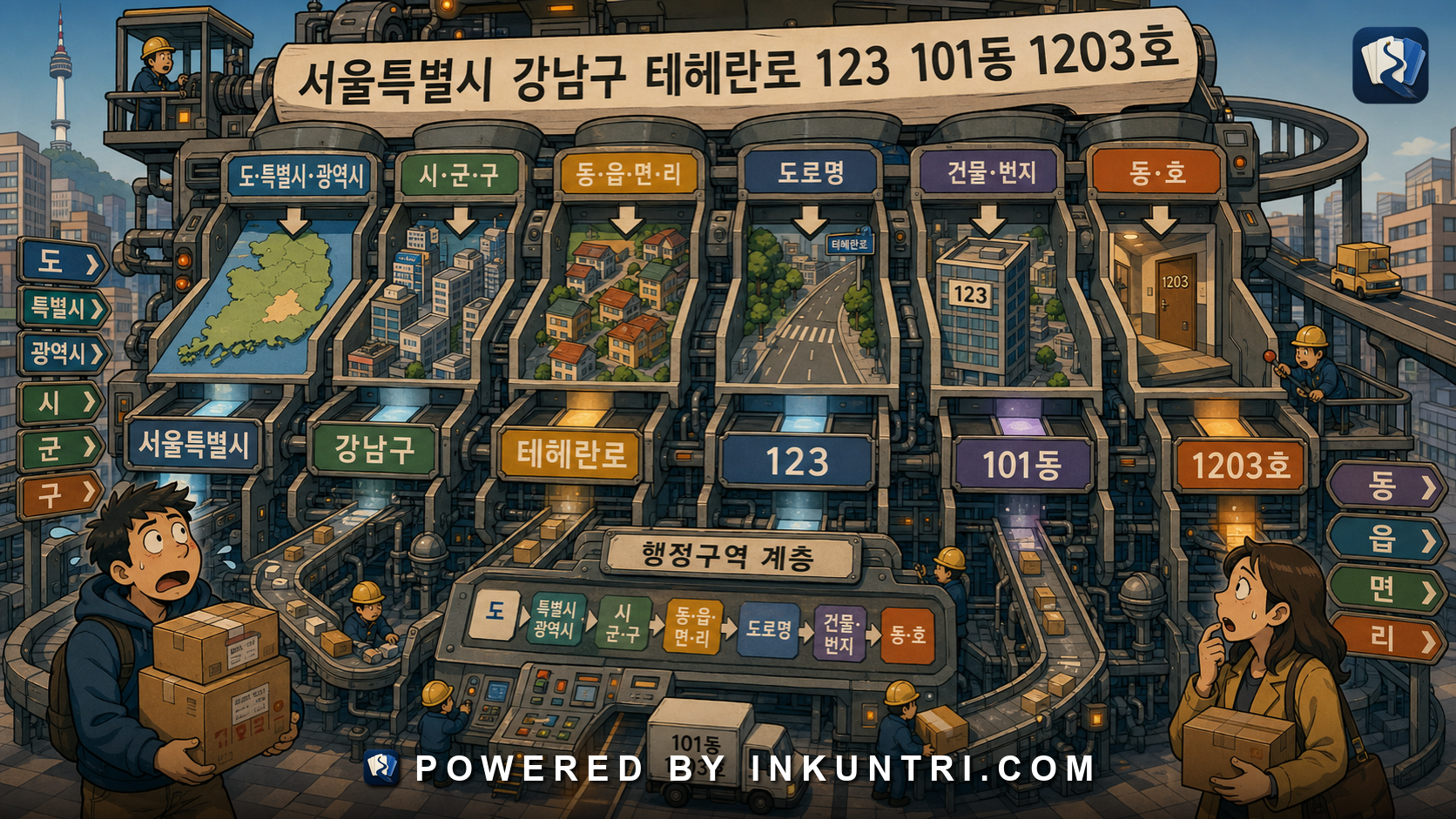
Reading Korean Addresses: Province, City, Gu, Dong, Road Name, and Building
The reader can parse Korean addresses from the largest administrative unit down to the building or room.
はず, べき, わけ, つもり: Reasoning Grammar in Japanese
The reader can use はず, べき, わけ, and つもり to read Japanese reasoning about expectation, obligation, explanation, and intention.
Apartment Life Korean: 관리사무소, 입주민, 동대표
The reader can understand Korean apartment-life notices, resident roles, maintenance language, and conflict terms.
Language Contact in Korea: Chinese, Japanese, English, Russian, and Beyond
The reader can trace Korean vocabulary through contact layers without reducing word history to trivia or purity debates.
Family Registry Korean: 가족관계증명서, 주민등록등본, 인감증명
The reader can read Korean family-registry and resident-registration documents by identifying certificate type, household head, registered domicile/base, address history, seal certificate, issuance, delegation...
Compliments and Deflection in Japanese Conversation
The reader can understand Japanese compliments and modest deflection without treating every denial as literal disagreement.
Tensification in Real Speech: When Consonants Become Tense
The reader can notice when Korean consonants become tense in real speech and why spelling alone may not announce it.
Korean Company Documents: 등기, 정관, 대표이사, 주주총회
The reader can approach Korean company documents by identifying corporate registration, articles of incorporation, representative authority, shareholder meetings, board decisions, capital, offices, seals, and...
The Social Life of Katakana in Modern Japan
The reader can analyze katakana as a social script that marks foreignness, emphasis, technicality, branding, species names, and voice.
Designing a Japanese Error Corpus From Your Own Mistakes
The reader can build a personal Japanese error corpus from writing, speaking, translation, and comprehension mistakes, then turn it into targeted practice.
When CJK Comparison Helps Learners and When It Becomes Noise
The reader can decide when CJK comparison accelerates Japanese learning and when it creates noise, overconfidence, or bad habits.

Emoji, Homophones, and Character Play in Chinese Digital Writing
The reader can interpret common mechanisms of online character play without reducing Chinese internet language to memes.
How to Read Linguistics Papers About Mandarin Without Drowning
The reader can approach Mandarin linguistics papers by identifying the research question, data, terminology, argument structure, and practical learner relevance.
Administrative Disposition Korean: 시정명령, 과태료, 취소, 처분
The reader can approach Korean administrative notices by distinguishing warnings, corrective orders, fines, cancellations, dispositions, appeals, notifications, violations, deadlines, and agency authority.
Japanese Words in Korean History: What Remains, What Was Replaced
The reader can read Japanese-origin vocabulary in Korean historically and socially, distinguishing common survivals, recommended replacements, generational usage, and stigma.
Academic Korean and the Sino-Xenic Knowledge Layer
The reader can read academic Korean by recognizing Sino-Korean abstract nouns, Hanja families, citation verbs, and shared CJK learned vocabulary without reducing scholarship to character trivia.
Japanese Restaurant Reviews: Texture, Atmosphere, Service, and Value
The reader can read Japanese restaurant reviews beyond star ratings by understanding texture words, service evaluation, atmosphere, price-value language, and reviewer stance.
Mandarin Read-Aloud Style vs Conversation Style
The reader understands why reading written Mandarin aloud differs from speaking spontaneously.
Korean Newsreader Speech vs Everyday Conversation
The reader can distinguish Korean newsreader speech from everyday conversation and use both for different learning goals.
How to Read a Korean Article in Three Passes
The reader can read Korean articles efficiently by separating gist, structure, and sentence-level precision instead of trying to solve every word on the first pass.
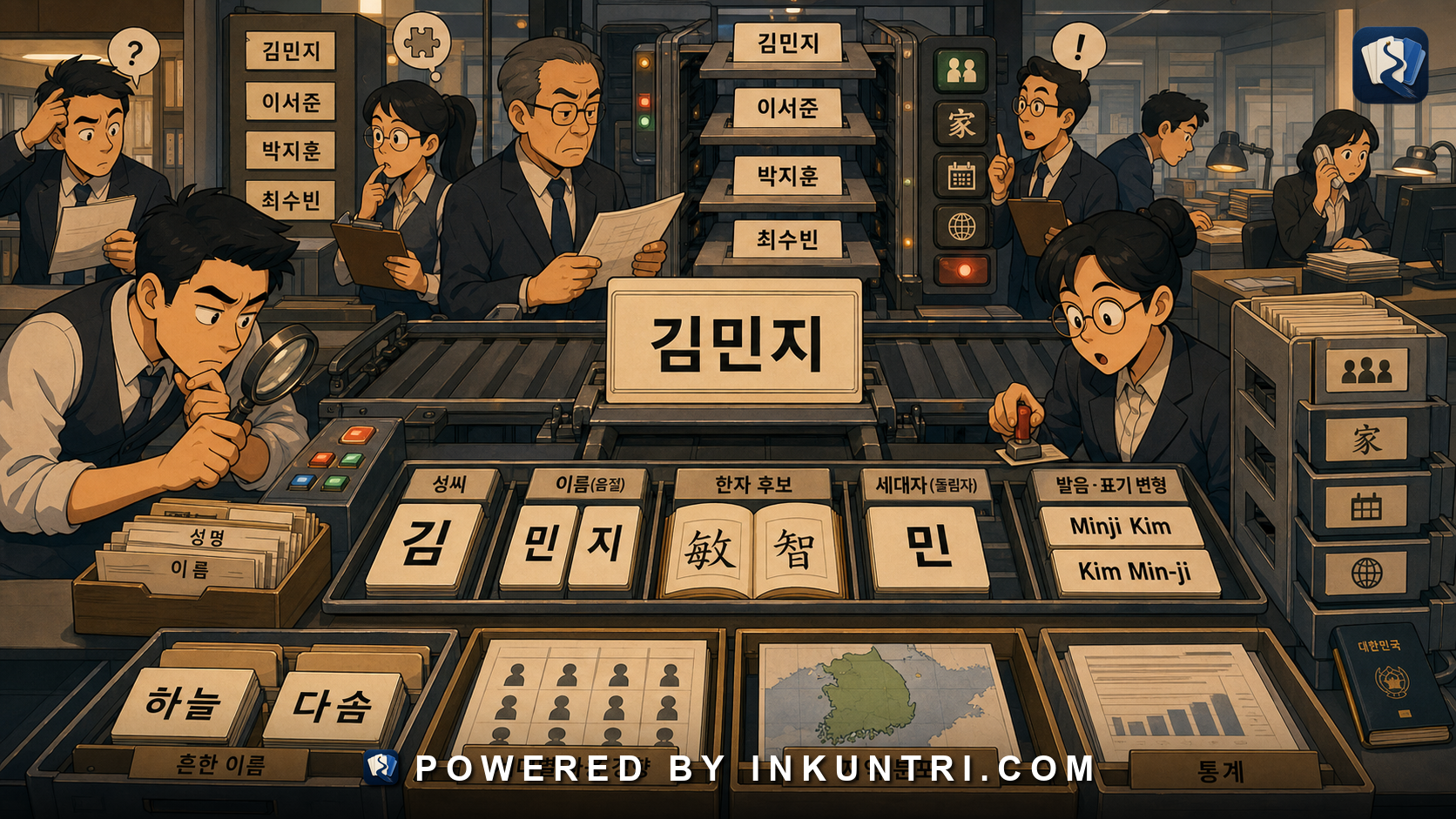
Reading Korean Personal Names: Syllables, Hanja, Generations, and Ambiguity
The reader can read Korean personal names as socially and linguistically layered forms rather than simple sound strings.
How Korean Packages Stance: 생각하다, 밝히다, 강조하다, 지적하다
The reader can identify how Korean reporting verbs package opinion, disclosure, emphasis, criticism, explanation, forecast, and concern.
て-Form as Connection, Not Just Conjugation
The reader can understand て-form as a general connector that links actions, states, requests, reasons, and auxiliaries.
Bungo, Kōgo, and the Modernization of Japanese Prose
The reader can understand bungo and kōgo as competing prose norms whose modernization shaped the Japanese people read today.
Korean Names: Hanja, Generational Syllables, Native Names, and Trends
The reader can read Korean names as linguistic and social forms without assuming that Hangul spelling automatically reveals meaning.
Korean Memes, Net Slang, and Polite Hostility Online
The reader can spot when Korean online politeness is sincere, sarcastic, passive-aggressive, protective, or openly hostile beneath polite endings.
The Passive in Japanese: Suffering, Neutral Reporting, and Agency
The reader can interpret Japanese passive forms as tools for affectedness, neutral reporting, agency management, and perspective shift.
Taiwanese Mandarin and the Legacy of 國語 Education
The reader can identify key features of Taiwanese Mandarin and understand its relationship to 國語 education, local languages, and identity.
Reported Speech in Mandarin News and Interviews
The reader can parse who said what in Chinese news, interviews, transcripts, and public statements.
Conditionals in Korean: 면, 거든, 다면, 아/어야
The reader can choose among 면, 거든, 다면, and 아/어야 by condition type, discourse role, and likelihood.
When Korean Grammar Depends More on Relationship Than Rule
The reader can map relationship before choosing endings, address terms, honorific verbs, humble verbs, pronouns, and omission.
Sino-Korean Nouns Plus 하다: How Korean Builds Technical Verbs
The reader can parse technical Korean where the action is distributed between a Sino-Korean noun and 하다.
Negotiation Korean: 견적, 납기, 조건, 조율
The reader can understand Korean negotiation emails and messages around quotations, unit price, delivery deadlines, conditions, adjustment, review, discounts, orders, and polite business pushback.
Abbreviations in Korean: From 자소서 to 편의점
The reader can decode Korean abbreviations and compact institutional nouns by expanding the source phrase, identifying the community that uses the shortened form, and judging whether the form belongs in casual...
Tax Japanese: 源泉徴収, 確定申告, 消費税, 控除
The reader can interpret Japanese tax language around withholding, filing, consumption tax, deductions, income categories, and deadlines.
How Japanese Marks Uncertainty Without Saying “Maybe”
The reader can notice how Japanese marks uncertainty through grammar, particles, hedges, and stance rather than only through words like “maybe”.
Sentence-Final Endings: 아/어요, 습니다, 네요, 군요, 죠, 더라고요
The reader can interpret Korean sentence-final endings as stance, evidence, emotion, politeness, and discourse management.
The Grammar of Asking Favors: ください, くれませんか, いただけますか
The reader can ask favors in Japanese by selecting grammar that matches burden, relationship, urgency, and politeness.
Korean Internet Slang: Abbreviation, Hangul Play, and Persona
The reader can recognize Korean internet slang as a system of compression, emotional display, group identity, and online persona while avoiding unsafe or stale reuse.
Confucian Vocabulary in Japanese Public Language
The reader can identify Confucian vocabulary in Japanese public language and understand its role in hierarchy, education, and social ethics.
Polite Speech Prosody: Why 丁寧語 Has a Sound
The reader can notice that polite Japanese has prosodic conventions in addition to polite vocabulary and grammar.
Listening for Word Boundaries in a Language Without Spoken Spaces
The reader learns to hear Mandarin word boundaries through rhythm, grammar, collocation, and prosodic grouping.
Relative Clauses Before Nouns in Korean
The reader can parse Korean relative clauses that appear before nouns and often lack explicit relative pronouns.
Mandarin Aspect Without English Tense: A Framework for Real Reading
The reader learns to read Mandarin time and event structure through aspect, context, and time words rather than forcing English tense categories.
Pronunciation in Chinese Rap, Pop, and Spoken Drama
The reader learns how performance genres bend rhythm, tone, rhyme, and articulation while remaining intelligible.
The Sound of Japanese Newsreading vs Conversation
The reader can compare Japanese newsreading and conversation as different speech styles with different pacing, pronunciation, and information structure.
News Japanese: Attribution, Agency Style, and Headline Compression
The reader can read Japanese news prose by understanding attribution, agency style, headline compression, source hierarchy, and omitted context.
Korean Hangul-Only Writing and the Invisible Hanja Layer
The reader sees why Korean text can look alphabetic while still containing a deep Sino-Korean vocabulary layer that matters for Chinese learners comparing the languages.
Compound Verbs: 読み始める, 書き直す, 走り出す, and Beyond
The reader can use compound verbs to infer aspect, direction, repetition, completion, correction, and viewpoint in Japanese prose.
Reading Government Document Headers: 发文, 通知, 公告, and 编号
The reader can identify the key parts of Chinese official document headers and understand what the document is doing.
Near-Synonym Field Guide: 方便, 便利, 便捷
The reader can distinguish everyday convenience, formal convenience, and efficient/easy access in Mandarin.
Causatives in Korean: Authority, Permission, and Agency
The reader can analyze Korean causatives as statements about agency, authority, permission, and responsibility.
Chinese Pronunciation Self-Diagnosis With Recording and Native Models
The reader can diagnose Mandarin pronunciation problems through recording, comparison, targeted drills, and structured feedback rather than vague “tone practice.”
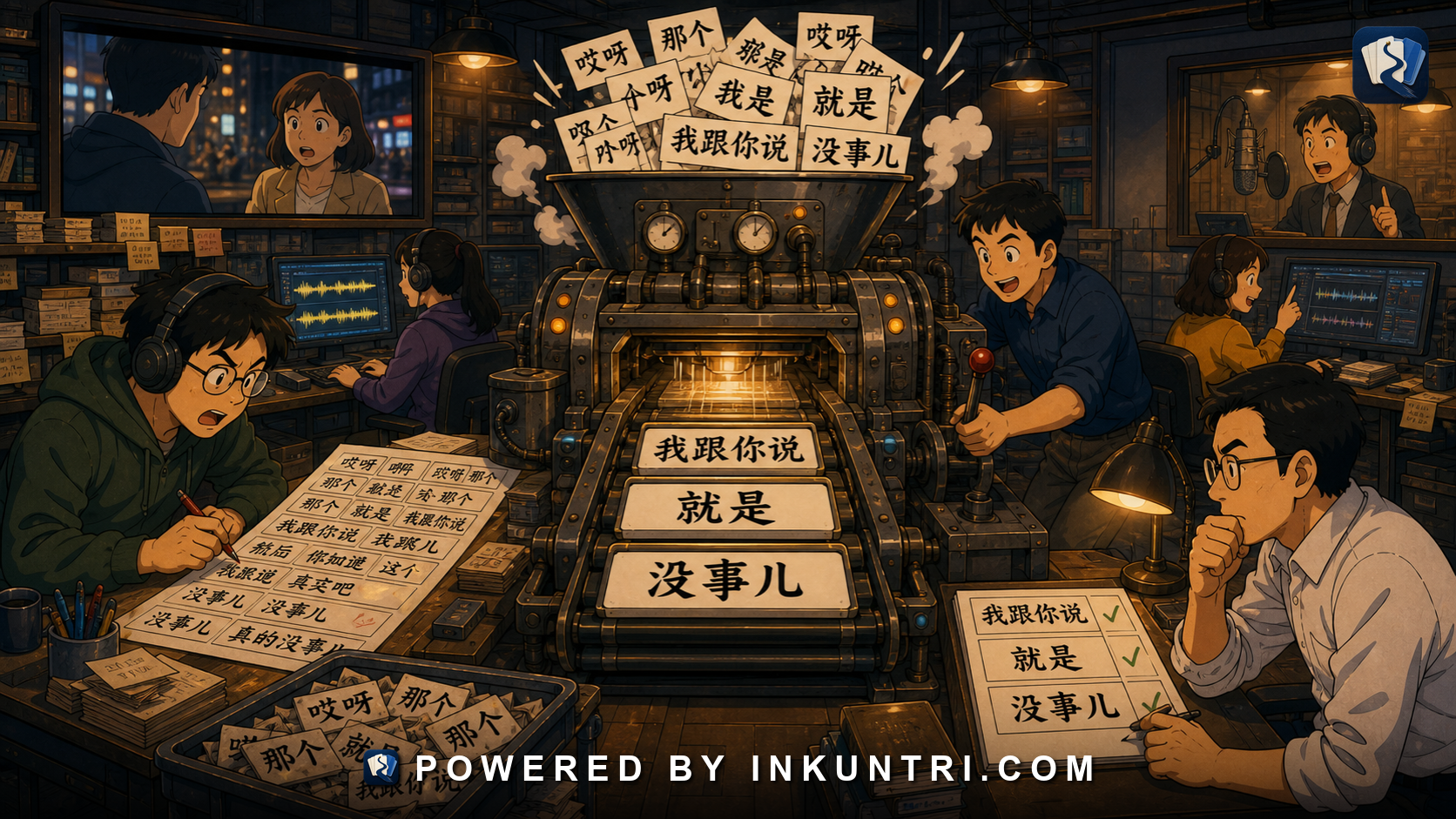
How Chinese Subtitles Compress Speech Into Readable Lines
The reader understands subtitles as edited written language, not a full transcript of speech.
Causative and Causative-Passive: Authority, Permission, and Burden
The reader can read causative and causative-passive forms as grammar of authority, permission, obligation, and burden.
Numbers as Words in Chinese Digital Culture
The reader can interpret common numeric expressions in texting, comments, online commerce, holidays, work culture, and pop culture.
A Serious Learner’s Guide to Chinese Dictionaries
The reader can use Chinese dictionaries more deeply by reading definitions, parts of speech, usage notes, examples, synonyms, variants, and register labels.
Nominalization With 기, 음, 것, and 데
The reader can distinguish nominalizers 기, 음, 것, and 데 by function, register, and sentence role.
How Mandarin Expresses Collective Identity
The reader can identify how Mandarin builds collective identity through pronouns, group nouns, shared fate language, institutional wording, and emotional alignment.
Japanese Pitch Accent Is Not Optional: What It Changes and What It Does Not
The reader can hear pitch accent as a meaning, naturalness, and comprehension feature while avoiding panic or perfectionism.
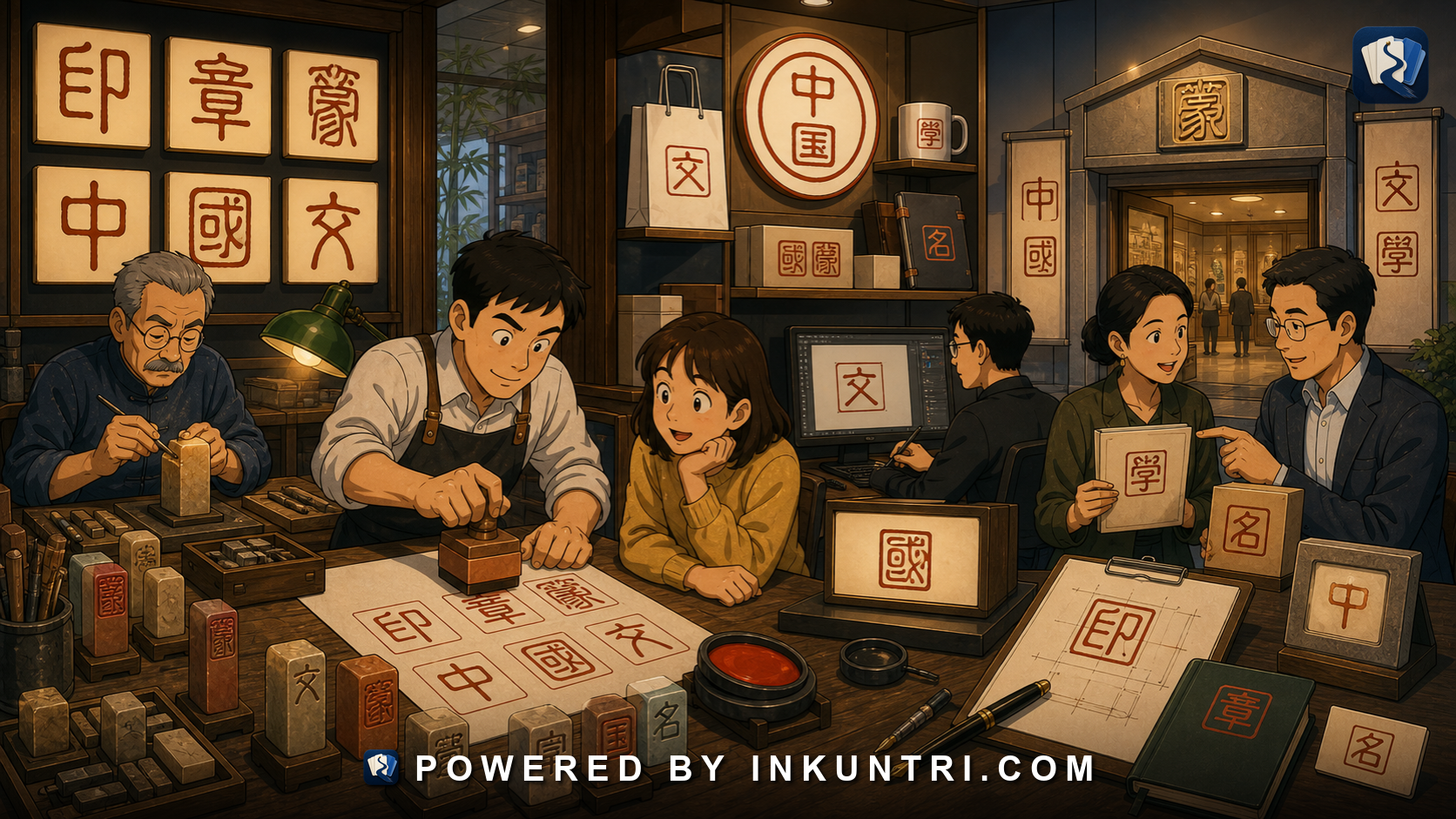
Seal Script in Modern China: Where Ancient Forms Still Appear
The reader recognizes seal script as a living visual register in stamps, logos, art, institutions, and cultural branding.
How Restaurant Names Signal Region, Class, and Taste in Korea
The reader can interpret Korean restaurant names as signals of region, authenticity, age, cuisine, market position, and atmosphere.
Jeju Speech and Why It Is Not Just “Dialect Flavor”
The reader can treat Jeju speech as a serious linguistic system with its own history, vocabulary, and preservation issues.
Neighborhood Japanese: 町内会, 自治会, 回覧板
The reader can understand Japanese neighborhood language around local associations, circular notices, cleanup duties, disaster drills, festivals, and resident coordination.
The May Fourth Language Shift and the Rise of 白话
The reader understands how modern written Chinese emerged from debates over education, literature, modernization, and accessibility.
Tea, Cafés, and Contemporary Korean Social Vocabulary
The reader can read café language as everyday Korean social practice, not just beverage vocabulary.
Katakana Loans vs Chinese Transliterations of the Same Global Terms
The reader can compare how Japanese katakana loans and Chinese transliterations or semantic translations handle the same global terms.
Sentence Rhythm in Korean: Eojeol, Particles, and Breath Groups
The reader can understand Korean sentence rhythm through eojeol grouping, particles, verb endings, and breath units.
Nasalization in Korean: ㄱ, ㄷ, ㅂ Before Nasals
The reader can recognize nasalization as a predictable Korean listening pattern, especially before nasal consonants.
From Flashcards to Literacy: When Chinese Study Must Leave the Card
The reader can recognize when flashcards are helping and when they are delaying real Chinese literacy, then shift toward connected reading and listening.
Cantonese Words in Mandarin Media and Internet Culture
The reader can recognize Cantonese-derived words and expressions that circulate in Mandarin-speaking pop culture, media, and online communities.
Cause and Reason: 아/어서, 니까, 때문에, 덕분에, 탓에
The reader can differentiate Korean reason and cause expressions by logic, evidence, politeness, and evaluation.
Political Slogans and Four-Character Style Across East Asia
The reader understands how four-character rhythm and classical-style compression shape political and public language across Chinese, Japanese, and Korean contexts.
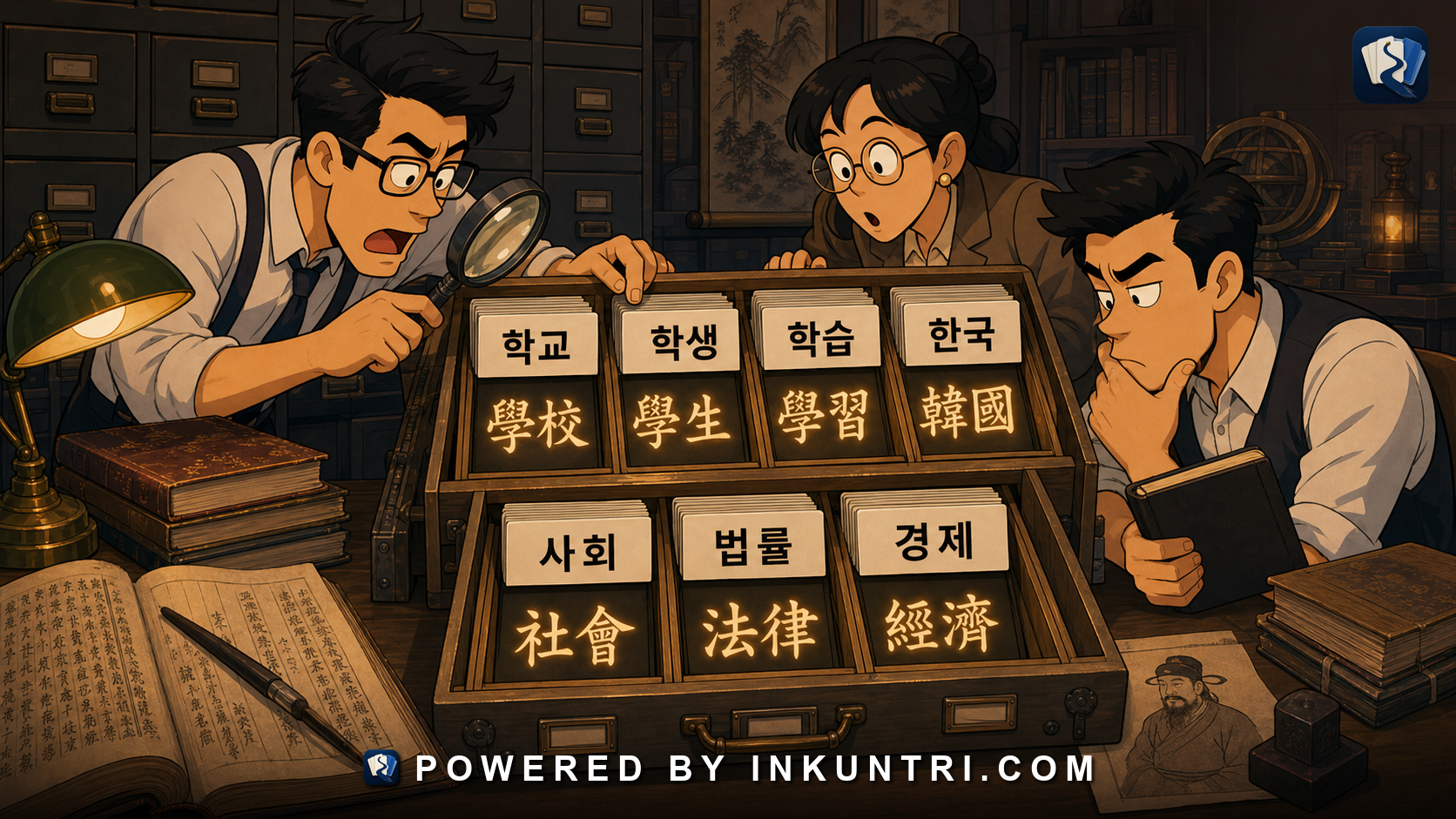
Hanja Beneath Hangul: The Hidden Sino-Korean Layer
The reader can recognize the Sino-Korean layer behind Hangul words without needing to become a full Hanja reader on day one.
How Japanese Honorific Culture Appears in Train Announcements
The reader can analyze train announcements as scripted honorific language that blends service, safety, apology, and authority.
Why Chinese “Run-On Sentences” Often Are Not Run-Ons
The reader learns to parse Chinese clause chains by relationship and information flow rather than judging them by English punctuation habits.
Museum Japanese and the Language of Heritage
The reader can read Japanese museum labels and heritage writing around period, object type, provenance, cultural value, preservation, and interpretive framing.
Four-Character Phrases: Idiom, Slogan, Formula, and Rhythm
The reader can distinguish 成语 from broader four-character phrasing and understand why four-character rhythm is so productive.
How Chinese Speakers Use Titles Instead of Names
The reader can understand why Mandarin speakers often address people by title, role, kinship term, or nickname rather than personal name.
Classifiers as Grammar: Beyond Counting Nouns
The reader understands classifiers as a grammatical system for counting, reference, categorization, and discourse.
Grammar Patterns That Only Make Sense in Discourse
The reader can identify grammar patterns whose real function only appears across surrounding sentences and speaker intentions.
Korean Sound Change Rules as Listening Tools, Not Trivia
The reader can use Korean sound-change rules as practical listening predictions rather than trivia to memorize in isolation.
ている: Ongoing Action, Result State, Habit, and Experience
The reader can choose the right reading of ている by distinguishing ongoing action, result state, habit, experience, and identity-like states.
The Language of Regional Pride in Korea
The reader can recognize how regional identity is expressed in Korean through place names, dialect references, food branding, sports, tourism, and hometown language.
ㅎ Weakening, Aspiration, and Disappearance
The reader can understand how ㅎ weakens, disappears, or creates aspiration depending on its position and neighbors.
Science News Japanese: Breakthroughs, Caution, and Hype
The reader can read Japanese science-news language while distinguishing discovery, hypothesis, experimental result, expert caution, institutional press release, and media hype.
Japanese Bureaucratic Vocabulary: 実施, 対応, 検討, 周知, 徹底
The reader can unpack high-frequency bureaucratic Japanese and understand the institutional actions hidden behind neutral-sounding vocabulary.
Concession and Contrast: 虽然, 但是, 不过, 然而, and 反而
The reader can express contrast, concession, correction, and unexpected reversal with appropriate register.
Chinese Classics in Japanese Education and Quotation
The reader can recognize Chinese-classics quotations and allusions in Japanese education, journalism, speeches, and public writing.
Youth Language in Korea: Trend, Identity, and Moral Panic
The reader can read Korean youth language as community and identity marking without mistaking every new expression for decay, nonsense, or safe vocabulary to imitate.
のだ / んだ: Explanation, Discovery, and Social Pressure
The reader can understand のだ/んだ as explanation grammar that can signal discovery, backgrounding, insistence, and social pressure.
Comparing Word Order: Chinese SVO vs Japanese and Korean SOV
The reader sees why shared vocabulary does not make sentence structure shared, especially when comparing Mandarin with Japanese and Korean.
Japanese Comparatives Without a Single “More” Word
The reader can parse Japanese comparisons through anchors, scales, and evaluation phrases without searching for a single word equivalent to English “more.”
Noun Modification Chains: How Japanese Packs Context Before the Noun
The reader can parse long noun-modification chains by identifying the head noun and unpacking context packed before it.
How to Build a Personal Mandarin Shadowing Corpus
The reader can build a focused, repeatable set of audio materials for pronunciation, rhythm, vocabulary, and register practice.
Chinese News About Science: Breakthroughs, Caution, and Hype
The reader can read Chinese science news critically, separating reported findings, institutional publicity, cautious expert language, and exaggerated breakthrough framing.
Museum Korean: 전시해설, 문화재, 소장, 복원
The reader can approach Korean museum labels and guides by identifying exhibition explanation, cultural property categories, collection/ownership, restoration, artifacts, special/permanent exhibitions, viewing...
Chinese Characters Abroad: Hanzi, Kanji, Hanja, and the Shared Scriptworld
The reader understands the shared character tradition across China, Japan, and Korea while respecting each language’s independent grammar, pronunciation, and history.
Reduplication in Mandarin: Verbs, Adjectives, Nouns, and Tone
The reader learns how reduplication changes meaning, tone, duration, softness, and register.
A Research Stack for Japanese Learners: Corpora, Dictionaries, White Papers, Archives
The reader can assemble a Japanese research stack using corpora, dictionaries, official white papers, archives, news databases, and domain sources.
Japanese Travel Vlogs: Informal Speech and Place Promotion
The reader can understand Japanese travel-vlog language around informal narration, reaction phrases, place promotion, food description, local identity, and viewer engagement.
Tracking Japanese Listening Progress With Real Audio
The reader can track Japanese listening progress using real audio, transcripts, comprehension targets, error categories, and repeated measurement.
Funeral Japanese and the Language of Avoidance
The reader can understand funeral and condolence Japanese while respecting avoidance language, formulae, euphemism, religious variation, and social caution.
How to Build a Kanji Component Notebook That Respects Japanese Readings
The reader can build a kanji component notebook that uses radicals and components without pretending they determine Japanese meanings or readings mechanically.
Using Speech Recognition Carefully for Korean Pronunciation
The reader can use speech recognition as a Korean pronunciation aid without treating it as an objective pronunciation judge.
Kanji Component Analysis Without Fake Etymology
The reader can use kanji components for memory and lookup while avoiding made-up etymologies that teach false history.
Memes, Homophones, and Political Caution in Chinese Online Culture
The reader can understand how Chinese online users use homophones, euphemisms, abbreviations, and layered jokes to manage sensitivity, moderation, and community recognition.
Adverb Placement: Why “Already,” “Also,” and “Only” Move Differently
The reader learns that Mandarin adverb placement depends on scope, target, and discourse function rather than English word order.
Chinese Pop Lyrics: Compression, Classical Echoes, and Rhyme
The reader can analyze Chinese pop lyrics as compressed poetic language, with attention to imagery, rhyme, register mixing, classical echoes, and emotional ambiguity.
Korean Pronunciation Self-Diagnosis With Recording and Native Models
The reader can diagnose Korean pronunciation problems using recordings, minimal pairs, native models, and targeted feedback rather than vague accent anxiety.
Confucian Vocabulary in Korean Public Language
The reader can recognize Confucian-derived terms in modern Korean public language without treating them as timeless cultural essence.
Japanese Wedding Language: ご祝儀, 披露宴, 招待状, 内祝い
The reader can understand Japanese wedding language around gift money, receptions, invitations, return gifts, speeches, and formal register.
Counters as Vocabulary: 명, 개, 마리, 대, 건, 채
The reader can treat Korean counters as categorization vocabulary, not just grammar endings after numbers.
Software UI Chinese: Buttons, Empty States, Errors, and Confirmation
The reader can interpret Chinese software interface text, including action buttons, empty states, error messages, confirmations, and status labels.
Reported Speech: 다고, 라고, 냐고, 자고, 라고 하다
The reader can parse Korean reported speech endings for statements, quotes, questions, suggestions, and commands.
着 in Instructions, Descriptions, and Live Commentary
The reader understands 着 as a marker of ongoing state or manner across different genres.
Building a Mandarin Reader Workflow From News, Documents, and Literature
The reader can build a sustainable Mandarin reading workflow that combines current news, practical documents, essays, and literature without drowning in vocabulary.

Vowel Combinations in Korean: ㅐ, ㅔ, ㅚ, ㅟ, ㅢ
The reader can recognize Korean vowel combinations and the modern pronunciation issues they create.
Cybersecurity Korean: 취약점, 공격, 방어, 개인정보 유출
The reader can approach Korean cybersecurity notices by identifying vulnerabilities, attacks, defense, personal-data leaks, malware, patches, incidents, phishing, and security advisories.
Counters as Vocabulary: 匹, 頭, 羽, 本, 枚, 件, 社
The reader can treat counters as vocabulary entries with semantic ranges, not just grammar endings after numbers.
了1 and 了2: Why One Character Does Two Different Jobs
The reader can distinguish verb-suffix 了 from sentence-final 了 and understand how they interact.
National Language Policy and the Idea of Kokugo
The reader can understand kokugo as a national-language idea with educational, political, and cultural consequences.
When CJK Comparison Helps Korean Learners and When It Becomes Noise
The reader can decide when Chinese/Japanese comparison accelerates Korean learning and when it creates false friends, grammar transfer, register mistakes, or institutional confusion.
Korean Table Manners Through Serving Verbs and Set Phrases
The reader can understand Korean table manners through verbs of serving, receiving, sharing, pouring, and eating respectfully.