
Emoji, Homophones, and Character Play in Chinese Digital Writing
The reader can interpret common mechanisms of online character play without reducing Chinese internet language to memes.
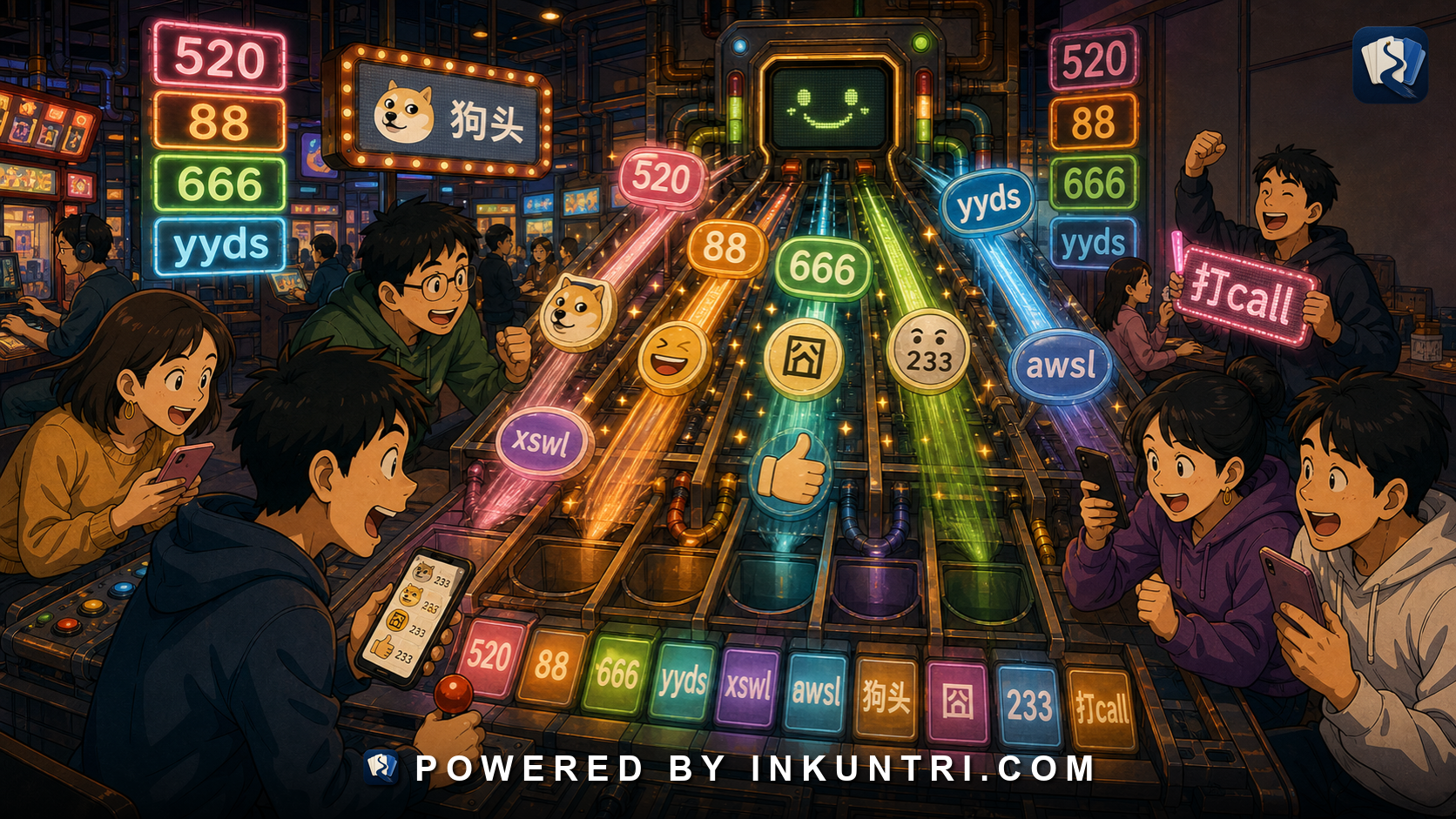
Core examples: 520, 88, 666, yyds, xswl, awsl, 狗头 emoji, 囧, 233, 打call. Recommended feature module: Decode-the-post lab: highlights number homophones, pinyin initials, emoji stance markers, irony cues, and register warnings. Related internal articles: 016, 024, 025, 026, 028, 029, 048, 051, 056.
Chinese internet language is playful because Chinese writing gives it tools
Chinese digital writing is famous for numbers like 520, letter strings like yyds, emojis such as 狗头, and character jokes that seem impossible to translate neatly.
It is tempting to treat this as a collection of memes. That is too shallow.
Chinese online play draws on deep properties of the language and writing system:
- many morphemes are one syllable
- many syllables have many homophonous or near-homophonous characters
- tones can be bent or ignored in playful matching
- numbers have pronunciations that resemble words
- Pinyin initials can stand in for whole phrases
- characters can be chosen for sound, meaning, shape, or irony
- emoji can soften, mock, intensify, or evade direct wording
- input methods make Latin letters, numbers, emoji, and characters easy to mix
A serious learner should not memorize every trending expression. Trends expire. Mechanisms last.
The goal is to ask:
What is being played with here: sound, character, number, pinyin, emoji, register, or platform context?1. Homophones are the engine
Mandarin has many syllables and tones, but compared with English, the number of possible syllables is relatively constrained. Many distinct morphemes share similar pronunciations. Chinese writing then lets users choose between characters, numbers, letters, and emoji to represent or hint at those sounds.
Example:
520This is commonly read as wǔ èr líng, approximating 我爱你 (wǒ ài nǐ, “I love you”). The match is not phonetically perfect. It is socially conventional.
Another:
88The pronunciation bā bā can suggest 拜拜 (bāibāi, “bye-bye”).
Another:
666The number 六 (liù) is associated with 溜 (liū, smooth, slick, skillful), especially in gaming and livestream contexts. So 666 can mean “nice,” “smooth,” “well played,” or “impressive.”
The important point: these are not dictionary definitions of numbers. They are conventionalized sound-play within digital communities.
2. Number slang is not arithmetic
Here are common examples learners meet:
| Form | Rough reading | Common meaning | Mechanism |
|---|---|---|---|
| 520 | wǔ èr líng | I love you | near-homophone for 我爱你 |
| 521 | wǔ èr yī | I love you | variation on 520 |
| 88 | bā bā | bye-bye | sounds like 拜拜 |
| 666 | liù liù liù | awesome; skillful | association with 溜 |
| 233 | èr sān sān | laughter | convention from forum/emoji culture |
| 1314 | yī sān yī sì | forever; one lifetime | near-homophone for 一生一世 |
| 555 | wǔ wǔ wǔ | crying sound | resembles 呜呜呜 |
These can be affectionate, ironic, playful, dated, platform-specific, or age-marked.
A crucial learner warning:
Do not use slang just because you can decode it.A 40-year-old professor may understand 666, but that does not mean it fits in an email. A livestream chat may flood 666, but it may sound unserious in a work message. 520 can be sweet in a romantic context and weird in a neutral one.
Slang has grammar, but it also has social placement.
3. Pinyin initials turn phrases into compact codes
Chinese users often abbreviate phrases by Pinyin initials. This is especially common in online comments, fandoms, gaming, youth platforms, and fast-moving social media.
Examples:
| Initialism | Expanded phrase | Rough meaning |
|---|---|---|
| yyds | 永远的神 | “eternal god”; GOAT; extremely good |
| xswl | 笑死我了 | laughing so hard; “I’m dead” |
| awsl | 啊我死了 | overwhelmed by cuteness/excitement |
| dbq | 对不起 | sorry |
| nsdd | 你说得对 | you’re right |
| zqsg | 真情实感 | sincere feeling; emotionally invested |
| yygq | 阴阳怪气 | sarcastic; passive-aggressive tone |
These forms depend on Pinyin knowledge but are not Pinyin in the normal pedagogical sense. They are compressed social writing.
They are also ambiguous. dbq can mean 对不起, but an abbreviation’s meaning depends on community and context. Some initialisms overlap with English abbreviations or with unrelated Chinese phrases.
A learner method:
- Identify whether the string is probably Pinyin initials.
- Look at the surrounding topic.
- Ask whether the expression is praise, complaint, apology, laughter, fandom, or insult.
- Search the exact form if necessary.
- Do not assume it is stable across platforms.
4. Emoji are not just pictures
Emoji in Chinese digital writing often function as stance markers. They tell you how to read the sentence emotionally.
A plain sentence:
你真厉害。Could mean sincere praise: “You’re really impressive.”
With a laughing emoji, it may be playful.
With 狗头, it may be ironic, self-protective, or “don’t take this too seriously.” The dog-head emoji/meme marker often signals joking intent, sarcasm, or plausible deniability.
Compare:
| Text | Likely effect |
|---|---|
| 我谢谢你 | Could be sincere or sarcastic depending context. |
| 我谢谢你🙂 | Often more ambiguous; may feel dry or ironic. |
| 我谢谢你😂 | Laughing, teasing, maybe not serious. |
| 我谢谢你[狗头] | Often ironic or joking. |
| 太强了 | Strong praise. |
| 太强了666 | Stream/chat-style praise. |
| 太强了,yyds | Fan-style praise. |
Emoji can also soften directness:
能不能晚点发呀🙏The prayer-hands emoji can make a request feel less abrupt. But context matters. Too many emojis can look childish, performative, or manipulative in formal settings.
5. Characters can be chosen for sound, shape, and attitude
Chinese character play is not limited to numbers and emoji. Users also choose characters for sound or visual effect.
Examples:
| Form | Mechanism | Comment |
|---|---|---|
| 囧 | visual shape | Looks like an embarrassed face; used for awkwardness or frustration. |
| 槑 | shape/character doubling | Internet form associated with “very dumb/cute-stunned,” from two 呆 components. |
| 蓝瘦香菇 | sound substitution | Sounds like 难受想哭 in certain accent imitation. |
| 鸭梨山大 | sound play | Sounds like 压力山大, “huge pressure.” |
| 稀饭 | sound play | Can stand for 喜欢 in cute/playful style. |
Some of these become dated. Some are tied to accent imitation, which can be affectionate, mocking, or regionally loaded depending context. Learners should be careful not to repeat accent-based jokes casually.
A safe rule:
Decode widely. Imitate selectively.Understanding internet language helps reading. Producing it requires social judgment.
6. Mixed scripts are normal online
A Chinese post may include:
- Chinese characters
- Arabic numerals
- Latin letters
- English words
- Pinyin initials
- emoji
- hashtags
- platform tags
- screenshots with embedded text
Example:
这段真的xswl,谁懂啊😂 这个角色也太yyds了,打call!Possible decoding:
| Segment | Meaning/function |
|---|---|
| 这段 | this part/scene |
| 真的 | really |
| xswl | 笑死我了, very funny |
| 谁懂啊 | who gets it / does anyone understand this feeling |
| 😂 | laughter marker |
| 这个角色 | this character |
| 也太…了 | so extremely… |
| yyds | extremely great / iconic |
| 打call | cheer for; support enthusiastically |
A natural translation might be:
This part absolutely killed me 😂 Does anyone get it? This character is iconic. I’m cheering so hard.But the translation loses the platform feel. That is normal. Digital Chinese often carries its tone through mixed forms that do not map neatly into English.
7. Censorship, moderation, and avoidance also shape expression
Some character play exists because direct expression may be moderated, socially risky, or too blunt. Users may use homophones, initials, emojis, screenshots, or altered characters to avoid filters or soften statements.
This does not only apply to politics. It can apply to profanity, sex, fandom conflict, commercial claims, platform rules, sensitive names, spoilers, or interpersonal drama.
Examples of avoidance mechanisms:
| Strategy | Example pattern | Function |
|---|---|---|
| Pinyin initials | using initials instead of full phrase | Reduces directness or avoids search/filter detection. |
| Homophone replacement | sound-alike characters | Keeps meaning recoverable to insiders. |
| Emoji substitution | image instead of word | Softens or obscures stance. |
| Asterisks/spaces | partial masking | Avoids automated detection or social bluntness. |
| Screenshots | text as image | Harder to search or copy. |
Learner caution: not every weird spelling is a joke. Sometimes it is a workaround.
8. How to decode responsibly
When you meet an unfamiliar expression, use this checklist:
| Question | Why it matters |
|---|---|
| Is it sound-based? | Numbers and characters may be homophones or near-homophones. |
| Is it Pinyin-initial based? | Latin letters may represent a Chinese phrase. |
| Is it platform-specific? | Douyin, Bilibili, Weibo, Xiaohongshu, WeChat, forums, and games differ. |
| Is it age-marked? | Some expressions sound young, old, dated, or subcultural. |
| Is it ironic? | Emoji and punctuation may reverse the literal meaning. |
| Is it sensitive? | Altered forms may avoid moderation or direct confrontation. |
| Should I imitate it? | Understanding is safer than production. |
Example:
这个操作太6了[狗头]Literal pieces:
这个操作 = this move/operation
太6了 = too six? → very slick/impressive, possibly ironic
[狗头] = joking/sarcastic marker
Possible reading:
That move was really something [joking/ironic tone].Context decides whether it is praise, mockery, or playful criticism.
9. What learners should memorize versus notice
Memorize a small starter set:
520 = I love you
88 = bye-bye
666 = impressive/slick
233 = laughter
xswl = laughing hard
yyds = extremely great / iconic
awsl = overwhelmed / “I’m dead”
狗头 = joking/irony marker
囧 = awkward/embarrassed face-like character
打call = cheer for/support
Notice mechanisms for everything else:
number → sound
initials → phrase
emoji → stance
character → sound/shape/irony
mixed script → platform voice
altered spelling → avoidance or play
That division protects you from chasing every trend. You build literacy by recognizing how new expressions are formed.
10. Tool concept: decode-the-post lab
A useful Inkuntri module would take a short post and layer annotations.
Input:
520快乐!今天也要给你喜欢的角色打call,yyds!Output:
| Element | Label | Explanation |
|---|---|---|
| 520 | number homophone | Often “I love you,” also associated with May 20 online romantic culture. |
| 快乐 | greeting formula | “Happy …” attached to event/day. |
| 打call | borrowed/mixed fan expression | Cheer for, support. |
| yyds | Pinyin initialism | 永远的神; high praise. |
The module should include a “production risk” label:
Safe to understand: yes.
Safe to use in formal writing: no.
Best context: fandom/chat/social media.
This is more useful than a flat slang dictionary.
10. A serious learner’s map of online play
Chinese digital writing is playful, but it is not random. Most online character play uses a small number of mechanisms:
| Mechanism | Example | What is happening |
|---|---|---|
| Number homophone | 520 | sounds like 我爱你 in common internet convention |
| Near-homophone | 886 / 拜拜了 | sounds like “bye-bye” variants |
| Pinyin initials | xswl | initials of 笑死我了 |
| Letter + character mix | yyds, YYDS | initials of 永远的神 |
| Emoji stance | 狗头 | marks joking, irony, or “don’t take this too literally” in some contexts |
| Visual symbol | 囧 | old-style emotive face/awkwardness marker |
| Dialect/register borrowing | 啊这, 咋, 嘎嘎 | regional or platform-flavored voice |
| Censorship avoidance | homophones, emojis, spacing | may avoid filters or soften sensitive wording |
| Aesthetic exaggeration | 绝绝子, 好家伙 | intensification and community flavor |
A responsible article should not present these as a fixed dictionary. Internet language changes quickly, and meanings vary by platform, generation, fandom, region, and political context. A slang form that feels normal in a fandom comment thread may sound childish, sarcastic, or stale in a work message.
For learners, the goal is recognition first:
Understand before you imitate.
Imitate only after you know the platform, relationship, and tone.
11. Numbers: sound, sentiment, and convention
Number slang is attractive to learners because it looks like a code. It is better understood as convention plus sound resemblance.
| Form | Common reading | Typical function | Caution |
|---|---|---|---|
| 88 / 886 | bye-bye | farewell | casual; can feel dated depending context |
| 520 | 我爱你 | affection | conventional, not phonologically exact in all accents |
| 1314 | 一生一世 | “for a lifetime” | romantic formula |
| 666 | skilled / impressive | praise or irony | tone depends on context |
| 233 | laughter | forum/gaming heritage | platform-dependent |
| 9494 | 就是就是 | agreement | less universal than textbook lists imply |
| 555 | crying sound | sadness/whining | childish/cute register |
The mistake is to teach these as if Chinese speakers decode each number mathematically every time. Many forms become lexicalized internet conventions. Users often recognize 520 as a whole symbol, not as a fresh sound puzzle.
A good learner workflow:
1. Identify whether the form is number slang.
2. Check whether it is used sincerely, jokingly, or ironically.
3. Notice who uses it: friends, fandoms, brands, livestream comments, couples.
4. Avoid using it in formal messages unless intentionally playful.
12. Pinyin initials are compact speech acts
Initialisms like yyds, xswl, and awsl are not just abbreviations. They often carry an entire stance.
| Initialism | Expanded form | Rough meaning | Common stance |
|---|---|---|---|
| yyds | 永远的神 | “forever god-tier” | praise, fandom admiration, exaggeration |
| xswl | 笑死我了 | “I laughed to death” | strong amusement |
| awsl | 啊我死了 | overwhelmed by cuteness/beauty | fandom/cute overload |
| dbq | 对不起 | sorry | informal apology, sometimes mock apology |
| nsdd | 你说得对 | you’re right | agreement or sarcastic agreement |
| plmm | 漂亮妹妹 | pretty girl | internet/fandom label; context-sensitive |
| zqsg | 真情实感 | sincere emotional investment | fandom commentary |
These are hard for learners because the letters are Latin but the logic is Chinese. English-speaking learners may look for English abbreviations. The correct move is usually:
letters → Pinyin initials → Chinese phrase → platform meaningFor example:
yyds → yǒng yuǎn de shén → 永远的神 → exaggerated praiseThe learner should also watch for capitalization, repetition, and punctuation:
YYDS!!!
yyds哈哈哈
真的是yyds
Those details change intensity.
13. Emoji do grammar-like work
Emoji in Chinese digital writing often act less like pictures and more like discourse particles, stance markers, and tone-management tools.
| Emoji / label | Possible function | Example interpretation |
|---|---|---|
| 😂 / 哈哈哈 | laughter | sincere amusement or softening |
| 😭 | exaggerated sadness/cuteness overload | “I’m emotionally destroyed” |
| 狗头 | joking/ironic shield | “I’m teasing; don’t attack me” |
| 🙏 | request, thanks, pleading, respect | depends on context |
| ❤️ | affection, support, fan emotion | may be sincere or performative |
| 👀 | watching, curiosity, implied drama | “I’m paying attention” |
| 🐶 / 狗 | self-mockery or teasing | platform-specific |
The same sentence can change dramatically:
你真厉害。
You’re really impressive.

你真厉害😂
Maybe amused, teasing, or light praise.

你真厉害狗头
Often joking or ironic; the speaker may be avoiding full seriousness.
This is why machine translation often fails with online Chinese. The words alone do not carry the whole message.
14. Register warning: internet literacy is not permission to sound weird
Learners love slang because it feels alive. That is good. But overusing slang can make a learner sound like a parody of a comment section.
Use this ladder:
| Context | Safer style |
|---|---|
| Formal email | standard Mandarin, no number slang, no meme initialisms |
| Teacher/classroom | occasional colloquial words if invited, not meme-heavy |
| Friend chat | emojis, 哈哈, casual particles, some slang if relationship fits |
| Fandom/live chat | initialisms, exaggerated praise, emoji play |
| Public post | platform-dependent; watch audience and topic |
| Sensitive topic | be careful: homophones and emojis can imply more than you intend |
The article should make one firm point: internet language is not “bad Chinese,” but it is also not universally appropriate Chinese. It is register-sensitive writing.
15. Stronger tool spec: decode-the-post lab
The decode-the-post tool should label four layers:
Literal text
Sound play
Platform/register
Pragmatic stance
Example:
这场演出真的yyds😭 我直接awslPossible annotation:
| Element | Label | Explanation |
|---|---|---|
| 这场演出 | topic | this performance/show |
| 真的 | intensifier | really |
| yyds | Pinyin initialism | 永远的神; exaggerated praise |
| 😭 | emoji stance | overwhelmed/emotional, not necessarily literal sadness |
| 我直接 | colloquial frame | “I just / I immediately” intensifies reaction |
| awsl | Pinyin initialism | 啊我死了; overwhelmed by cuteness/beauty/impression |
The module should include a warning:
Do not copy slang into formal writing.
Save examples by platform and date because internet usage ages quickly.
That makes the article useful without pretending to freeze a living register.
Final learner takeaway
Chinese digital writing is not a random pile of memes. It is a creative system built from sound, characters, Pinyin, numbers, emoji, platform habits, and social risk.
Your goal is not to sound like a teenager on every platform. Your goal is to recognize what is happening.
When you see an unfamiliar form, ask:
Is this a homophone?
Is this Pinyin initials?
Is this emoji stance?
Is this character shape play?
Is this avoidance?
What community uses it?
That is how internet language becomes durable literacy instead of disposable slang.
Related reading
A Serious Learner’s Guide to Chinese Dictionaries
The reader can use Chinese dictionaries more deeply by reading definitions, parts of speech, usage notes, examples, synonyms, variants, and register labels.
Chinese Pronunciation Self-Diagnosis With Recording and Native Models
The reader can diagnose Mandarin pronunciation problems through recording, comparison, targeted drills, and structured feedback rather than vague “tone practice.”
A Research Stack for Chinese Learners: Dictionaries, Corpora, Standards, and Archives
The reader can assemble a serious Chinese research stack for verifying words, usage, standards, historical context, public documents, and domain terminology.
How to Track Mandarin Listening Progress With Real Audio
The reader can measure Mandarin listening progress using real audio, transcripts, dictation, shadowing, comprehension logs, and targeted diagnosis.
How to Compare Mainland, Taiwan, and Diaspora Usage Responsibly
The reader can compare Mainland, Taiwan, Hong Kong, Singapore, and diaspora Chinese usage without collapsing everything into “same Chinese” or exaggerating difference.
Creating Domain-Specific Chinese Glossaries From Source Texts
The reader can build Chinese glossaries for specific domains by extracting terms from real documents, defining them from context, and organizing them for reuse.