
Usage
Articles tagged Usage across Chinese, Japanese, and Korean.
Switch language.
Articles.
Chinese Measure Word Guide
A clear guide to common Mandarin measure words, when 个 works, and when a noun usually prefers something more specific.
Japanese Particles Guide
A plain-language guide to core Japanese particles such as は, が, を, に, で, と, and も, with examples and comparison notes.
Korean Particles Guide
A plain-language guide to Korean particles such as 은/는, 이/가, 을/를, 에, 에서, and (으)로, with examples and use notes.
JLPT Levels Explained
A plain-language guide to what JLPT N5, N4, N3, N2, and N1 actually mean for Japanese learners.
TOPIK Levels Explained
A clean guide to how TOPIK I and TOPIK II map onto Korean proficiency levels and what the scores are used for.
HSK Levels Explained
A beginner-friendly explanation of HSK levels, what HSKK is, and why people also mention a newer HSK 3.0 framework.
First 100 Chinese Characters
A usefulness-first explorer for the first hundred Chinese characters that matter most early in reading and beginner study.
False Friends Across Chinese, Japanese, and Korean
Compare same-looking CJK words that drift into different meanings across Mandarin, Japanese, and Korean.
Sino-xenic Vocabulary Explorer
See one character or compound across Mandarin, Japanese, and Korean readings, meanings, and script forms.
Stroke Order Practice Sheets Generator
Generate printable practice sheets for kana, hangul, and beginner hanzi with guide squares ready to print.
Kanji, Hanja, and Hanzi Component Finder
Click a common component or radical and see characters built from it, along with meanings and usage notes.
How To Write Japanese Hiragana and Katakana
A beginner guide to the Japanese kana charts, basic pronunciation, and full kana stroke-order reference.
How To Read and Write Korean Hangul
A plain-language introduction to Hangul consonants, vowels, syllable blocks, and full letter stroke-order reference.
Chinese Tones Explained With Audio
A beginner explanation of Mandarin tones, contour numbers, and same-syllable examples that change meaning by tone.
Chinese, Japanese, and Korean: Common Civilization, Different Languages
A long-form essay on how Chinese, Japanese, and Korean share a civilizational sphere without belonging to a single language family.
How Loanwords Changed Japanese and Korean
A learner-oriented essay on Chinese, Western, and modern English loanwords in Japanese and Korean, and how borrowing reshaped both lexicons.
The Sinosphere and Shared Vocabulary Across East Asia
A learner-oriented essay on the Sinosphere, the old Chinese scriptworld, and why related vocabulary still links Chinese, Japanese, Korean, and older Vietnamese layers today.
Mandarin 了, 着, and 过 Explained as a System
A learner-oriented essay on why 了, 着, and 过 are best understood as aspect markers and how their contrasts organize modern Mandarin viewpoint.
Mandarin 把 and 被 Explained
A learner-oriented essay on how 把 and 被 organize affectedness, result, and viewpoint in modern Mandarin instead of working as simple word-for-word equivalents.
Mandarin Sentence-Final Particles Explained
A learner-oriented essay on Mandarin sentence-final particles, what they do in conversation, and why they cannot be reduced to a few loose translation labels.
Mandarin Complements Explained
A learner-oriented essay on result, direction, degree, potential, and other complement patterns that shape how Mandarin packages actions and outcomes.
Japanese は vs が Explained
A learner-oriented essay on topic, subject, information structure, and why the contrast between は and が cannot be mastered through one-line translation rules.
Japanese に vs で vs へ Explained
A learner-oriented essay on how Japanese location and direction particles divide labor across destination, location, route, and event framing.
Japanese Verb Forms Explained as a System
A learner-oriented essay on how Japanese verb morphology works as a connected system rather than a pile of isolated endings to memorize separately.
Japanese Transitive and Intransitive Verb Pairs Explained
A learner-oriented essay on how Japanese transitive and intransitive verb pairs frame events differently and why the contrast matters for natural expression.
Japanese Relative Clauses Explained
A learner-oriented essay on Japanese noun-modifying clauses, prenominal structure, and why English-style relative pronoun expectations often mislead beginners.
Japanese Sentence-Final Particles Explained
A learner-oriented essay on Japanese sentence-final particles and how they shape stance, softness, certainty, and conversational alignment.
Japanese Keigo Explained
A learner-oriented essay on honorific, humble, and polite Japanese, and how keigo works as a system of social framing rather than decorative politeness.
Korean 은/는 vs 이/가 Explained
A learner-oriented essay on Korean topic and subject marking, information structure, and why 은/는 and 이/가 resist simple English glosses.
Korean Speech Levels and Honorifics Explained
A learner-oriented essay on Korean speech levels, honorific marking, and how grammar tracks social relation in everyday usage.
Korean Connective Endings Explained
A learner-oriented essay on Korean clause chaining and connective endings, including how sequence, cause, contrast, and backgrounding are expressed.
Korean Omission and Ellipsis Explained
A learner-oriented essay on how Korean omits recoverable material, why that is grammatical rather than sloppy, and how discourse context carries meaning.
Korean Spacing and Why Korean Looks Inconsistent
A learner-oriented essay on Korean spacing, eojeol-like units, and why orthographic consistency depends on grammar and convention rather than simple word breaks.
Ryukyuan Languages and Why They Are Not Just “Okinawan Dialect”
The reader can understand why Ryukyuan languages deserve treatment as related languages, not simply “Okinawan dialect.”
How Chinese Funerary Language Avoids Directness
The reader can recognize euphemism, restraint, condolence formulae, and ritual vocabulary in Chinese funerary and mourning language.
Reading Korean Government Document Headers and Seal Language
The reader can read Korean government-document headers, routing labels, and seal language as a bureaucratic genre.
Confucian Terms Across East Asia: 仁, 義, 礼, 孝, and Their Afterlives
The reader can trace Confucian ethical vocabulary across Chinese, Japanese, and Korean cultural and political language.
The Mandarin of Housing Dreams: 房, 家, 安居, and Stability
The reader can understand how Mandarin links housing vocabulary with family, stability, status, local identity, education, and life planning.
Economic Vocabulary: 增长, 收入, 利润, 投资, 消费
The reader can read basic Chinese economic reporting with attention to metrics, actors, trends, and evaluative framing.
From Flashcards to Literacy: When Korean Study Must Leave the Card
The reader can tell when flashcards are useful and when Korean learning must move into extended reading, listening, writing, and task performance.
Korean Backchanneling: 네, 예, 맞아요, 음, 아
The reader can interpret Korean backchanneling as active participation, alignment, checking, or polite listening.
When Not to Overcorrect Korean Pronunciation
The reader can avoid overcorrecting Korean pronunciation in ways that make speech stiff, unnatural, or socially odd.
Negation: 안, 못, 지 않다, 지 못하다, 아니다
The reader can distinguish Korean negation types by scope, ability, formality, and predicate type.
Causality in Chinese: 因为, 所以, 由于, 因而, and Result Framing
The reader learns how Mandarin marks cause, result, explanation, and formal causal reasoning.
How Chinese Forms Abbreviations: From 北京大学 to 北大
The reader can decode common Chinese abbreviations and understand how characters are selected, compressed, and conventionalized.
Japanese Municipal Notices: 回覧板, 申請, 窓口, 期限
The reader can read Japanese municipal notices and identify topic, responsible office, deadline, required action, target audience, and administrative procedure.
The Language of Imperial Eras: Meiji, Taishō, Shōwa, Heisei, Reiwa
The reader can interpret imperial era names as time vocabulary, political-cultural symbols, and document conventions.

Why Japanese Has So Many Ways to Write the Same Word
The reader can understand orthographic choice as a register and style decision: kanji, kana, katakana, and mixed spelling can all be legitimate.
Chinese Verbs That Translate as “Make”: 做, 制作, 造成, 使, 令
The reader can choose among Mandarin verbs that English often collapses into “make.”
A Serious Learner’s Guide to Japanese Dictionaries
The reader can choose and use Japanese dictionaries for words, kanji, pitch accent, collocations, classical forms, domain terms, and learner-level explanations.
How to Build a Hanja-Aware Korean Vocabulary Notebook
The reader can use Hanja roots to organize Korean vocabulary without turning Korean study into unfocused character memorization.
Chinese HR Language: 招聘, 入职, 考核, 离职
The reader can understand Chinese HR language from recruitment through onboarding, performance review, contract changes, and resignation.
Classical Japanese Grammar Still Hiding in Modern Expressions
The reader can recognize classical Japanese grammar that survives in modern set phrases, literature, songs, signs, and formal writing.
How Japanese Expresses Group Identity
The reader can analyze how Japanese expresses group identity through uchi/soto, company and school affiliation, regional belonging, fandom, team language, and pronoun choice.
Wasei-Eigo: English-Looking Japanese That English Speakers Misread
The reader can identify wasei-eigo and avoid assuming English-looking katakana words preserve English meaning.
Reading Chinese Meeting Minutes: 纪要, 事项, 责任人, 截止时间
The reader can read Chinese meeting minutes, identify decisions and action items, and understand the formal shorthand used in workplace documentation.
Building a Japanese Reader Workflow From News, Essays, Manga, and Forms
The reader can build a Japanese reading workflow that balances news, essays, manga, forms, and domain documents instead of relying on one genre.
The Shared Calendar Vocabulary of East Asia
The reader understands the Chinese-origin calendar vocabulary shared across East Asia and where modern Chinese, Japanese, and Korean systems diverge.
から, ので, ため: Cause, Explanation, and Formality
The reader can choose among から, ので, and ため by tracking causality, explanation, formality, and speaker stance.
Korean Internet Humor as Hangul and Register Play
The reader can recognize how Korean internet humor uses spelling, abbreviation, sound symbolism, register shifts, and subtitle-like timing.
Tone Pairs in Natural Speech: Why 2-3 and 4-4 Need Special Practice
The reader learns why tone pairs are the practical foundation of tone production and listening.
Place Suffixes: 省, 市, 区, 县, 镇, 村, 路, 巷
The reader can decode Chinese place names and administrative labels on maps, addresses, signs, and news reports.
Buddhist Vocabulary Across Chinese, Japanese, and Korean
The reader understands Buddhist vocabulary as a major shared layer of religious, philosophical, literary, and everyday East Asian language.
Jeju Language and Why It Is Not Just Regional Flavor
The reader can understand Jeju language/Jejueo as an endangered language ecology and approach Jeju speech in media, tourism, and scholarship with respect.
Kinship Terms as Social Vocabulary in Mandarin
The reader can interpret kinship terms as family labels, social address terms, metaphors, and hierarchy markers.
Hotel Korean: 체크인, 보관, 영수증, 불만
The reader can approach Korean hotel pages and service interactions by identifying check-in/out, luggage storage, receipts, complaints, rooms, reservation names, extra fees, breakfast, and front desk language.
Korean Small Talk: Weather, Food, Work, and Safe Openings
The reader can use Korean small talk to open conversation, maintain warmth, and avoid jumping too quickly into overly personal or overly formal speech.
Postwar Script Reform and the Shape of Today’s Kanji
The reader can explain postwar script reform and recognize how it shaped today’s kanji use, education, and public writing.
False Friends Between Japanese and Korean Sino-Xenic Words
The reader can spot false friends between Japanese kango and Korean Sino-Xenic words by checking meaning, usage, and register rather than characters alone.
How Chinese Builds Words From Characters Without Being “One Character = One Word”
The reader can use character knowledge to learn vocabulary without falling into the false belief that every character equals a standalone word.
Branding Korean: Naming, Hangul Choice, and Consumer Trust
The reader can analyze Korean branding language through naming, Hangul/English mix, premium and local cues, institutional trust, product-category labels, and consumer persona.
Mandarin in Variety Shows: Banter, Teasing, and Audience Alignment
The reader can understand Mandarin variety-show speech as edited performance involving banter, teasing, callbacks, audience alignment, and persona management.
Chinese Loanwords, Japanese Colonial Terms, and English Loans in Korean
The reader can distinguish major borrowing channels into Korean and understand why origin often predicts register, social feeling, and domain.
The Grammar of Korean Legal Obligations: 해야 한다, 하여야 한다, 할 수 있다, 해서는 안 된다
The reader can parse Korean legal obligation and permission language with attention to force, prohibition, discretion, and duty.
Korean Formal Writing: Nominal Endings, Parallelism, and Compression
The reader can parse Korean formal writing that uses nominal endings, parallel bullets, omitted actors, and compressed administrative style.
How Japanese Speakers Soften Disagreement Prosodically
The reader can hear and produce softened disagreement in Japanese through prosody, hedging, delay, and partial acceptance.
Customer-Service Mandarin: Apology, Escalation, and Resolution Scripts
The reader can understand customer-service Mandarin in chat scripts, complaint handling, escalation, apology, and resolution language.
North Korean and South Korean Vocabulary Divergence
The reader can read North/South vocabulary comparisons as evidence of history, policy, domain, and register rather than as novelty lists.
The Language of Housing in Japan: マイホーム, 賃貸, 空き家
The reader can read Japanese housing language around renting, buying, vacant homes, floor plans, fees, neighborhood image, and homeownership ideals.
Same Character, Different Word: 学, 學, 学ぶ, 배우다, and the Limits of Cognates
The reader learns that shared characters do not mean shared words, especially when Japanese and Korean use native verbs around Chinese-derived characters.
The Script Reform Debate: Simplification, Pinyin, and Unfinished Questions
The reader understands script reform as a long debate involving literacy, identity, technology, regional standards, and politics.
How to Build a Yearlong Korean Intensive Around Inkuntri + Reader
The reader can design a 12-month Korean study plan that combines structured lessons, reading, listening, writing, domain literacy, and periodic assessment.
Japanese Insurance Policies: 保険料, 補償, 免責, 受取人
The reader can read Japanese insurance policies by separating premium, coverage, exemption, beneficiary, claim process, and exclusions.
Chinese-Korean False Friends in Everyday Formal Vocabulary
The reader can recognize cases where Mandarin and Korean formal vocabulary share roots but diverge in everyday meaning or usage.
How Japanese Children Move From Kana to Kanji Literacy
The reader can understand how Japanese children acquire literacy from kana fluency through graded kanji, vocabulary, reading, and composition.
Minimal Pairs That Matter: shi/xi, chi/qi, an/ang, en/eng
The reader practices minimal and near-minimal contrasts that cause real misunderstanding in Mandarin listening and speaking.
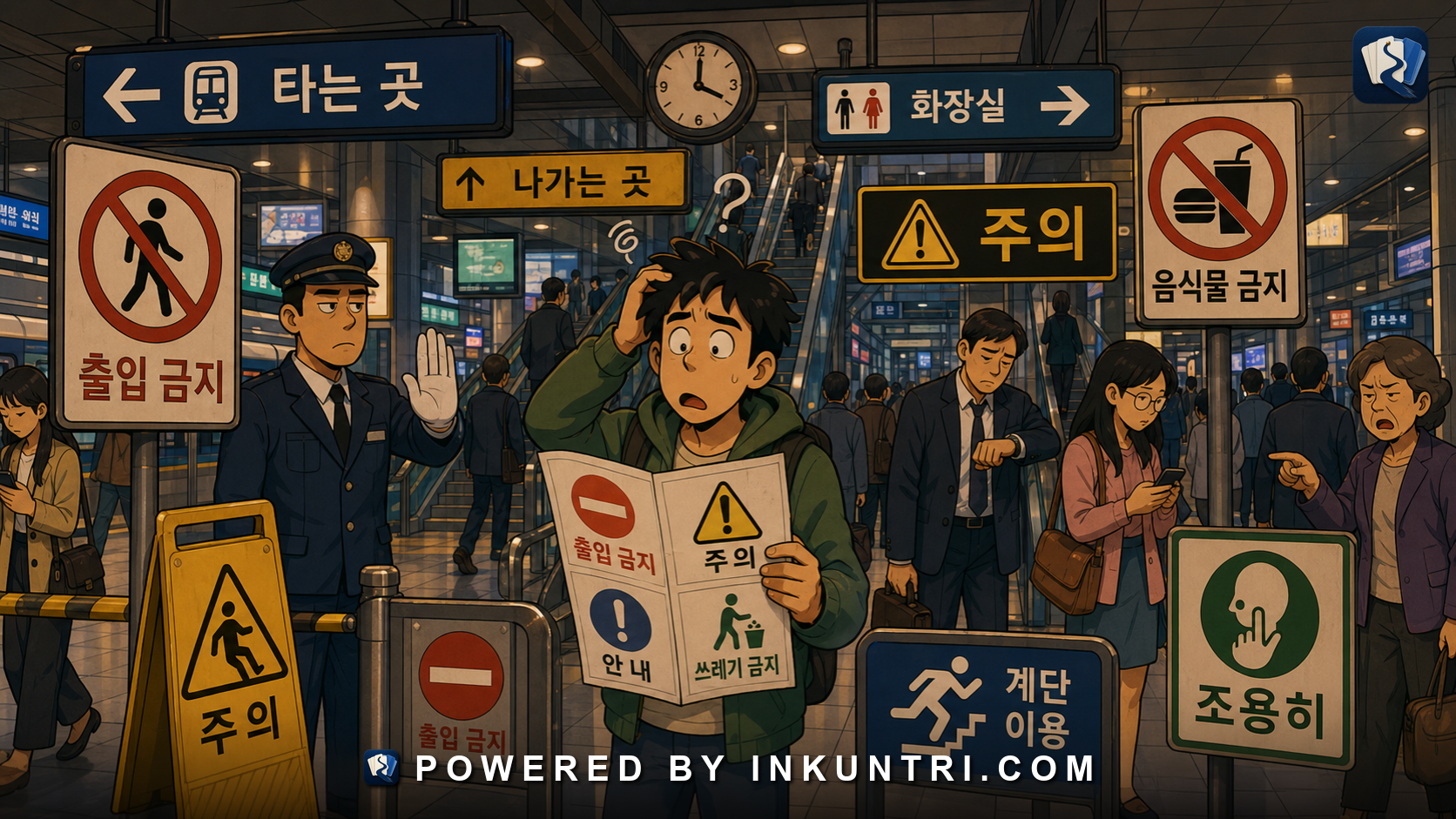
Public-Sign Korean: Prohibitions, Requests, Warnings, and Polite Authority
The reader can read Korean public signs as compressed systems of authority, politeness, safety, and institutional voice.
The Korean Language Under Japanese Colonial Rule
The reader can understand colonial-era language history as schooling, policy, identity, vocabulary, publication, resistance, and post-liberation memory rather than a simple list of loanwords.
成语 for Adults: History, Register, and When Not to Use Them
The reader learns to treat 成语 as register-sensitive cultural vocabulary, not as decorative proof of fluency.
The Language of Neighborhood Life: 小区, 物业, 居委会
The reader can understand Chinese neighborhood-life vocabulary in residential notices, group chats, property-management messages, and local community interactions.
Internet Slang Built From Homophones: 666, 88, xswl, and Beyond
The reader understands how Chinese internet slang exploits sound, numbers, initials, tone, and platform culture while learning to use it cautiously.
Modern Korean Through Mandarin Eyes: What Hanja Conceals
The reader can use Mandarin knowledge to interpret Korean formal vocabulary while respecting Hangul, Korean-specific readings, semantic drift, institutions, and Hanja concealment.
Backchanneling: はい, ええ, うん, そうですね as Listening Grammar
The reader can treat backchanneling as listening grammar that keeps Japanese conversation flowing and signals attention without taking the floor.
CJK Translation of Western Concepts: Nation, Society, Science, Rights
The reader can understand modern Korean intellectual vocabulary as part of a broader East Asian translation history while still checking Korean-specific usage.
Mandarin Travel Vlogs: Informal Speech and Place Branding
The reader can understand Chinese travel-vlog language, including informal narration, recommendation formulas, influencer phrasing, and place-branding clichés.
Fraud Warning Japanese: 特殊詐欺, 不審メール, 注意喚起
The reader can identify Japanese fraud-warning language in official notices, emails, texts, bank alerts, and public-safety announcements.
Modern Coinages: How Chinese Names New Technologies
The reader can analyze new Chinese technical terms by recognizing semantic compounds, calques, sound borrowings, acronym retention, transliterations, and hybrid forms.
Reading Temple, Palace, and Heritage-Site Signs
The reader can read Korean heritage-site signs as a mix of visitor instruction, historical explanation, preservation language, and religious/court vocabulary.

Variant Characters, 异体字, and What Learners Meet in Names and Archives
The reader recognizes variant characters as a real literacy issue in names, historical materials, typography, and cross-region reading.
Education Policy Korean: 입시, 교육과정, 장학금, 학교폭력
The reader can read Korean education-policy language by distinguishing admissions, curriculum, scholarships, school violence procedures, college entrance exam terms, school records, parents, counseling, and...
Railway Japanese: Announcements, Delays, Transfers, and Platform Language
The reader can understand Japanese railway announcements, delay explanations, transfer instructions, and platform language in real time.
Creating Domain-Specific Chinese Glossaries From Source Texts
The reader can build Chinese glossaries for specific domains by extracting terms from real documents, defining them from context, and organizing them for reuse.
How Japanese Uses Lists, Parallelism, and Nominal Endings
The reader can interpret Japanese list structures, parallel phrasing, and nominal endings in formal prose without losing the sentence thread.
How to Compare Mainland, Taiwan, and Diaspora Usage Responsibly
The reader can compare Mainland, Taiwan, Hong Kong, Singapore, and diaspora Chinese usage without collapsing everything into “same Chinese” or exaggerating difference.
Money Talk in Korean: Directness, Indirection, and Social Boundary
The reader can recognize when Korean money talk is ordinary, intrusive, playful, transactional, or relationship-defining.
Korean Hanja and Japanese Kanji: Shared Forms, Different Literacy Futures
The reader can compare Korean hanja and Japanese kanji as shared character literacy systems that took very different modern paths.
Casual Contractions: ている to てる, じゃない to じゃん, and More
The reader can recognize common casual contractions and understand their grammar, register, and social boundaries.
Information Structure: 新信息, 旧信息, Focus, and Emphasis
The reader understands how Mandarin organizes old information, new information, focus, and emphasis through word order and particles.
Advertising Japanese: 安心, お得, 限定, 実感, 選ばれる理由
The reader can analyze Japanese advertising language by separating reassurance, value claims, exclusivity, sensory proof, and consumer persuasion.
How to Use Japanese Corpora Without Mistaking Frequency for Importance
The reader can use Japanese corpora responsibly by distinguishing frequency, distribution, register, genre, collocation, learner usefulness, and curricular importance.
How Korean Dramas Teach Register and Social Role
The reader can use Korean dramas as register evidence while avoiding the mistake of copying stylized dialogue as ordinary speech.
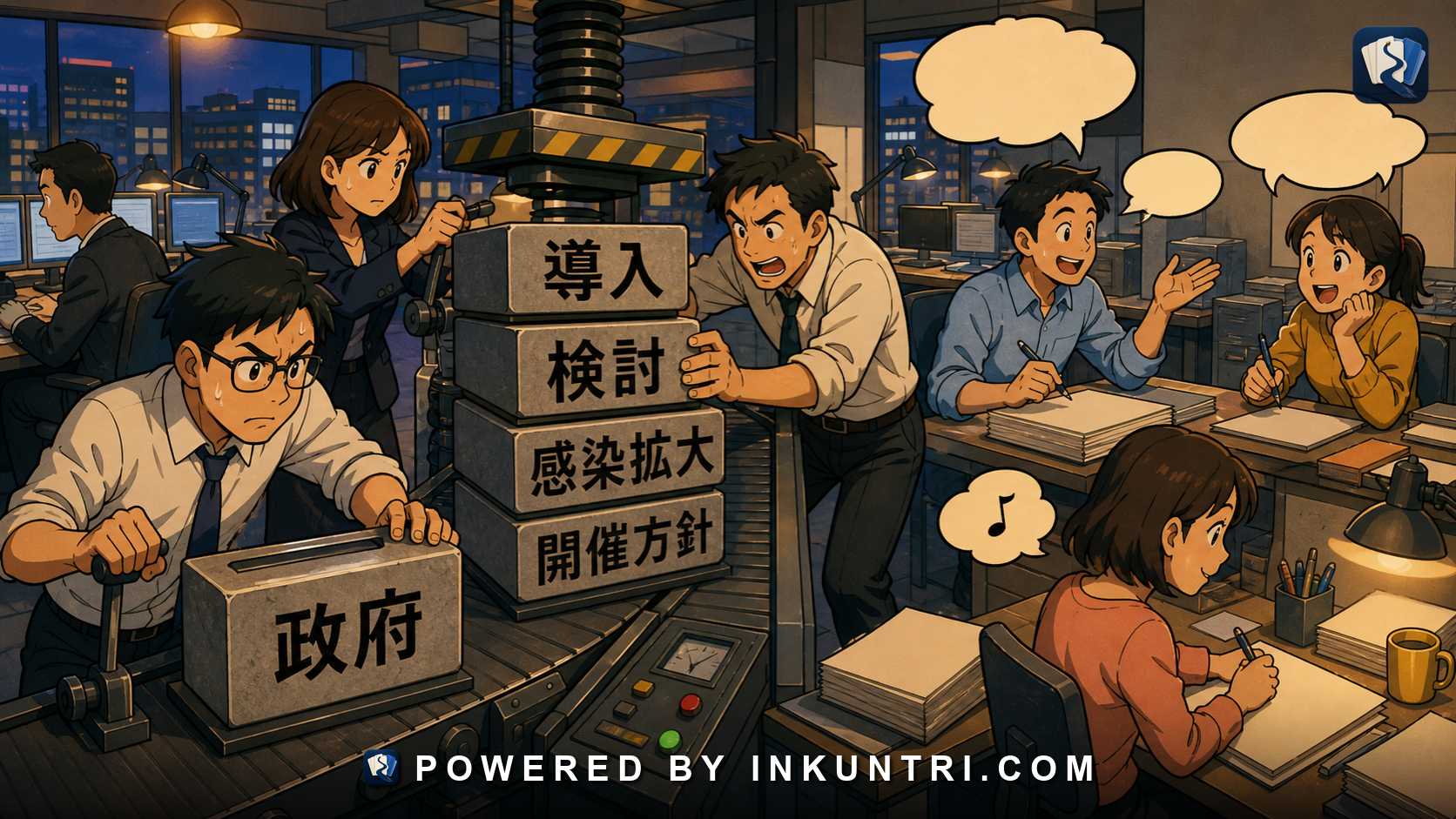
Kanji Compounds in Newspapers vs Everyday Writing
The reader can read Japanese news and institutional writing by recognizing why kanji compounds are denser there than in casual prose.
When a Korean Word Has Native and Sino-Korean Alternatives
The reader can choose between Korean near-synonyms such as 나이/연령, 이름/성명, 집/주택, 몸/신체, 말/언어, 도움/지원, and 아픔/통증 by register, domain, collocation, and emotional distance.
Onomatopoeia and Sound Symbolism in Spoken Japanese
The reader can use Japanese onomatopoeia and sound symbolism as a serious vocabulary system for sound, texture, emotion, motion, and state.
The Language of Housing in Korea: 전세, 월세, 내 집 마련
The reader can understand Korean housing vocabulary across ads, news, contracts, family conversations, and policy discourse.
How to Track Mandarin Listening Progress With Real Audio
The reader can measure Mandarin listening progress using real audio, transcripts, dictation, shadowing, comprehension logs, and targeted diagnosis.
Mandarin Conditionals: 如果, 要是, 只要, 除非, and 即使
The reader can distinguish ordinary conditions, casual hypotheticals, sufficient conditions, exceptions, and concessive conditions.
How Mandarin Speakers Reduce Syllables in Fast Speech
The reader understands that natural Mandarin speech reduces syllables, particles, and common words without becoming “incorrect.”
Korean Drama Speech vs Real Conversation
The reader can use Korean drama speech as a learning resource while separating scripted convention from ordinary conversation.
Sentence-Final 吧, 啊, 呢, 了, and 的 in Conversation
The reader understands major sentence-final particles as stance markers that shape conversation, certainty, softness, and shared context.
Standard Korean, Seoul Speech, and the Politics of “Correct” Korean
The reader can distinguish Standard Korean from actual Seoul speech and understand why “correct Korean” is institutional, social, and linguistic at once.
Chinese Internet Humor as Linguistic Compression
The reader can understand Chinese internet humor as a system of compression, quotation, rhythm, homophones, stance-taking, and shared cultural context.
Legal Kango Shared Across East Asia
The reader can compare legal kango shared across East Asia while noticing jurisdiction-specific meanings and document conventions.
Pronunciation Problems That Survive Advanced Korean Study
The reader can diagnose advanced Korean pronunciation problems that remain after basic Hangul and sound-change study.
Taiwan Mandarin Pronunciation: Common Differences Learners Actually Hear
The reader recognizes common Taiwan Mandarin pronunciation patterns and understands how they affect listening, not just accent labels.

Hangul as a Scientific Script: What That Claim Gets Right and Wrong
The reader can separate the real design strengths of Hangul from simplistic claims about perfection or total transparency.
The Grammar of Chinese Legal Obligations: 应当, 必须, 可以, 不得
The reader can distinguish duty, necessity, permission, authorization, prohibition, and recommendation in legal and regulatory Chinese.
Sino-Korean Vocabulary vs Sino-Japanese Vocabulary
The reader can compare Sino-Korean and Sino-Japanese vocabulary by reading, register, productivity, frequency, and grammar instead of by character identity alone.
Japanese Loans in Modern Chinese: Why Some “Chinese” Words Came Back Through Japan
The reader understands the modern Sino-Japanese vocabulary loop and why many modern Chinese intellectual terms were shaped through Japan.
School Culture in Japanese: Clubs, Homeroom, Exams, and Senpai/Kōhai
The reader can understand Japanese school-culture language around homeroom, club activities, exams, teacher roles, school events, and senpai/kōhai relations.
Building Korean Vocabulary by Register Instead of Frequency Alone
The reader can organize Korean vocabulary by word family, register, domain, collocation, and source type rather than relying on flat frequency lists.
How to Compare Tokyo, Kansai, and Regional Usage Responsibly
The reader can compare Tokyo, Kansai, and regional Japanese usage without overgeneralizing from stereotypes, jokes, or one speaker’s habits.
Comparatives in Korean: 보다, 만큼, 제일, 더
The reader can parse Korean comparison in reviews, charts, news statistics, product pages, and everyday evaluation.
Native Korean, Sino-Korean, and Loanwords: Three Layers of Vocabulary
The reader can classify Korean vocabulary by layer and understand how layer affects register, collocation, domain, and emotional tone.
Traditional Chinese, Japanese Kyūjitai, and Korean Hanja Forms Compared
The reader understands why traditional Chinese forms, Japanese old forms, and Korean Hanja often overlap but are not always identical in practice.
Vowels That Devoice: です, ます, and Everyday Speech
The reader can notice vowel devoicing in common environments and use it to understand why natural です and ます differ from textbook spelling.
What Serious Korea-Philes Should Learn From One Subway Announcement
The reader can treat one Korean subway announcement as a compact lesson in public language, politeness, accessibility, safety, urban geography, and repeated listening.
What Korean Learners Should Know About North-South Terminology
The reader can compare North and South Korean terminology without turning division into novelty, caricature, or overconfident equivalence lists.

Email Japanese: Formatting, Openings, Closings, and Line Breaks
The reader can write and read Japanese email by understanding formulaic openings, closings, line breaks, signatures, and politeness expectations.
Variety-Show Japanese: Teasing, Reaction, and Group Alignment
The reader can understand Japanese variety-show language around teasing, reaction, self-deprecation, group alignment, laughter cues, and host control.
Mandarin, Cantonese, Shanghainese, Hokkien: Language, Variety, and Politics
The reader gains a respectful and accurate framework for discussing Sinitic languages and the politics of calling them “dialects.”
The Grammar of Japanese Legal Obligations: しなければならない, してはならない, できる
The reader can parse Japanese legal obligation and permission language as a system of duty, prohibition, discretion, and legal effect.
Abbreviations in Japanese: From コンビニ to 就活
The reader can understand Japanese abbreviations as a productive word-formation system across everyday life, school, work, and pop culture.
How Beijing Accent Differs From Standard Classroom Mandarin
The reader can distinguish Beijing-accent features from standard Putonghua expectations and avoid overgeneralizing Beijing speech as “the standard.”
Social Media Platform Chinese: Posts, Comments, Shares, and Moderation
The reader can understand Chinese social-platform vocabulary for posting, commenting, sharing, algorithms, moderation, and user behavior.
逆接 Grammar: が, けど, のに, ても, ところが
The reader can distinguish Japanese adversative connectors by contrast type, expectation, register, and discourse function instead of translating all of them as “but.”
How to Compare Seoul, Regional, and North-South Usage Responsibly
The reader can compare Korean usage varieties without turning difference into stereotype, superiority, or unsupported anecdote.
Traditional Chinese Medicine Vocabulary for Skeptical Learners
The reader can understand traditional Chinese medicine vocabulary as language and cultural discourse while maintaining clear boundaries between terminology, belief system, and evidence.
Literary Chinese in Today’s Signs, Names, and Slogans
The reader can spot literary or classical-style language embedded in modern public Chinese.
Discourse Markers: 사실, 물론, 아무튼, 그러니까, 그런데
The reader can interpret Korean discourse markers as tools for steering thought, not filler words.
How Mandarin Handles Compliments and Denials
The reader can interpret compliment responses in Mandarin, including denial, deflection, modest acceptance, reciprocal praise, and playful exaggeration.
Gaming Chinese: UI, Patch Notes, Player Complaints, and Esports
The reader can understand Chinese gaming language across UI labels, patch notes, player forums, bug reports, and esports commentary.
Korean Immigration Forms: 체류자격, 연장, 허가, 제출서류
The reader can understand the structure and risk language of Korean immigration forms and notices without treating them as ordinary conversational Korean.
A Research Stack for Chinese Learners: Dictionaries, Corpora, Standards, and Archives
The reader can assemble a serious Chinese research stack for verifying words, usage, standards, historical context, public documents, and domain terminology.
Gendered Language Debates in Modern Chinese
The reader understands how Chinese debates gender through characters, pronouns, address terms, professional titles, and internet discourse.
Near-Synonym Field Guide: 直す, 治す, 修正する, 改善する
The reader can distinguish repair, healing, correction, and improvement vocabulary instead of translating all of it as “fix.”
Buddhist Vocabulary Across Korean, Chinese, and Japanese
The reader can compare Buddhist vocabulary across Korean, Chinese, and Japanese while distinguishing doctrine, temple language, history, and everyday idiom.
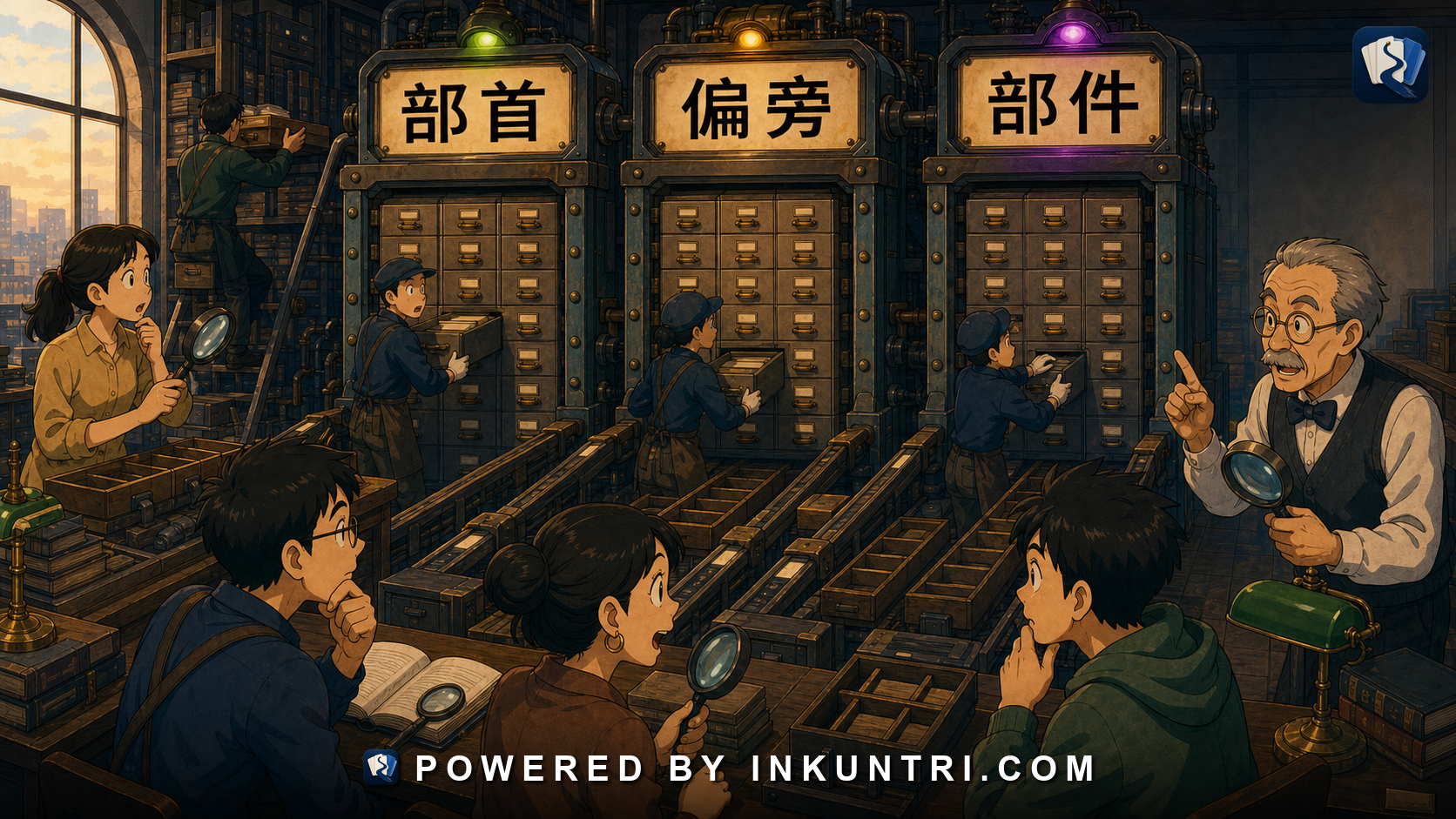
The Real Work of 部首 in Reading, Lookup, and Education
The reader learns that 部首 are not simply “meaning parts” and sees how radicals function in dictionaries, schooling, and learner memory.
Speech Rate and Pausing in Korean Presentations
The reader can control speech rate and pausing for Korean presentations and formal explanations.
Listening to Kansai Japanese Without Turning It Into a Stereotype
The reader can listen to Kansai Japanese as a living regional variety rather than a bundle of comedy stereotypes.

Korean Headline Writing: Particles Dropped, Verbs Compressed, Meaning Preserved
The reader can decode Korean headlines that omit particles, compress verbs, and front-load key actors or results.
Near-Synonym Field Guide: 问题, 议题, 课题, 难题
The reader can choose among words for problem, issue, research topic, and difficult challenge.
Housing Policy Mandarin: 保障房, 商品房, 公积金, 限购
The reader can understand Chinese housing-policy language in news, government notices, and real estate commentary.
Defense Japanese: 訓練, 装備, 自衛隊, 防衛白書
The reader can understand Japanese defense language in public, non-operational sources such as training notices, equipment descriptions, and white papers.
Pharmaceutical Chinese: Indications, Contraindications, and Dosage Labels
The reader can read Chinese medication labels and distinguish usage instructions, warnings, dosage, side effects, and contraindications.
The Vocabulary of Korean Apologies by Severity
The reader can select apology language by severity, relationship, responsibility, and repair obligation instead of memorizing one “sorry” phrase.
How Korean Schooling Shapes Standard Speech
The reader can see school Korean as an institutionally trained norm involving pronunciation, spelling, public speaking, honorifics, and correctness.
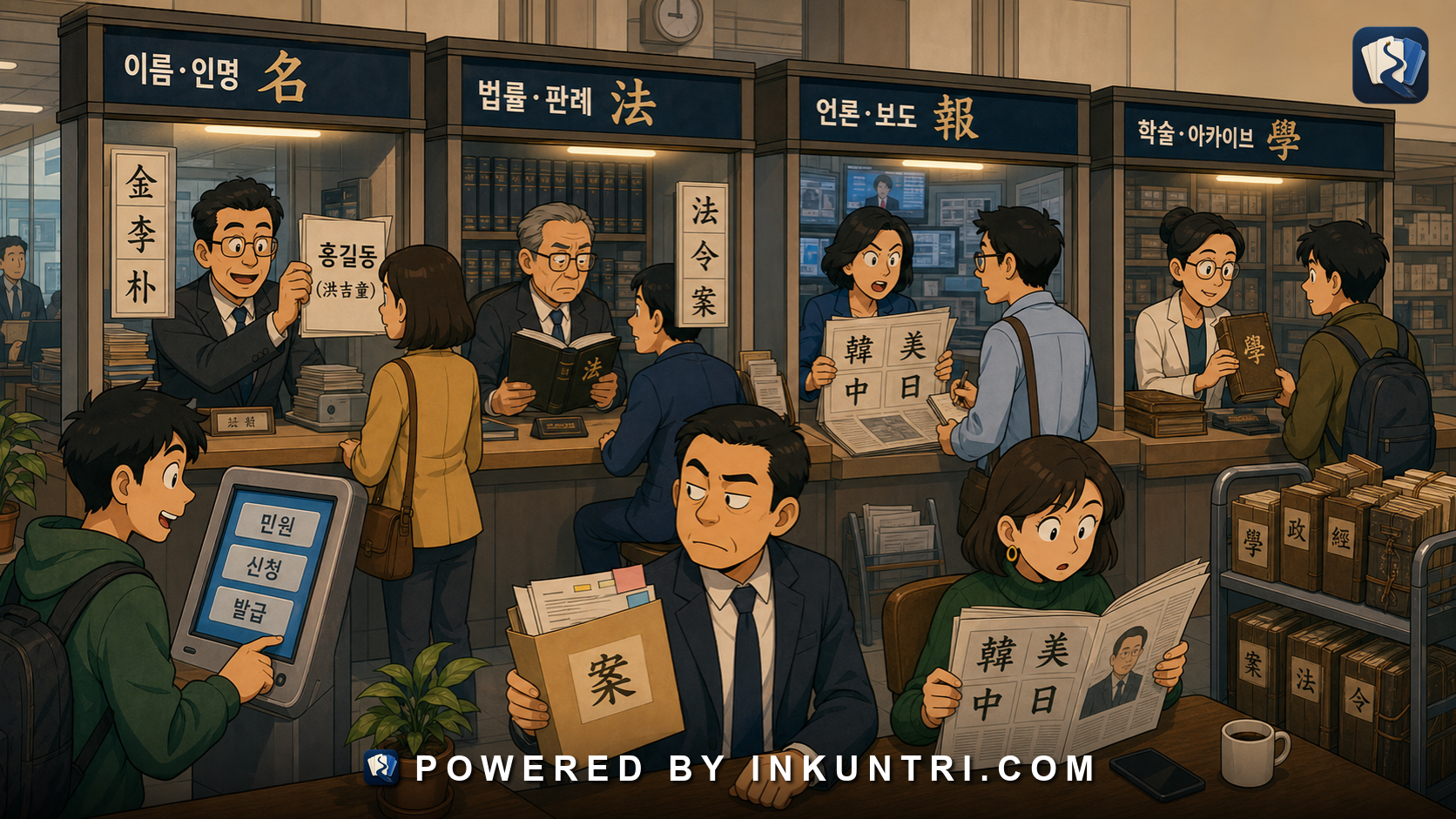
When Hanja Still Appears in Korean Names, Law, News, and Academia
The reader can know where Hanja still matters in modern Korean reading: names, law, news, official documents, scholarship, and archives.
Idioms From Classical Chinese in Modern Japanese
The reader can identify idioms inherited from Classical Chinese and understand why they still shape formal and literary Japanese.
How Restaurant Names Signal Region, Class, and Taste in Japan
The reader can interpret Japanese restaurant names as signals of cuisine, region, atmosphere, price point, nostalgia, trendiness, and brand identity.
Japanese Internet Humor as Script and Register Play
The reader can analyze Japanese internet humor through script choice, register shifts, parody forms, abbreviations, reaction language, and community context.
Gendered Korean: History, Media, and Real Usage
The reader can analyze gendered Korean as usage, ideology, media performance, and interaction rather than a fixed “men’s language vs women’s language” code.
Building a Korean Reader Workflow From News, Essays, Dramas, and Forms
The reader can build a balanced Korean reading workflow that combines polished prose, spoken dialogue, domain documents, and repeatable annotation habits.

How Menus Use Characters Differently From Textbooks
The reader learns to read menu Chinese as a compressed domain language built from ingredients, methods, textures, regions, and dish names.
False Friends Between Korean and Mandarin Sino-Xenic Words
The reader can identify Korean–Mandarin false friends that share character roots but diverge in modern meaning, collocation, or register.
Japanese School Language and the Formation of Standard Speech
The reader can see how school language participates in forming standard speech, literacy norms, and social behavior.
なら, と, ば, たら: Four Conditional Logics
The reader can choose among なら, と, ば, and たら by recognizing different conditional logics and discourse functions.
Fraud Warning Korean: 보이스피싱, 스미싱, 주의보
The reader can understand Korean fraud warnings, recognize official caution patterns, and identify the verbs used for reporting, prevention, and damage control.
Speech Levels as Grammar: 해체, 해요체, 하십시오체, and Beyond
The reader can choose and interpret Korean speech levels as grammatical systems tied to relationship, genre, and situation.

Reading Japanese Names: Nanori, On/Kun, and Why Guessing Fails
The reader can approach Japanese names with humility, tools, and context instead of trying to mechanically derive readings from kanji.
Serial Verb Constructions in Everyday Mandarin
The reader recognizes chains of verbs that express sequence, purpose, means, and accompanying actions without extra conjunctions.
Why 선생님 Is a Social Category, Not Just “Teacher”
The reader can understand 선생님 as an address term for expertise, service roles, respect, and safe distance, not only for schoolteachers.
Japanese Banking App Language: 振込, 認証, 限度額, 手数料
The reader can use Japanese banking-app language by recognizing transfer, authentication, limits, fees, confirmation, and security warnings.
Why Japanese 音読み Helps but Also Misleads Mandarin Learners
The reader understands how Japanese on-yomi can support Mandarin vocabulary learning while creating false expectations about sound and meaning.
The Language of Korean Family Registers and Identity Documents
The reader can recognize major terms in Korean civil-status and identity documents without treating them as ordinary conversational vocabulary.
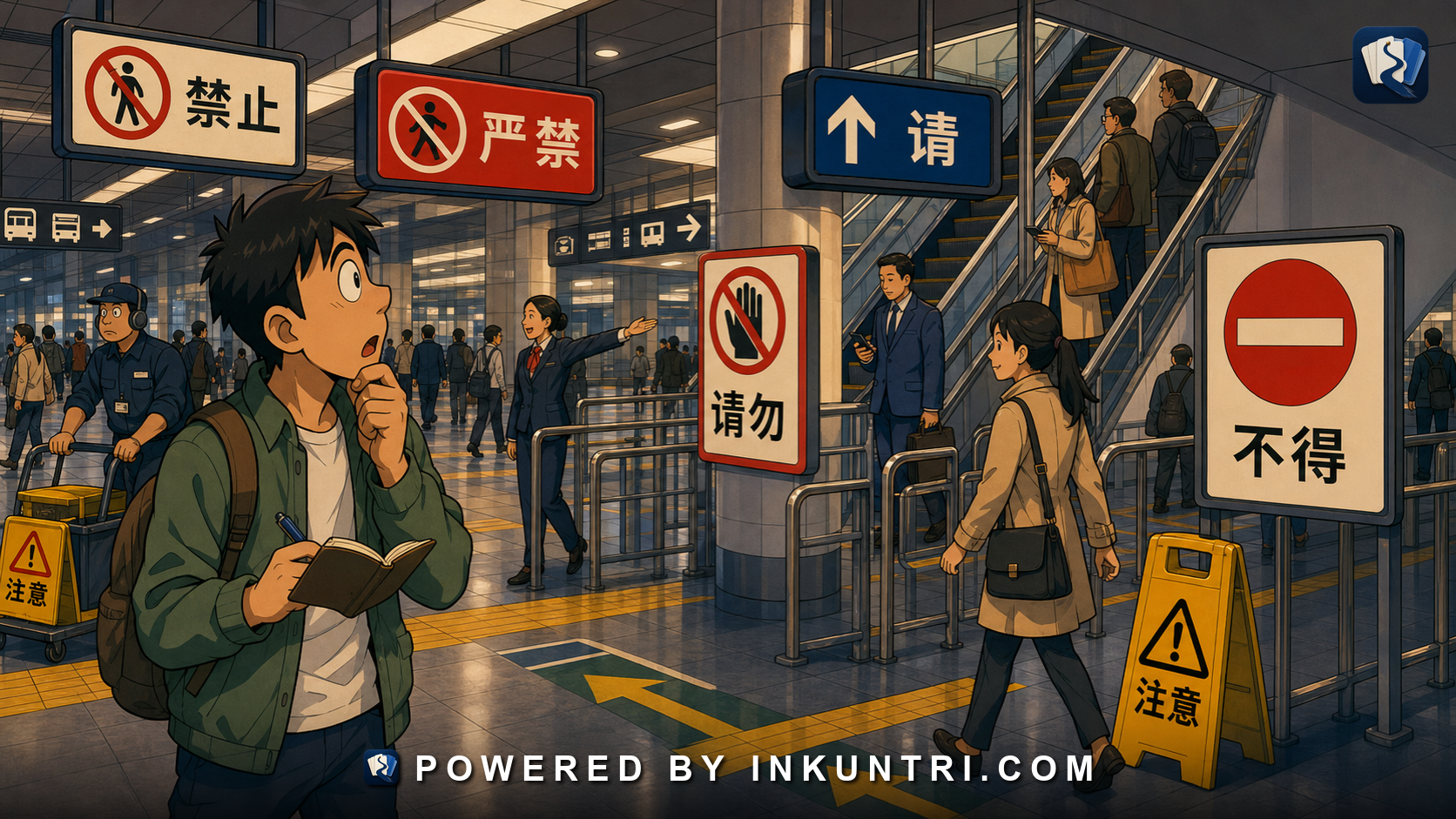
Reading Public Signs in China: The Grammar of Warnings, Bans, and Instructions
The reader learns the compact grammar of signs, warnings, prohibitions, permissions, and procedural instructions.
Konglish: English-Looking Korean That English Speakers Misread
The reader can recognize Koreanized English forms whose Korean meaning, domain, and usage differ from English expectations.
Korean Modality: 수 있다, 줄 알다, 해야 하다, 모양이다
The reader can analyze Korean modality through ability, know-how, obligation, possibility, inference, and appearance.
A Serious Learner’s Guide to Korean Dictionaries
The reader can choose the right dictionary type for meaning, usage, Hanja layer, pronunciation, collocation, example sentences, and domain terminology.
How Korean Hanja Maps to Japanese Kanji and Mandarin Hanzi
The reader can map Korean Hanja to Japanese Kanji and Chinese Hanzi forms while keeping form, reading, and usage separate.
Near-Synonym Field Guide: 変える, 替える, 代える, 換える
The reader can choose among 変える, 替える, 代える, and 換える by identifying what kind of change or substitution is taking place.
Chinese Verbs That Translate as “Say”: 说, 讲, 表示, 称, 指出
The reader can identify different reporting verbs and use them appropriately in speech, news, interviews, and academic writing.
How to Build a Yearlong Mandarin Intensive Around Inkuntri + Reader
The reader can design a one-year Mandarin learning plan that combines structured lessons, topical reading, listening, review, output, diagnostics, and domain specialization.
Near-Synonym Field Guide: 알다, 이해하다, 깨닫다, 인식하다
The reader can distinguish factual knowledge, comprehension, realization, and institutional awareness in Korean.
Post-Liberation Language Reform in North and South Korea
The reader can understand North/South Korean language divergence as separate standardization histories involving spelling, vocabulary, pronunciation, policy, and ideology.
Academic Korean: Hedging, Citation, and Argument Flow
The reader can read and write academic Korean by recognizing hedging, citation, argument structure, and formal stance.
A Research Stack for Korean Learners: Corpora, Dictionaries, White Papers, Archives
The reader can assemble a serious Korean research workflow using resource types rather than relying on random search results or social-media explanations.
Modern Japanese Through Mandarin Eyes: What Kanji Conceals
The reader can use Mandarin knowledge to read Japanese kanji more intelligently while avoiding false friends and grammar-transfer errors.
Idioms From Classical Chinese in Modern Korean
The reader can recognize Hanja-based idioms in modern Korean, understand their register, and decide when recognition is more important than active use.
What Chinese Place Classifiers Reveal About Administrative Geography
The reader can understand how administrative geography is encoded in Chinese place terms and why similar-looking labels differ in scale and authority.
Japanese as a Global Language: Pop Culture, Business, and Study Abroad
The reader can understand Japanese as a global language of pop culture, business, tourism, study abroad, and soft power without reducing it to anime fandom.
Platform Governance Language in Chinese Internet Regulation
The reader can understand Chinese platform-governance vocabulary around content moderation, algorithms, user accounts, compliance, and responsibility.
Desire and Intention: -고 싶다, -(으)려고 하다, -(으)ㄹ까 하다
The reader can differentiate desire, intention, plan, and tentative thought in Korean.
Why “Dialect” Is a Loaded Word in Chinese Contexts
The reader understands why 方言 does not map cleanly to the English word “dialect.”
Reading Tokyo Through Language: Wards, Lines, Districts, and Place Branding
The reader can interpret Tokyo place language through ward names, station lines, neighborhood branding, district identity, and transit-oriented descriptions.
Modern Japanese Through Korean Eyes: What Cognates Reveal
The reader can use Korean-Japanese cognates to discover patterns in modern Japanese without flattening the two languages into the same system.
Industrialization and the Vocabulary of Modern Korean Work
The reader can connect Korean workplace vocabulary to factory history, corporate hierarchy, labor relations, productivity language, and office culture.
Mandarin Academic Prose: Topic Chains, Nominalization, and Hedging
The reader can recognize the sentence architecture of Chinese academic prose and avoid reading every clause as a simple conversational sentence.
The Language of Neighborhood Life: 아파트, 관리사무소, 동대표
The reader can read apartment notices, resident messages, and neighborhood-management language in Korean urban life.
The 是…的 Construction: Event Framing and Contrast
The reader can use 是…的 to emphasize circumstances of a completed or known event, especially time, place, manner, and agent.
Pronouncing Loanwords in Katakana: English Knowledge as a Liability
The reader can pronounce katakana loanwords as Japanese words rather than as English words squeezed into Japanese spelling.
Building a Tri-Language Kanji/Hanzi/Hanja Cognate Map
The reader can build a practical tri-language Kanji/Hanzi/Hanja cognate map for vocabulary learning and cross-language reading.
Speech Rate and Pausing in Japanese Presentations
The reader can control speech rate and pausing in Japanese presentations to make information structure clear and professional.
How to Use Korean Corpora Without Mistaking Frequency for Importance
The reader can use corpus evidence to study Korean collocations and patterns while accounting for genre, register, source bias, and learner goals.
Korean App Permission Language: 위치정보, 알림, 연동, 해제
The reader can understand Korean app-permission screens, privacy prompts, account-linking messages, and opt-out language.
Vowel Mergers in Modern Seoul Korean
The reader can recognize modern Seoul vowel mergers and understand their effects on listening, spelling, and formality.
Tea Chinese: Varieties, Processing, Brewing, and Tasting Notes
The reader can understand Chinese tea vocabulary involving categories, origin, processing, brewing, aroma, taste, and evaluation.
Chinese Statistics Language: 同比, 环比, 基数, 抽样, 显著
The reader can understand Chinese statistical reporting in news, reports, and research summaries without mistaking technical comparison terms for ordinary adjectives.
Japanese AI Vocabulary: 生成AI, 推論, 学習データ, 計算資源
The reader can read Japanese AI vocabulary across technical, business, and policy contexts without reducing every term to English buzzwords.
The CJK Vocabulary of Modernity: Nation, Society, Science, Economy
The reader sees how a shared character vocabulary helped East Asia name modern institutions and concepts across Chinese, Japanese, and Korean.
Kinship Terms and Address Terms in Korean Society
The reader can treat Korean address terms as social grammar involving age, gender, role, closeness, service context, and avoidance of pronouns.
K-Pop Lyrics: Pronouns, English, Emotion, and Persona
The reader can analyze K-pop lyrics as crafted persona-language involving pronouns, English phrases, emotional compression, and genre conventions.
CJK Numerals and Counters: Korean Counting in Comparative Perspective
The reader can read Korean counting expressions across native numbers, Sino-Korean numbers, counters, legal numbering, time, money, statistics, and CJK comparison without forcing Chinese or Japanese patterns onto Korean.
Why Chinese Learners Should Not Overtrust Kanji Knowledge
The reader learns how to use Japanese kanji knowledge as a helpful clue while avoiding systematic errors in Mandarin reading, pronunciation, and word choice.
Hotel Chinese: Check-In, Deposits, Invoices, and Complaints
The reader can understand Chinese hotel communication involving booking, check-in, deposits, invoices, room issues, and service recovery.
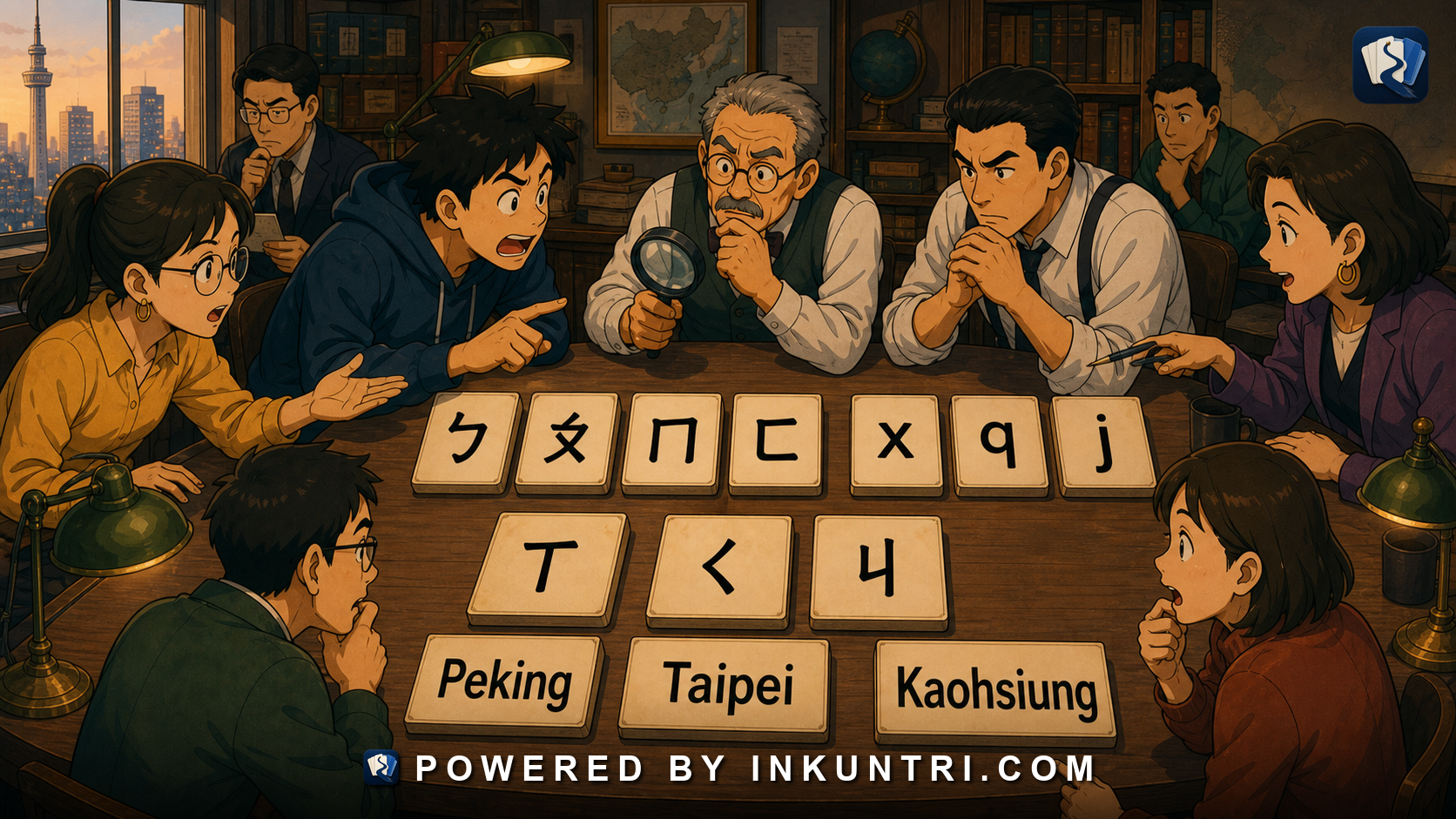
Pinyin, Zhuyin, and the Politics of Pronunciation Notation
The reader understands pronunciation notation systems as tools with histories, institutions, and regional identities.
CJK Numerals and Counters: Japanese Counting in Comparative Perspective
The reader can compare Japanese numerals and counters with Chinese and Korean systems while keeping Japanese counting grammar intact.
Plain Form, Polite Form, and Where Grammar Meets Social Distance
The reader can choose between plain and polite forms by considering grammar, relationship, genre, and social distance rather than politeness alone.
Contrast and Concession: 지만, 는데, 아/어도, 더라도
The reader can read Korean contrast and concession through 지만, 는데, 아/어도, and 더라도 without flattening them into but.

Ateji and Gikun: When Kanji Represent Sound, Meaning, or Both
The reader can distinguish ateji, gikun, semantic kanji spelling, and phonetic borrowing in Japanese written vocabulary.
Yamato Kotoba, Kango, and Gairaigo: Three Layers of Japanese Vocabulary
The reader can classify Japanese vocabulary into Yamato kotoba, kango, and gairaigo layers and predict the register effects of each layer.
Medical Kango and Its Chinese/Korean Counterparts
The reader can compare medical kango and its Chinese/Korean counterparts while avoiding unsafe assumptions about diagnosis or treatment terms.
False Friends Between Japanese and Mandarin in Everyday Kanji Words
The reader can recognize false friends between Japanese and Mandarin in everyday character words before they cause practical misunderstandings.
The Grammar of Apology: 미안하다, 죄송하다, 사과드리다
The reader can use Korean apology grammar and vocabulary according to severity, responsibility, and social distance.
Legal Vocabulary: 权利, 义务, 责任, 合同, 争议
The reader can recognize legal roles, duties, rights, liability, contract structure, and dispute language in Chinese documents.
How to Use Chinese Corpora Without Misreading Frequency
The reader can use Chinese corpora responsibly, understanding that frequency depends on corpus composition, genre, date, region, tokenization, and search method.
Pitch Accent in Verb and Adjective Conjugation
The reader can track how pitch accent interacts with verb and adjective conjugation instead of treating each form as a separate word.
Variety-Show Korean: Teasing, Reaction, and Group Alignment
The reader can understand Korean variety-show speech as a performance of teasing, reaction, captions, hierarchy, and group belonging.
Prosody in Chinese News Announcing vs Everyday Conversation
The reader can hear the difference between broadcast Mandarin and everyday Mandarin in rhythm, pitch range, phrasing, and register.
得 and 地: How Modern Usage Separates Result and Manner
The reader learns how 得 and 地 function in standard written Mandarin and where real usage blurs textbook rules.
Birth, Household, and Identity Documents in Chinese
The reader can recognize the basic structure and vocabulary of Chinese birth, household-registration, residence, and identity documents without treating them as ordinary conversational Chinese.
Economic Japanese: 景気, 物価, 賃金, 投資, 消費
The reader can follow economic Japanese by separating macro indicators, household conditions, corporate activity, and policy language.
The Language of Migration: 户口, 居住证, 流动人口
The reader can read Chinese migration, residency, employment, and public-service vocabulary with sensitivity to legal and social context.

Korean Punctuation: Modern Standards and Real Usage
The reader can read Korean punctuation according to modern convention while recognizing real-world variation.
Why Knowing Chinese Helps Korean—and Where It Misleads You
The reader can use Chinese knowledge as a Korean vocabulary advantage while protecting against false friends, collocation errors, and Hangul-only ambiguity.
Bond Market Korean: 국채, 수익률, 만기, 신용등급
The reader can read Korean bond-market language by distinguishing bonds, yields, maturities, credit ratings, spreads, issuance, auctions, interest rates, and the inverse price-yield relationship.
Near-Synonym Field Guide: 보다, 지켜보다, 살펴보다, 검토하다
The reader can distinguish visual perception, sustained observation, informal inspection, and formal review/evaluation in Korean.
Katakana Loanwords by Domain: Tech, Food, Fashion, Sports, and Business
The reader can organize katakana loanwords by domain and understand why pronunciation, abbreviation, and meaning shift after borrowing.
Sino-Korean Vocabulary From a Mandarin Learner’s Perspective
The reader can recognize the Hanja layer behind many Korean words and understand how it relates to Mandarin vocabulary.
Agricultural Mandarin: 种植, 养殖, 农资, 合作社
The reader can understand Chinese agricultural vocabulary in rural news, policy documents, product labels, and cooperative materials.
Near-Synonym Field Guide: 고치다, 치료하다, 수정하다, 개선하다
The reader can choose the Korean repair verb based on whether the target is a machine, habit, illness, document, error, system, policy, or condition.

Korean Internet Spelling: ㅋㅋ, ㅠㅠ, Abbreviations, and Persona
The reader can interpret Korean internet spelling as social signaling, affect, speed, and community style rather than as random mistakes.
When Not to Overcorrect Pitch Accent
The reader can avoid overcorrecting pitch accent in ways that harm fluency, natural interaction, or respect for regional variation.
Reading a Chinese Employment Contract: 劳动合同, 试用期, 社保, and 违约
The reader can navigate the structure and vocabulary of a Chinese employment contract without treating every clause as ordinary conversational Mandarin.
Japanese Sound-Symbolic Words: Giongo, Gitaigo, and Embodied Meaning
The reader can interpret Japanese sound-symbolic words as a structured semantic system, not childish decoration.
Childcare and School Communication in Korean
The reader can understand Korean school and childcare messages as a genre with its own politeness, deadlines, preparation lists, and parent-teacher roles.
Buddhist Vocabulary Across Japanese, Chinese, and Korean
The reader can recognize Buddhist vocabulary across Japanese, Chinese, and Korean and see its influence beyond religion.
The Language of Work Units, Neighborhood Committees, and Urban Governance
The reader understands civic and neighborhood vocabulary that appears in Chinese urban life, notices, registration, and local governance.
Scientific Vocabulary: 研究, 实验, 数据, 模型, 机制
The reader can interpret the core vocabulary of Chinese scientific summaries, abstracts, popular science, and research reporting.
Influencer Commerce Japanese: PR表記, 案件, フォロワー, 購買
The reader can understand Japanese influencer-commerce language around PR labeling, sponsored posts, followers, purchase funnels, and credibility.
How Measure Words Are Written in Real Notes, Receipts, and Labels
The reader sees measure words not only as grammar lessons but as practical written units in commerce, packaging, recipes, and everyday records.
How Chinese Festivals Preserve Older Vocabulary
The reader understands festival vocabulary as a living archive of ritual, agricultural time, kinship, food, and older textual forms.
Education Policy Japanese: 入試, 学習指導要領, 奨学金, 不登校
The reader can read Japanese education-policy language around entrance exams, curriculum guidelines, scholarships, absenteeism, and school reform.
Kango in Japanese and Sino-Korean Vocabulary Compared
The reader can compare Japanese kango and Sino-Korean vocabulary as parallel systems built from Chinese-character roots but shaped by different languages.
How to Build a Chinese Vocabulary Deck Around Word Families, Not Lists
The reader gains a practical method for organizing Chinese vocabulary by morpheme, collocation, register, and sentence environment.
Building Vocabulary by Register Instead of Frequency Alone
The reader can build Japanese vocabulary by register, domain, and usage situation rather than frequency rank alone.
The Language of Chinese Family Registers and Ancestral Places
The reader can recognize key terms in genealogy, ancestral hometowns, clan records, and family-history documents.
Near-Synonym Field Guide: 말하다, 이야기하다, 밝히다, 주장하다
The reader can identify whether a Korean speech verb frames casual saying, narrative telling, official disclosure, contested assertion, explanation, or reported stance.
Ellipsis in Japanese Conversation: What Can Be Left Unsaid
The reader can understand ellipsis in Japanese conversation as context-sensitive grammar, not laziness or incomplete speech.
New Year Japanese: Greetings, Cards, Shrines, and Commercial Formulae
The reader can understand New Year Japanese across greetings, cards, shrine visits, business announcements, advertisements, and seasonal formulae.
Newspaper Korean and the Development of Modern Formal Style
The reader can parse Korean news style as a genre with headline compression, source attribution, Sino-Korean density, and formal reporting habits.
Loanwords in Mandarin: Sound Borrowing, Meaning Borrowing, and Hybrids
The reader can classify Mandarin loanwords and understand why Chinese sometimes borrows sound, sometimes meaning, and often both.
School Culture in Korean: Hagwon, Exams, Clubs, and 선후배
The reader can understand Korean school-related language as an ecosystem of exams, extracurriculars, private education, peer hierarchy, and future planning.
Fast Speech Reductions in Korean Conversation
The reader can recognize common reductions in fast Korean speech without treating them as separate vocabulary.
Tourism Japanese Beyond Phrasebooks: Tickets, Etiquette, and Route Language
The reader can handle tourism Japanese beyond phrasebooks by reading tickets, etiquette notices, route instructions, and facility rules.
Korean Menus by Cooking Method and Regional Style
The reader can read Korean menus by identifying cooking method, soup/stew type, raw/sliced dishes, mixed dishes, regional style, course format, portion logic, and menu shorthand.
Creating Domain-Specific Japanese Glossaries From Source Texts
The reader can build domain-specific Japanese glossaries from real source texts by extracting terms, definitions, collocations, example sentences, and usage constraints.
Medical Sino-Xenic Vocabulary: When Terms Look Related Across Languages
The reader can identify shared medical character vocabulary across CJK languages while understanding differences in usage, scripts, and health systems.
Mandarin Numeral-Classifier-Noun Order in Real Documents
The reader can read and produce quantity expressions in forms, labels, contracts, receipts, notices, product pages, and official documents.
Two-Character Compounds: The Engine of Modern Chinese Vocabulary
The reader understands why disyllabic compounds dominate modern Mandarin and how their internal structures work.
Japanese Table Manners Through Serving Verbs and Set Phrases
The reader can understand Japanese table manners through serving verbs, gratitude phrases, host-guest roles, and formulaic meal language.
Workplace Japanese: 報連相, 根回し, 稟議, 承認
The reader can understand workplace Japanese as a vocabulary system for reporting, consensus, approval, hierarchy, and informal preparation.
Discourse Markers: 其实, 当然, 反正, 总之, 那么, 然后
The reader can hear and read discourse markers as argument-management tools rather than filler words.
Spacing in Legal, Technical, and News Korean
The reader can notice how spacing choices become more consequential in legal, technical, and news Korean.
Interjections in Korean: 아이고, 어머, 아, 음, 글쎄
The reader can read and hear Korean interjections as emotional, social, and discourse markers rather than dictionary translations.
Ellipsis in Korean Conversation: What Context Carries
The reader can read Korean ellipsis by using context, particles, endings, and shared situation rather than searching for missing words.
Four-Kanji Compounds: Rhythm, Status, and Compression
The reader can read four-kanji compounds as compressed arguments, slogans, classifications, and prestige vocabulary.
Busan and Gyeongsang Prosody Without Stereotypes
The reader can understand Busan and broader Gyeongsang prosody through pitch, rhythm, and pragmatic use rather than caricature.
Japanese Internet Slang: Abbreviation, Kana Play, and Persona
The reader can understand Japanese internet slang as abbreviation, kana play, persona performance, and platform-specific writing.
Chinese-Japanese False Friends in Business Vocabulary
The reader can spot high-risk Chinese-Japanese business vocabulary that looks familiar but differs in usage, meaning, or register.
Synonym Pairs in Chinese: Why Many Compounds Have Two Near-Meaning Characters
The reader understands coordinate compounds and stops treating every character pair as a precise “A plus B” formula.
Japanese Shadowing With Drama, News, and Interviews
The reader can build a Japanese shadowing practice that changes depending on whether the source is drama, news, interview, or presentation.
How Hong Kong Written Chinese Differs From Mainland Written Chinese
The reader can recognize differences in script, vocabulary, Cantonese influence, institutional language, and media style in Hong Kong written Chinese.
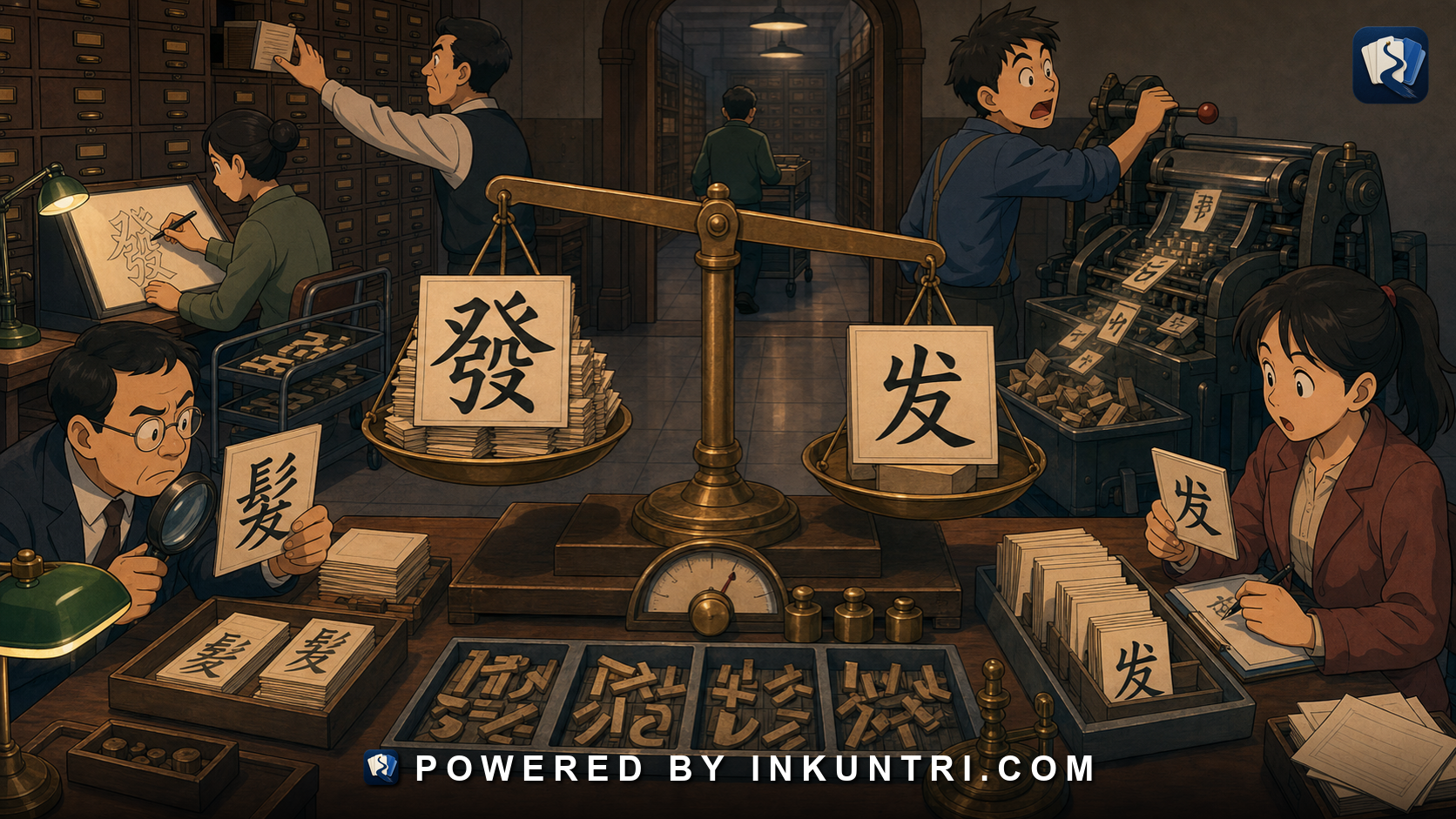
Character Simplification and Semantic Compression: What Was Gained and Lost
The reader sees simplification as a tradeoff between writing efficiency, standardization, historical transparency, and semantic distinction.
Youth Language in Japan: Trend, Identity, and Media Panic
The reader can evaluate Japanese youth language as identity work, trend circulation, and media narrative rather than language decay.
Japanese Medical Intake Forms: 問診票, 既往歴, アレルギー, 同意
The reader can complete and interpret Japanese medical intake forms with attention to symptoms, history, allergies, consent, and risk language.
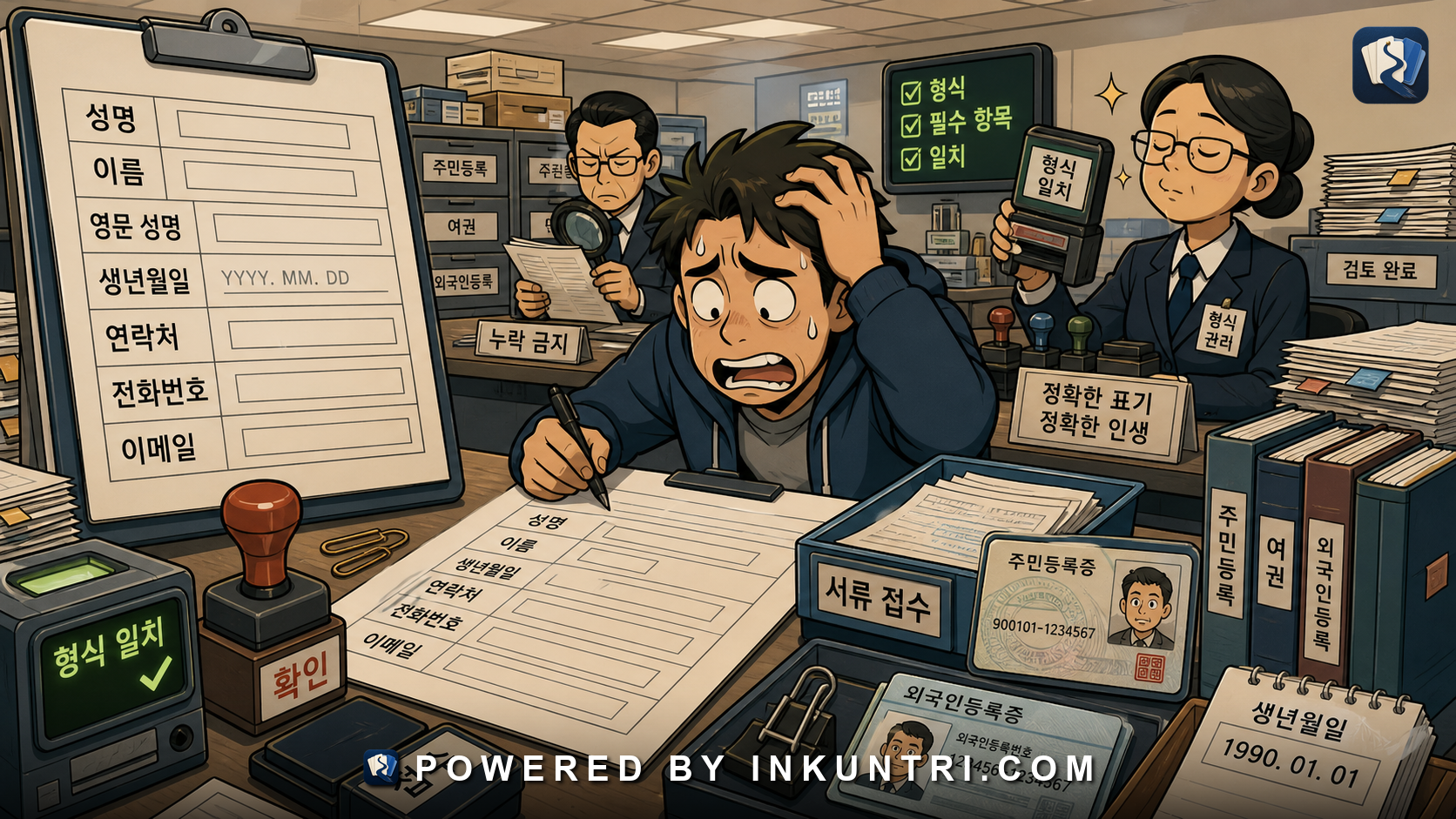
Korean Official Forms: Names, Birthdates, IDs, and Contact Fields
The reader can complete and interpret common Korean official-form fields without confusing labels, formats, or register.
How to Mine Chinese Sentences Without Collecting Bad Examples
The reader can collect useful Chinese example sentences while avoiding decontextualized, mistranslated, unidiomatic, outdated, or register-mismatched examples.
Korean Travel Vlogs: Informal Speech and Place Promotion
The reader can use Korean travel vlogs to study informal narration, place promotion, evaluation language, and creator-audience relationship.
Korean Lab Safety Language: 위험물, 보호구, 폐기, 점검
The reader can interpret Korean laboratory-safety signs, manuals, inspection checklists, and disposal instructions with attention to risk and procedure.
Korean Product Manuals: 안전수칙, 사용방법, 고장, 점검
The reader can read Korean product manuals by identifying safety rules, procedures, warnings, prohibited actions, troubleshooting, inspection, maintenance, warranty, and replacement language.
Creating Domain-Specific Korean Glossaries From Source Texts
The reader can build Korean glossaries from real domain texts and preserve definitions, examples, collocations, and document function.
Color Words in Chinese: Literal, Cultural, Political, and Market Uses
The reader understands how Chinese color words carry literal description, symbolic meaning, political meaning, branding, and idiomatic force.
Fintech Japanese: 決済, 本人確認, 与信, 不正検知
The reader can decode fintech Japanese around payment, identity verification, credit screening, fraud detection, and user consent.
Rural Development Policy Vocabulary in Chinese News
The reader can read Chinese news about rural development by recognizing policy slogans, administrative categories, and concrete implementation language.
Ellipsis in Menus, Labels, Headlines, and Forms
The reader can recover omitted words in compact real-world Chinese and stop expecting complete textbook sentences everywhere.
How to Mine Japanese Sentences Without Collecting Translationese
The reader can collect Japanese example sentences from natural sources while avoiding translationese, artificial examples, contextless fragments, and overlong cards.
Interjections in Japanese: ええ, あの, まあ, へえ, うーん
The reader can interpret Japanese interjections as interactional tools for hesitation, surprise, agreement, thinking, soft refusal, and stance.
Medical Vocabulary: 症状, 诊断, 治疗, 风险, 预后
The reader can understand common Chinese medical information while recognizing the difference between symptoms, diagnosis, treatment, risk, and prognosis.
Counting Grammar: Native Numbers, Sino-Korean Numbers, and Counters
The reader can combine native numbers, Sino-Korean numbers, and counters grammatically in real noun phrases.
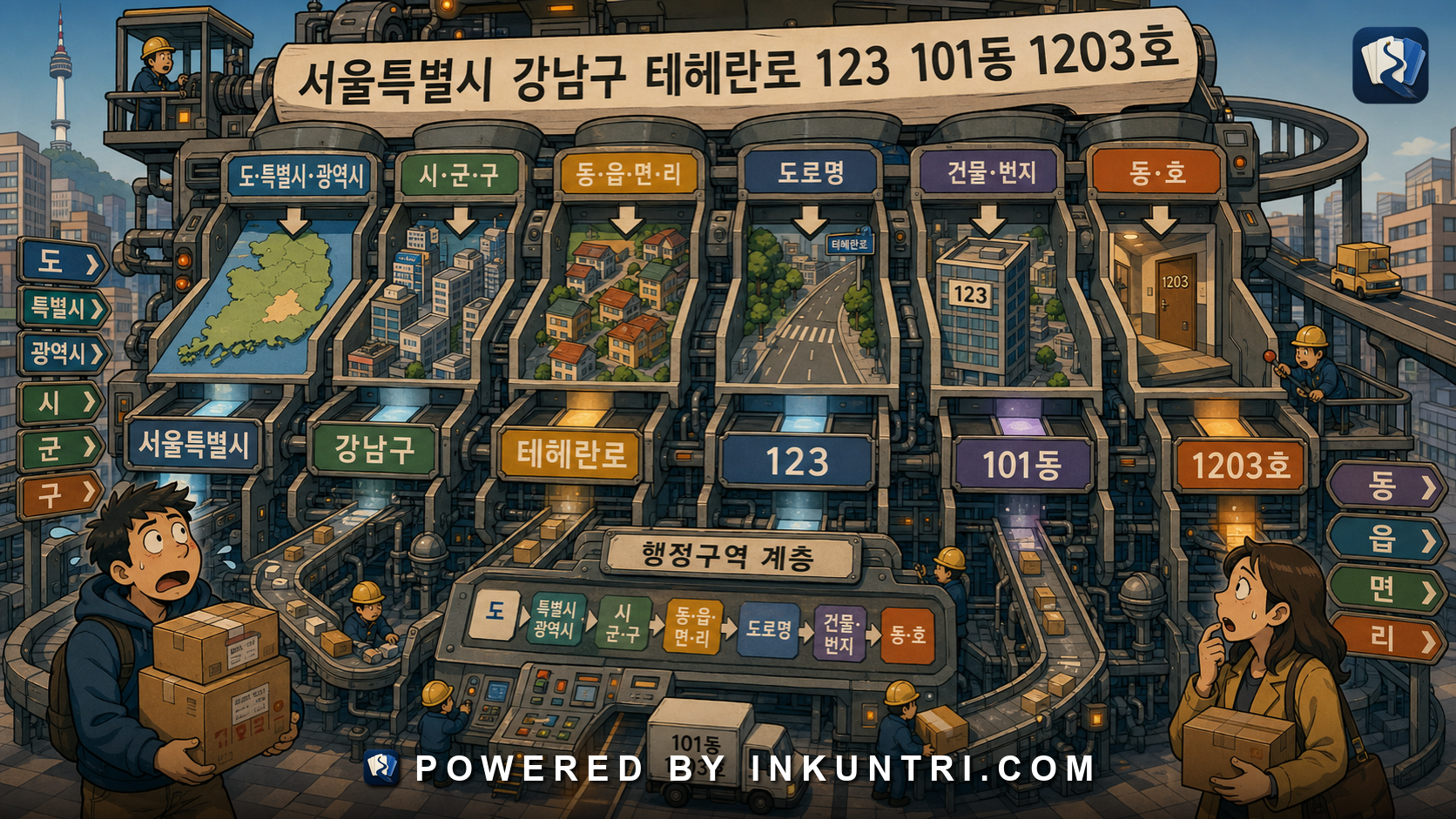
Reading Korean Addresses: Province, City, Gu, Dong, Road Name, and Building
The reader can parse Korean addresses from the largest administrative unit down to the building or room.
Tea Culture Vocabulary Beyond “Green” and “Black”
The reader can understand Chinese tea vocabulary as cultural practice, hospitality language, regional identity, commercial description, and sensory classification.
Family Registry Korean: 가족관계증명서, 주민등록등본, 인감증명
The reader can read Korean family-registry and resident-registration documents by identifying certificate type, household head, registered domicile/base, address history, seal certificate, issuance, delegation...
Korean Time Words: 연도, 학기, 상순, 하순, 기한
The reader can read institutional Korean time vocabulary in academic calendars, invoices, notices, reports, and statistics.
Compliments and Deflection in Japanese Conversation
The reader can understand Japanese compliments and modest deflection without treating every denial as literal disagreement.
Food Safety Labels in Chinese: 配料, 过敏原, 保质期, 生产许可
The reader can read Chinese food labels and understand ingredients, allergens, shelf life, storage, manufacturer information, and production licensing terms.
When CJK Comparison Helps Learners and When It Becomes Noise
The reader can decide when CJK comparison accelerates Japanese learning and when it creates noise, overconfidence, or bad habits.
Logistics Japanese: 宅配, 送り状, 倉庫, 再配達
The reader can understand Japanese logistics language around parcel delivery, waybills, warehouses, redelivery, tracking, and address problems.

Emoji, Homophones, and Character Play in Chinese Digital Writing
The reader can interpret common mechanisms of online character play without reducing Chinese internet language to memes.
How to Read Linguistics Papers About Mandarin Without Drowning
The reader can approach Mandarin linguistics papers by identifying the research question, data, terminology, argument structure, and practical learner relevance.
Japanese Words in Korean History: What Remains, What Was Replaced
The reader can read Japanese-origin vocabulary in Korean historically and socially, distinguishing common survivals, recommended replacements, generational usage, and stigma.
Mandarin Read-Aloud Style vs Conversation Style
The reader understands why reading written Mandarin aloud differs from speaking spontaneously.
Korean Newsreader Speech vs Everyday Conversation
The reader can distinguish Korean newsreader speech from everyday conversation and use both for different learning goals.
Bungo, Kōgo, and the Modernization of Japanese Prose
The reader can understand bungo and kōgo as competing prose norms whose modernization shaped the Japanese people read today.
How Kango Creates Formal, Technical, and Institutional Japanese
The reader can see kango as the backbone of formal, technical, legal, bureaucratic, and institutional Japanese.
Korean Memes, Net Slang, and Polite Hostility Online
The reader can spot when Korean online politeness is sincere, sarcastic, passive-aggressive, protective, or openly hostile beneath polite endings.
Character Simplification vs Japanese Shinjitai: Similar Goals, Different Results
The reader can compare Mainland simplified characters and Japanese shinjitai without assuming they are the same reform.
Korean Sound-Symbolic Words: 의성어, 의태어, and Embodied Meaning
The reader can classify sound-symbolic Korean by sound, motion, texture, emotion, or body state, and pair these words with natural verbs instead of treating them as childish decorations.
Reported Speech in Mandarin News and Interviews
The reader can parse who said what in Chinese news, interviews, transcripts, and public statements.
English Acronyms in Chinese Text: GDP, AI, KPI, and Local Grammar
The reader can parse English acronyms inside Chinese sentences and understand how they take Chinese grammar around them.
Conditionals in Korean: 면, 거든, 다면, 아/어야
The reader can choose among 면, 거든, 다면, and 아/어야 by condition type, discourse role, and likelihood.
E-Commerce Chinese: 商品详情, 评价, 售后, 退款
The reader can read Chinese e-commerce pages, reviews, after-sales policies, refund language, and seller communication.
Technical Suffixes: 화, 성, 적, 률/율, 도, 량/양
The reader can decode formal and technical Korean by recognizing suffixes that build process nouns, property nouns, adjectival modifiers, rates, degrees, and quantities.
Abbreviations in Korean: From 자소서 to 편의점
The reader can decode Korean abbreviations and compact institutional nouns by expanding the source phrase, identifying the community that uses the shortened form, and judging whether the form belongs in casual...
Tax Japanese: 源泉徴収, 確定申告, 消費税, 控除
The reader can interpret Japanese tax language around withholding, filing, consumption tax, deductions, income categories, and deadlines.
How Japanese Marks Uncertainty Without Saying “Maybe”
The reader can notice how Japanese marks uncertainty through grammar, particles, hedges, and stance rather than only through words like “maybe”.
Sentence-Final Endings: 아/어요, 습니다, 네요, 군요, 죠, 더라고요
The reader can interpret Korean sentence-final endings as stance, evidence, emotion, politeness, and discourse management.
Korean Internet Slang: Abbreviation, Hangul Play, and Persona
The reader can recognize Korean internet slang as a system of compression, emotional display, group identity, and online persona while avoiding unsafe or stale reuse.
Confucian Vocabulary in Japanese Public Language
The reader can identify Confucian vocabulary in Japanese public language and understand its role in hierarchy, education, and social ethics.
Polite Speech Prosody: Why 丁寧語 Has a Sound
The reader can notice that polite Japanese has prosodic conventions in addition to polite vocabulary and grammar.
Pronunciation in Chinese Rap, Pop, and Spoken Drama
The reader learns how performance genres bend rhythm, tone, rhyme, and articulation while remaining intelligible.
Near-Synonym Field Guide: 思う, 考える, 感じる, 信じる
The reader can distinguish 思う, 考える, 感じる, and 信じる by cognition type, evidence, emotion, and commitment.
How Classical Chinese Shaped Korean Elite Literacy
The reader can recognize how Classical Chinese shaped Korean elite literacy, Sino-Korean vocabulary, education, moral terminology, historical documents, and modern academic abstraction without confusing Hanja...
The Sound of Japanese Newsreading vs Conversation
The reader can compare Japanese newsreading and conversation as different speech styles with different pacing, pronunciation, and information structure.
Legal Korean: 권리, 의무, 계약, 손해, 책임
The reader can recognize basic Korean legal vocabulary by role, consequence, and document function while staying inside language literacy rather than legal advice.
Korean Hangul-Only Writing and the Invisible Hanja Layer
The reader sees why Korean text can look alphabetic while still containing a deep Sino-Korean vocabulary layer that matters for Chinese learners comparing the languages.
Near-Synonym Field Guide: 方便, 便利, 便捷
The reader can distinguish everyday convenience, formal convenience, and efficient/easy access in Mandarin.
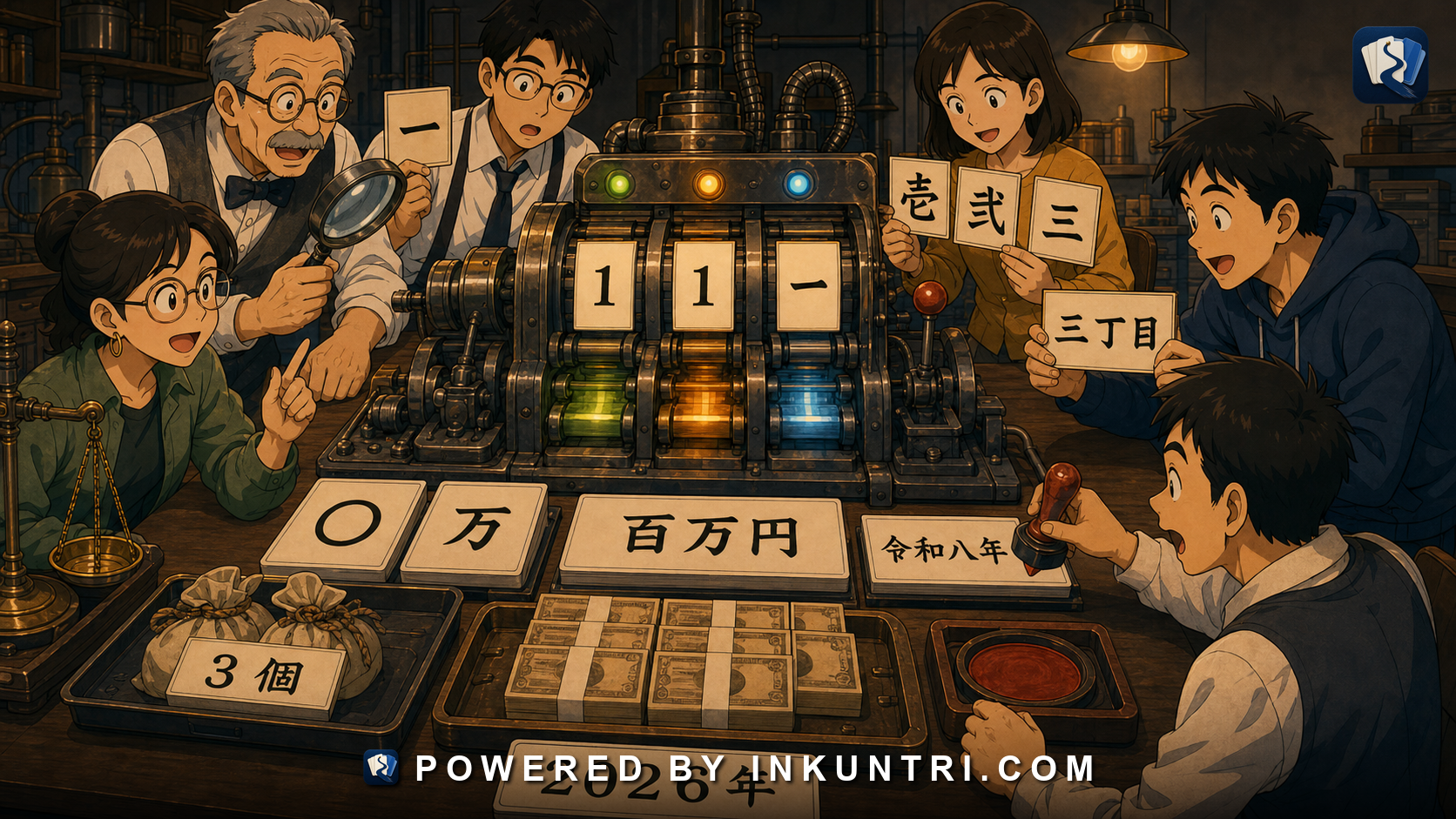
Japanese Numbers in Writing: Arabic Digits, Kanji Numerals, and Formal Forms
The reader can choose and interpret Arabic digits, kanji numerals, formal numerals, counters, dates, and addresses in Japanese writing.
Causatives in Korean: Authority, Permission, and Agency
The reader can analyze Korean causatives as statements about agency, authority, permission, and responsibility.
Chinese Pronunciation Self-Diagnosis With Recording and Native Models
The reader can diagnose Mandarin pronunciation problems through recording, comparison, targeted drills, and structured feedback rather than vague “tone practice.”
Numbers as Words in Chinese Digital Culture
The reader can interpret common numeric expressions in texting, comments, online commerce, holidays, work culture, and pop culture.
A Serious Learner’s Guide to Chinese Dictionaries
The reader can use Chinese dictionaries more deeply by reading definitions, parts of speech, usage notes, examples, synonyms, variants, and register labels.
Nominalization With 기, 음, 것, and 데
The reader can distinguish nominalizers 기, 음, 것, and 데 by function, register, and sentence role.
How Mandarin Expresses Collective Identity
The reader can identify how Mandarin builds collective identity through pronouns, group nouns, shared fate language, institutional wording, and emotional alignment.
The May Fourth Language Shift and the Rise of 白话
The reader understands how modern written Chinese emerged from debates over education, literature, modernization, and accessibility.
Designing Japanese Anki Cards for Kanji, Vocabulary, Pitch, and Context
The reader can design Japanese Anki cards that train recognition, production, kanji, vocabulary, pitch accent, and context without creating bloated review debt.
Tea, Cafés, and Contemporary Korean Social Vocabulary
The reader can read café language as everyday Korean social practice, not just beverage vocabulary.
Cantonese Words in Mandarin Media and Internet Culture
The reader can recognize Cantonese-derived words and expressions that circulate in Mandarin-speaking pop culture, media, and online communities.
Reading Chinese Lease Agreements: 租赁, 押金, 违约金, and 物业
The reader can read Chinese lease clauses involving rent, deposits, property management, repairs, early termination, and breach.
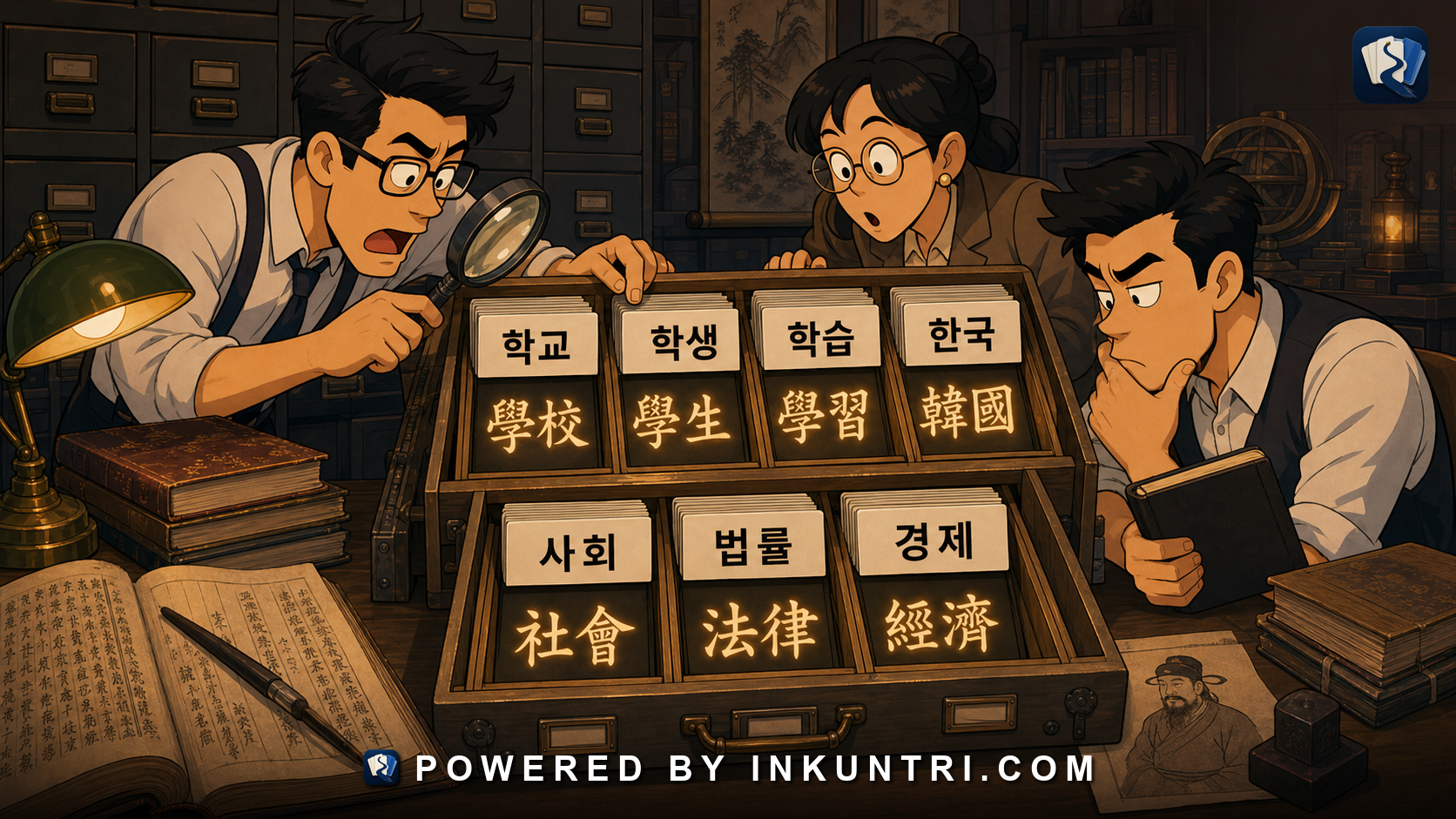
Hanja Beneath Hangul: The Hidden Sino-Korean Layer
The reader can recognize the Sino-Korean layer behind Hangul words without needing to become a full Hanja reader on day one.
Formal Korean Connectors: 따라서, 한편, 다만, 또한, 이에
The reader can read formal Korean connectors as paragraph-level logic signals rather than translating them one word at a time.
Food Vocabulary Through Cooking Verbs: 굽다, 끓이다, 볶다, 찌다, 튀기다
The reader can decode Korean menus and food writing through cooking verbs, derived dish nouns, texture expectations, and common collocations.
The Language of Regional Pride in Korea
The reader can recognize how regional identity is expressed in Korean through place names, dialect references, food branding, sports, tourism, and hometown language.
Designing Chinese Anki Cards for Words, Characters, and Collocations
The reader can design Chinese flashcards that train recognition, pronunciation, meaning, collocation, character form, and contextual use without turning review into trivia.
Youth Language in Korea: Trend, Identity, and Moral Panic
The reader can read Korean youth language as community and identity marking without mistaking every new expression for decay, nonsense, or safe vocabulary to imitate.
Color Words in Korean: Tradition, Marketing, and Politics
The reader can classify Korean color words as literal description, traditional symbolism, political label, marketing style, or fixed expression.
Legal Japanese: 権利, 義務, 契約, 損害, 責任
The reader can read core legal Japanese vocabulary by distinguishing rights, duties, contracts, liability, damages, and responsibility.
Pronouncing Korean Loanwords: English Knowledge as a Liability
The reader can pronounce Korean loanwords by Korean phonology instead of by English spelling habits.
のだ / んだ: Explanation, Discovery, and Social Pressure
The reader can understand のだ/んだ as explanation grammar that can signal discovery, backgrounding, insistence, and social pressure.
Museum Korean: 전시해설, 문화재, 소장, 복원
The reader can approach Korean museum labels and guides by identifying exhibition explanation, cultural property categories, collection/ownership, restoration, artifacts, special/permanent exhibitions, viewing...
Chinese Characters Abroad: Hanzi, Kanji, Hanja, and the Shared Scriptworld
The reader understands the shared character tradition across China, Japan, and Korea while respecting each language’s independent grammar, pronunciation, and history.
A Research Stack for Japanese Learners: Corpora, Dictionaries, White Papers, Archives
The reader can assemble a Japanese research stack using corpora, dictionaries, official white papers, archives, news databases, and domain sources.
Japanese Travel Vlogs: Informal Speech and Place Promotion
The reader can understand Japanese travel-vlog language around informal narration, reaction phrases, place promotion, food description, local identity, and viewer engagement.
Tracking Japanese Listening Progress With Real Audio
The reader can track Japanese listening progress using real audio, transcripts, comprehension targets, error categories, and repeated measurement.
Language Policy, Standardization, and Spacing Rules in Korea
The reader can understand Korean correctness debates as interactions among official norms, dictionaries, school practice, actual usage, and genre.
How to Build a Kanji Component Notebook That Respects Japanese Readings
The reader can build a kanji component notebook that uses radicals and components without pretending they determine Japanese meanings or readings mechanically.
Confucian Vocabulary in Korean Public Language
The reader can recognize Confucian-derived terms in modern Korean public language without treating them as timeless cultural essence.
Japanese Wedding Language: ご祝儀, 披露宴, 招待状, 内祝い
The reader can understand Japanese wedding language around gift money, receptions, invitations, return gifts, speeches, and formal register.
Compliments and Deflection in Korean Conversation
The reader can understand how Korean compliments are given, received, deflected, returned, or downgraded across relationship types.
Korean Medical Intake Forms: 문진표, 병력, 알레르기, 동의
The reader can identify Korean medical-intake form fields for symptoms, medical history, allergies, medications, pregnancy, consent, emergency contact, and personal-information collection, while treating the domain...
Software UI Chinese: Buttons, Empty States, Errors, and Confirmation
The reader can interpret Chinese software interface text, including action buttons, empty states, error messages, confirmations, and status labels.
Building a Mandarin Reader Workflow From News, Documents, and Literature
The reader can build a sustainable Mandarin reading workflow that combines current news, practical documents, essays, and literature without drowning in vocabulary.
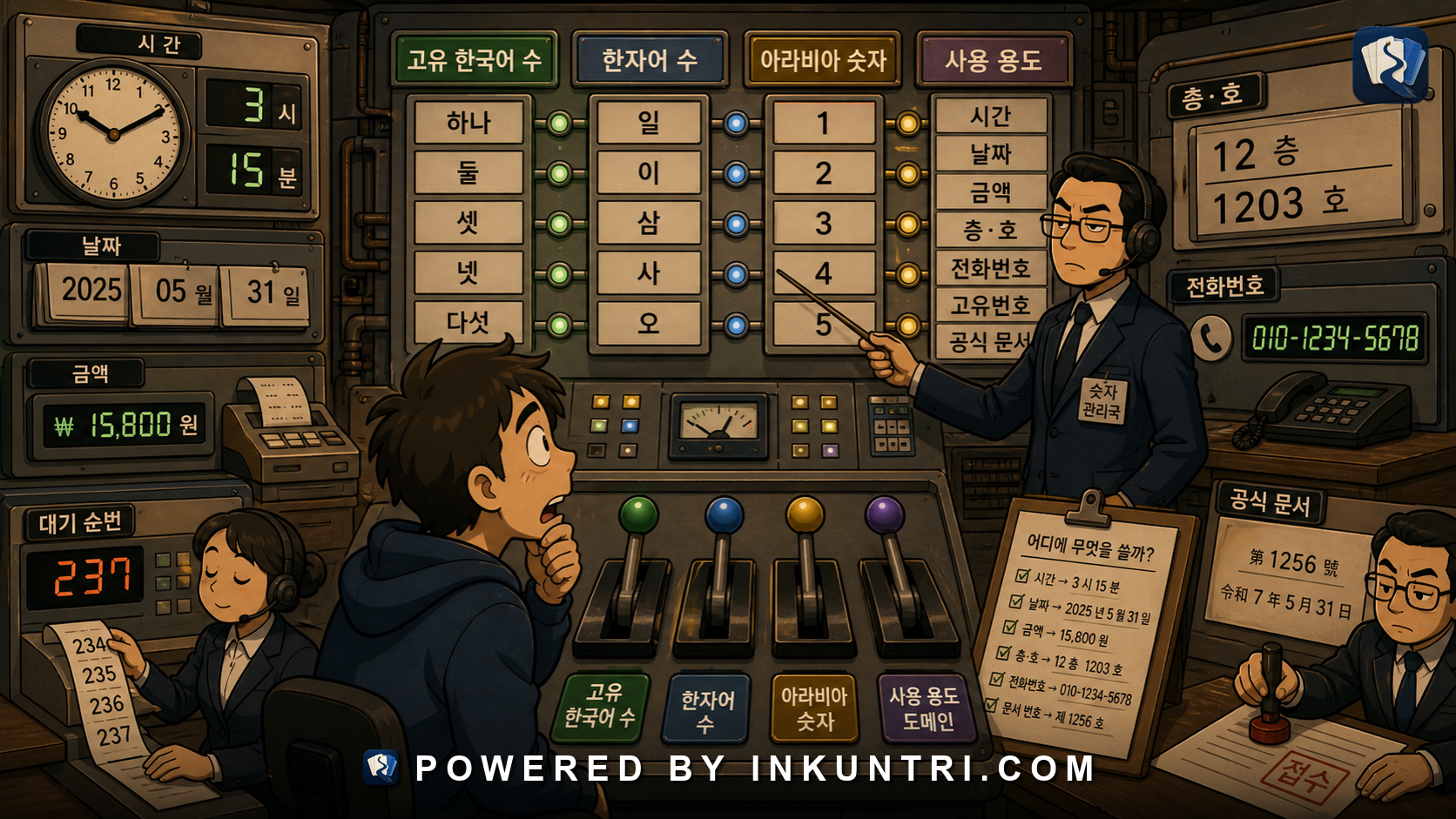
Korean Numbers in Writing: Native, Sino-Korean, Arabic Digits, and Formal Use
The reader can choose between native Korean numbers, Sino-Korean numbers, Arabic digits, and formal written number conventions.
Counters as Vocabulary: 匹, 頭, 羽, 本, 枚, 件, 社
The reader can treat counters as vocabulary entries with semantic ranges, not just grammar endings after numbers.
When CJK Comparison Helps Korean Learners and When It Becomes Noise
The reader can decide when Chinese/Japanese comparison accelerates Korean learning and when it creates false friends, grammar transfer, register mistakes, or institutional confusion.