
Sound Components That Lie: Why 青, 京, and 免 Do Not Guarantee Pronunciation
The reader learns how phonetic components help, where they fail, and how not to overtrust them.
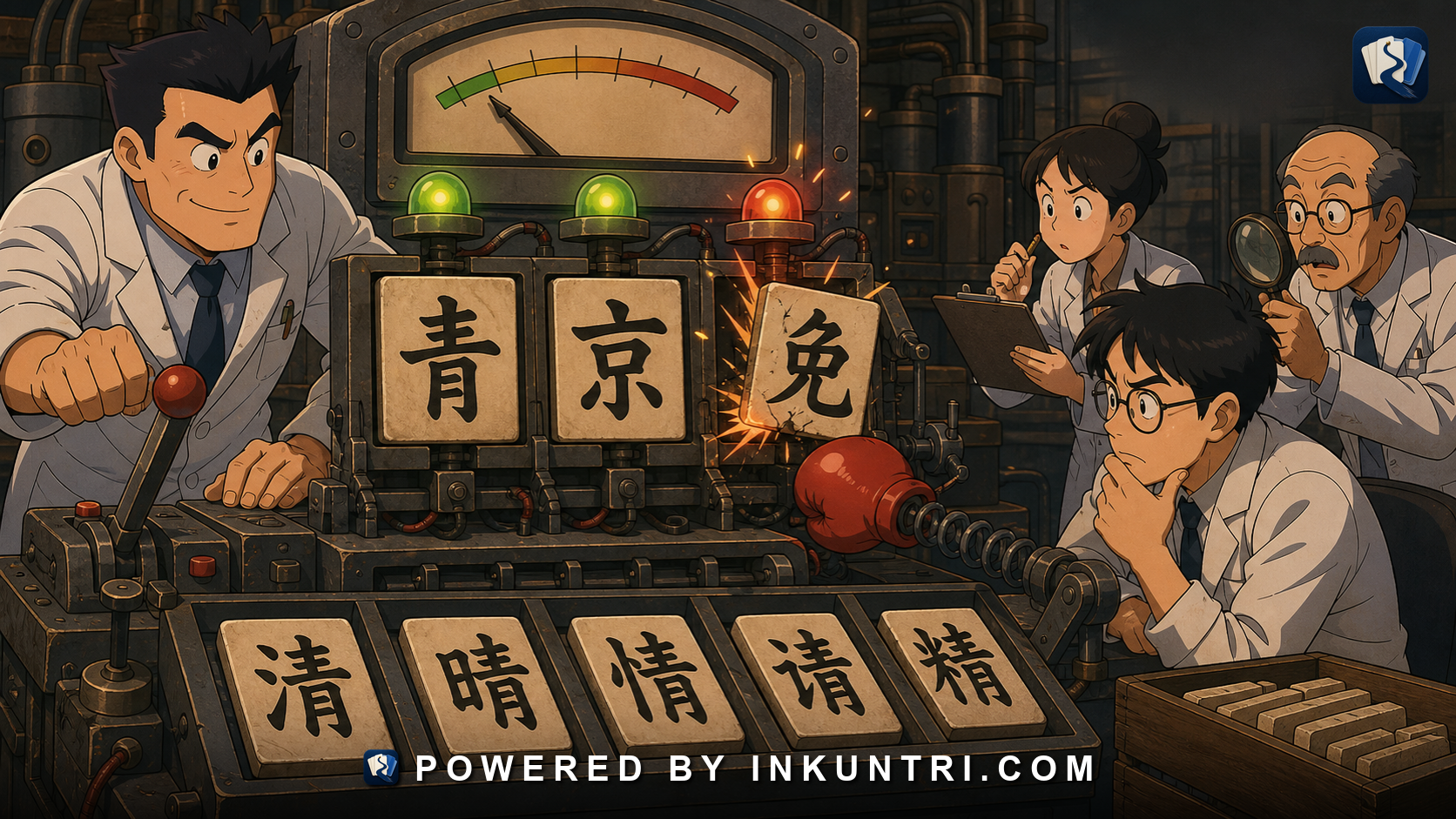
Core examples: 青/清/晴/情/请/精, 京/惊/景/凉/鲸, 免/晚/勉/冕/挽.
The tempting shortcut
Once you learn that many Chinese characters contain sound clues, you naturally want to use them aggressively.
青 is qīng. 清 is qīng. 晴 is qíng. 情 is qíng. 请 is qǐng. At this point, the learner’s brain says: good, every character with 青 must be pronounced qing.
Then 精 appears: jīng.
京 is jīng. 惊 is jīng. 鲸 is jīng. 景 is jǐng. This looks useful. Then 凉 appears: liáng.
免 is miǎn. 勉 is miǎn. 冕 is miǎn. This looks safe. Then 晚 and 挽 appear: wǎn.
This is the moment when learners often swing too far in the other direction. First they overtrust phonetic components. Then, after a few failures, they dismiss them as useless.
Both reactions are wrong.
Phonetic components are not pronunciation guarantees. They are probability signals. Some are excellent. Some are helpful only for rhyme or syllable shape. Some preserve historical relationships that modern Mandarin has partly hidden. Some are nearly useless for a beginner. A serious reader learns to use them with calibrated confidence.
The practical rule is simple:
Guess from the component. Confirm from the dictionary. Learn from the word. Verify with audio.
This article shows how that works through three productive but imperfect sound families: 青, 京, and 免.
A phonetic component is not Pinyin
The most important mistake is treating a component as if it were a modern alphabetic spelling.
If 青 were an alphabetic spelling, then every 青-series character would have the same Pinyin. But 青 is not a spelling. It is a graphic component that entered characters over long periods of historical sound change. The relationship between a phonetic component and a modern Mandarin pronunciation may be exact, near, distant, or opaque.
A component can hint at:
- the whole syllable, including initial and final;
- the syllable but not the tone;
- the final or rhyme but not the initial;
- an older sound relationship no longer obvious in Mandarin;
- a pronunciation that is clearer in another Sinitic language or historical reconstruction;
- nothing useful for the modern learner.
That last line is not defeat. It is calibration.
You should not ask, “Does this component always work?” It does not. Ask instead, “How reliable is this component in this character family?”
Reliability levels for phonetic clues
Use a rough four-level scale.
| Level | What it means | Example type |
|---|---|---|
| Strong | Same modern syllable and often same tone or close tone pattern | 胡 hú → 湖 hú; 同 tóng → 铜 tóng |
| Medium | Same syllable but tone differs | 青 qīng → 情 qíng; 反 fǎn → 饭 fàn |
| Weak | Same final/rhyme or historically related sound, but modern initial or vowel differs | 青 qīng → 精 jīng; 免 miǎn → 晚 wǎn |
| Opaque | Relationship is not useful for ordinary modern Mandarin guessing | 兑 duì → 说 shuō |
The level may vary inside the same series. 青 is strong for 清, medium for 情 and 请, and weaker for 精. 京 is strong for 惊 and 鲸, medium for 景, and weak for 凉. 免 is strong for 勉 and 冕, weak for 晚 and 挽.
That variation is why a family chart is better than a single rule.
Case study 1: 青
青 is one of the most learner-friendly sound components because many common characters preserve a clear qing/jing relationship.
| Character | Pinyin | Components | Meaning | Reliability from 青 qīng |
|---|---|---|---|---|
| 青 | qīng | base component | blue-green; young; fresh | Base |
| 清 | qīng | 氵 + 青 | clear; clean; pure | Strong |
| 晴 | qíng | 日 + 青 | clear weather | Medium: same syllable, tone shift |
| 情 | qíng | 忄 + 青 | feeling; situation | Medium: same syllable, tone shift |
| 请 | qǐng | 讠 + 青 | please; request | Medium: same syllable, tone shift |
| 精 | jīng | 米 + 青 | essence; refined; spirit | Weak-to-medium: same final, changed initial |
| 静 | jìng | 青 + 争/争-like component historically complex | quiet; still | Weak-to-medium: same final, changed initial |
For a learner, 青 gives real value. If you see a new character containing 青, you should consider qing or jing as a hypothesis. But you should not lock in a pronunciation without checking.
The semantic components are also useful:
- 清 has 氵, so water/clean/clear makes sense.
- 晴 has 日, so weather/light makes sense.
- 情 has 忄, so feeling/mind/situation makes sense.
- 请 has 讠, so speech/request makes sense.
- 精 has 米, historically related to refined grain and later extended to essence, spirit, fineness, energy, and precision.
The 青 family is exactly what component study should look like: high leverage, not absolute certainty.
How learners misuse 青
There are two common mistakes.
The first is ignoring the component entirely. A learner memorizes 清, 晴, 情, 请, and 精 as unrelated shapes. That wastes structure. These characters are visually and phonetically connected, and noticing that connection makes them easier to retain.
The second is overgeneralizing. A learner sees 青 and pronounces everything qīng. That creates errors: 情 is qíng, 请 is qǐng, 精 is jīng. Tone and initial matter.
The balanced method is to make a family note:
青 family: qīng/qíng/qǐng plus jīng/jìng outliers. Always confirm tone.
That one sentence is more useful than a fake story about the “real meaning” of every component.
Case study 2: 京
京 looks even safer at first.
| Character | Pinyin | Components | Meaning | Reliability from 京 jīng |
|---|---|---|---|---|
| 京 | jīng | base component | capital; Beijing-related in compounds | Base |
| 惊 | jīng | 忄 + 京 | startled; surprised | Strong |
| 鲸 | jīng | 鱼 + 京 | whale | Strong |
| 景 | jǐng | 日 + 京 | scene; view; circumstances | Medium: same syllable, tone shift |
| 凉 | liáng | 冫 + 京 | cool; cold | Weak: modern pronunciation differs strongly |
| 谅 | liàng | 讠 + 京 | to forgive; understand | Weak: modern pronunciation differs strongly |
| 晾 | liàng | 日 + 京 | to air/dry in the sun | Weak: modern pronunciation differs strongly |
京 gives a strong clue in 惊 and 鲸. It gives a tone-shifted clue in 景. Then the family splits: 凉, 谅, and 晾 are liáng/liàng, not jīng.
This is not random from the standpoint of historical phonology, but for a modern learner it is enough to know the practical result: 京 is reliable in some characters and misleading in others.
Why 京 is still worth learning
The weak cases do not make the component useless. They make it more important to record the family accurately.
For 惊:
- 忄 suggests a mental/emotional state.
- 京 suggests jīng.
- 惊 means startled, shocked, alarmed.
For 鲸:
- 鱼 suggests fish/sea animal.
- 京 suggests jīng.
- 鲸 means whale.
This is exactly the kind of character a learner can often guess well. If you know 鱼 and 京, 鲸鱼 is not an arbitrary word.
For 凉:
- 冫 suggests ice/cold.
- 京 is the sound-family component historically.
- The modern pronunciation is liáng.
Here the semantic component is useful, but the modern phonetic clue is dangerous if treated mechanically.
So the family note should look like this:
京 family: jīng in 京/惊/鲸, jǐng in 景, liáng/liàng in 凉/谅/晾. Good visual family; pronunciation split.
That is component literacy.
Case study 3: 免
The 免 family is a good antidote to overconfidence.
| Character | Pinyin | Components | Meaning | Reliability from 免 miǎn |
|---|---|---|---|---|
| 免 | miǎn | base component | to avoid; exempt; remove | Base |
| 勉 | miǎn | 免 + 力 | to exhort; make an effort | Strong |
| 冕 | miǎn | crown-like top + 免 | crown; ceremonial cap | Strong |
| 晚 | wǎn | 日 + 免 | late; evening | Weak: final relationship, different initial |
| 挽 | wǎn | 扌 + 免 | to pull; to draw; to save/retrieve in compounds | Weak: final relationship, different initial |
| 娩 | miǎn / wǎn in some contexts | 女 + 免 | childbirth-related in 分娩 | Mixed; dictionary required |
免 itself is miǎn. 勉 and 冕 preserve that pronunciation neatly. Then 晚 and 挽 become wǎn. If you guess miǎn for 晚, you will misread one of the most common time characters in Mandarin.
This family teaches a practical point: common characters override component guessing. Once you know 晚上, 晚饭, and 晚安, you do not need to guess 晚 from 免. You know it as wǎn.
The component still helps visually. 晚 and 挽 are related in shape and sound neighborhood. But for active pronunciation, word memory wins.
Why sound components “lie”
They do not lie intentionally. They lie from the learner’s point of view because the learner expects a modern one-to-one system.
Several causes matter.
Historical sound change
Characters were created and standardized across long historical periods. Initial consonants, vowels, finals, and tones changed. A component that was once a good sound clue may look weak in modern Mandarin.
This is why 精 can be related to 青 even though qīng and jīng are not identical. It is also why 京 can sit inside both jīng and liáng/liàng characters.
Tone development
Modern Mandarin tones are not always preserved across a phonetic series. 青 qīng gives 情 qíng and 请 qǐng. 反 fǎn gives 饭 fàn. 丙 bǐng gives 病 bìng.
A component may help you predict the syllable while leaving the tone uncertain.
Regional variation
Modern Standard Mandarin is only one modern reading system. Other Sinitic languages may preserve different aspects of older sound relationships. A component that looks weak in Mandarin may be stronger in Cantonese, Hokkien, Shanghainese, Hakka, or another variety, and vice versa.
This does not mean learners must study historical phonology or several Chinese languages before using components. It simply explains why a Mandarin-only expectation is too narrow.
Character borrowing and semantic drift
Characters and components have been borrowed, extended, simplified, reanalyzed, and standardized. A component may have entered one character as a sound clue, another as a meaning clue, and another through later graphic analogy.
Do not assume a component performs the same function everywhere.
Simplification and variant forms
Simplified characters sometimes preserve a phonetic relation clearly; sometimes they obscure one. Traditional forms sometimes preserve more structure; sometimes they introduce their own complexity. Variant characters may rearrange components, making a familiar family less obvious.
This is why serious component study eventually intersects with simplified/traditional conversion and variant-character literacy.
The learner workflow: guess, confirm, compound, audio
A reliable workflow prevents both panic and overconfidence.
1. Component guess
When you see an unfamiliar character, identify the semantic and possible phonetic components.
Example: 鲸.
- 鱼 suggests fish or aquatic animal.
- 京 suggests jīng as a possible sound.
- Guess: something aquatic, pronounced near jīng.
2. Dictionary confirmation
Look it up. 鲸 is jīng, whale. The guess was good.
Example: 凉.
- 冫 suggests cold.
- 京 suggests maybe jīng.
- Dictionary says liáng, cool/cold.
The semantic guess was useful; the sound guess needed correction.
3. Compound reading
Learn the character in words.
- 鲸鱼 — whale
- 蓝鲸 — blue whale
- 凉快 — pleasantly cool
- 凉水 — cool/cold water
- 晚上 — evening
- 晚饭 — dinner
- 挽回 — to retrieve; to reverse; to salvage
Words are where pronunciation becomes stable.
4. Audio verification
Listen to the word. Do not rely on silent Pinyin or component logic. Tone, rhythm, and word stress matter.
For 请 qǐng, 情 qíng, and 清 qīng, audio prevents tone flattening. For 凉 liáng, it prevents a false jīng reading from lingering.
How to build useful phonetic-series notes
Do not make enormous charts you will never review. Make short, reusable notes.
A good note has five parts:
- The component.
- The main pronunciation cluster.
- Common characters.
- Common words.
- Known exceptions or split readings.
Example:
青 series Main cluster: qing / jing. Characters: 青 qīng, 清 qīng, 晴 qíng, 情 qíng, 请 qǐng, 精 jīng, 静 jìng. Words: 清楚, 晴天, 心情, 请问, 精神, 安静. Warning: tone varies; jīng/jìng branch exists.
京 series Main clusters: jīng/jǐng and liáng/liàng. Characters: 京 jīng, 惊 jīng, 景 jǐng, 鲸 jīng, 凉 liáng, 谅 liàng, 晾 liàng. Words: 北京, 惊讶, 风景, 鲸鱼, 凉快, 原谅, 晾衣服. Warning: do not pronounce all as jīng.
免 series Main clusters: miǎn and wǎn. Characters: 免 miǎn, 勉 miǎn, 冕 miǎn, 晚 wǎn, 挽 wǎn. Words: 免费, 避免, 勉强, 加冕, 晚上, 挽回. Warning: 晚 is high-frequency wǎn; learn it as a word anchor.
This kind of note is small enough to review and rich enough to prevent bad guesses.
Why component study helps reading speed
Fluent readers do not identify every stroke from scratch. They recognize patterns. Components help create those patterns.
If you know the 青 family, 情 and 晴 no longer feel like unrelated characters. If you know the 京 family, 鲸鱼 becomes more transparent: fish/animal domain plus jīng sound. If you know the 免 family, you can distinguish 勉 from 晚 and 挽 more carefully because you know they belong to a family with split pronunciations.
This is especially important for visually similar characters. Learners often confuse characters because they memorize them as complete silhouettes. Component awareness gives you internal landmarks.
Compare:
- 清, 晴, 情, 请
- 惊, 景, 凉, 谅
- 免, 勉, 冕, 晚, 挽
Each set becomes easier when you ask what changed and what stayed.
Why component study can hurt pronunciation
Component study becomes harmful when it replaces listening.
A learner who studies only character families may develop strong visual guesses and weak auditory memory. They may know that 请 belongs to the 青 family but still produce the wrong tone. They may know 凉 contains 京 but mispronounce it. They may read 晚 as miǎn because the component note is louder in memory than real words like 晚上.
This is why the workflow ends with audio. A character component is a route into memory. It is not a pronunciation teacher.
Use components to organize. Use dictionaries to confirm. Use audio to pronounce.
A practical guessing protocol
When you encounter an unknown character, use this protocol.
Strong guess allowed
If the character has a clear semantic component and a known strong phonetic component, make a tentative guess.
Example: 铜.
- 钅 = metal.
- 同 = tóng.
- 铜 = likely metal, tóng.
Dictionary confirms: copper, tóng.
Medium guess only
If the phonetic component often preserves syllable but not tone, guess syllable only.
Example: 请.
- 讠 = speech/request.
- 青 = qing family.
- Guess: qing-like, speech action.
Dictionary confirms: qǐng.
Weak guess with warning
If you know the family has split pronunciations, do not pronounce aloud until confirmed.
Example: 凉.
- 冫 = cold.
- 京 = maybe jīng or liáng/liàng branch.
- Guess meaning domain, not pronunciation.
Dictionary confirms: liáng.
No useful guess
If the component relationship is opaque or the character is high-stakes — a name, address, medicine, legal term, rare surname, or historical form — look it up directly.
Do not perform confidence.
Practice: reading clues without overclaiming
Try classifying these before looking them up.
| Character | Components | Safe guess | What to confirm |
|---|---|---|---|
| 清 | 氵 + 青 | water/clear domain; qing-like | tone and exact meaning |
| 情 | 忄 + 青 | feeling/mind domain; qing-like | tone; word usage |
| 精 | 米 + 青 | refined/essence domain maybe; jing/qing family | exact pronunciation jīng |
| 鲸 | 鱼 + 京 | aquatic animal; jing-like | exact meaning whale |
| 凉 | 冫 + 京 | cold/cool domain | pronunciation liáng |
| 晚 | 日 + 免 | time/day domain maybe | pronunciation wǎn and time usage |
| 勉 | 免 + 力 | mian-like; effort maybe | exact meaning and compounds |
The goal is not to be right without lookup. The goal is to make better hypotheses and remember the confirmed answer more deeply.
A strong tool for this article would make phonetic clues visible and graded.
Suggested functions:
- Series view: Display 青, 京, and 免 as center nodes with character branches.
- Pronunciation coloring: Group characters by exact pronunciation, same syllable with tone shift, same final/rhyme, and divergent modern reading.
- Semantic overlay: Show how 氵, 日, 忄, 讠, 米, 鱼, 冫, 扌, and 力 change meaning fields.
- Guess mode: Show a character without Pinyin; let the reader choose a confidence level before revealing pronunciation.
- Compound mode: Reveal common words after the isolated character, so learners do not memorize characters without usage.
- Audio check: Play clear audio for each character in common words, not just isolated syllables.
- Mistake log: If a user guesses 凉 as jīng or 晚 as miǎn, the tool records the family split and schedules review.
Final rule
Sound components are not liars. They are old witnesses.
They remember sound relationships from earlier stages of the writing system, but they do not speak modern Mandarin perfectly. Treat them as witnesses: useful, biased, incomplete, and worth cross-examining.
For learners, the winning habit is not blind trust and not cynicism. It is calibrated use:
Component guess. Dictionary confirmation. Compound learning. Audio verification.
That is how you get the benefit of phonetic components without being fooled by them.
Related reading
Influencer Commerce Vocabulary in Mandarin
The reader can understand Chinese influencer-commerce language across live streams, product promotion, affiliate links, commissions, and buyer claims.
Memes, Homophones, and Political Caution in Chinese Online Culture
The reader can understand how Chinese online users use homophones, euphemisms, abbreviations, and layered jokes to manage sensitivity, moderation, and community recognition.
Chinese Characters Abroad: Hanzi, Kanji, Hanja, and the Shared Scriptworld
The reader understands the shared character tradition across China, Japan, and Korea while respecting each language’s independent grammar, pronunciation, and history.
Designing Chinese Anki Cards for Words, Characters, and Collocations
The reader can design Chinese flashcards that train recognition, pronunciation, meaning, collocation, character form, and contextual use without turning review into trivia.
When a Character Is Also a Word: 字, 词, and the Limits of English Categories
The reader stops equating “character” with “word” and learns to think in terms of characters, morphemes, words, and compounds.
How Punctuation Changed Modern Written Chinese
The reader understands modern Chinese punctuation as a historical layer that reshaped reading rhythm, sentence structure, and translation.